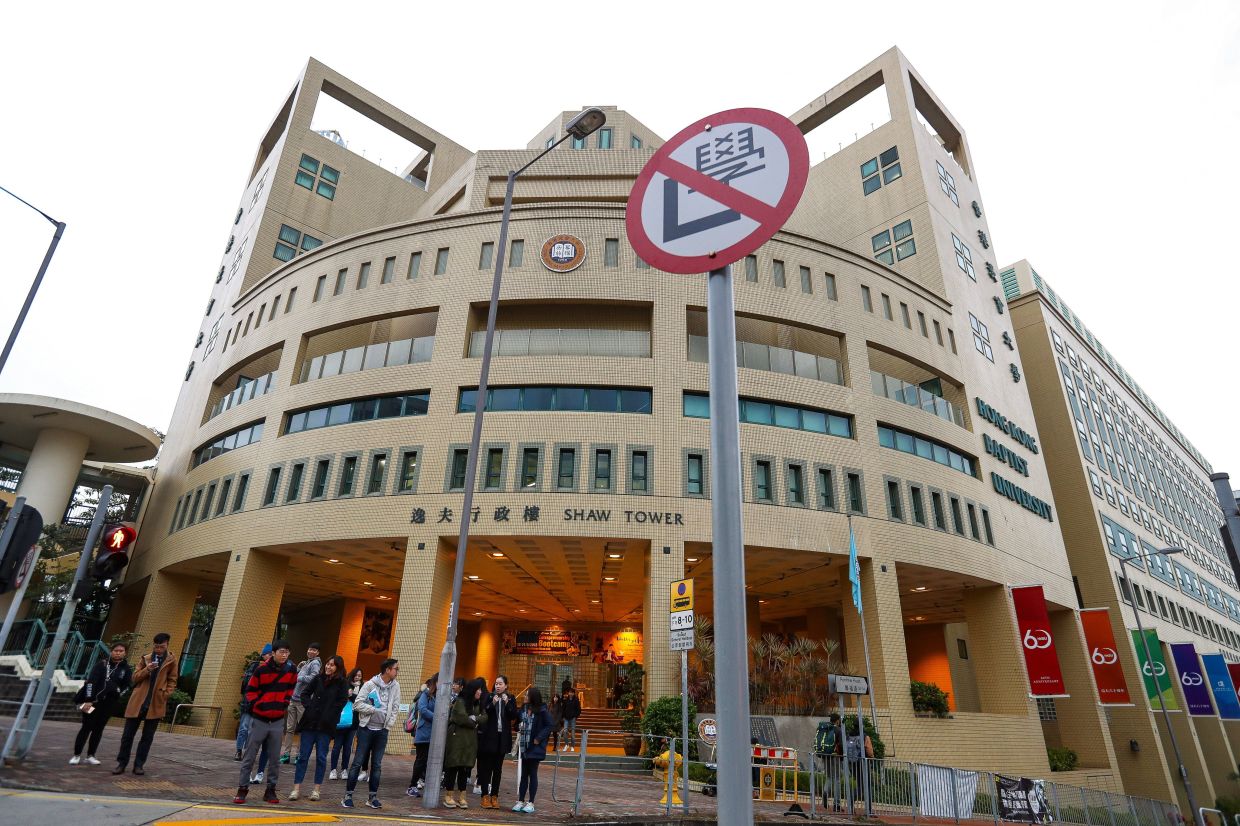
Hong Kong Baptist University is conducting an urgent review of its information technology infrastructure following claims by a sophisticated ransomware syndicate that it has illicitly obtained access to the institution's systems and sensitive data. The allegations surfaced publicly through announcements made by "The Gentlemen," an advanced cybercriminal outfit that emerged in mid-2023 and has rapidly established itself as a significant threat across international corporate and institutional networks.
According to cybersecurity monitoring platforms tracking the incident, the potential breach has exposed approximately 1,900 user credentials across multiple categories. The compromised accounts comprise roughly 130 staff member profiles, approximately 1,770 additional institutional user accounts, and around 260 credentials belonging to third-party employees and contractors with access to university systems. This tiered exposure raises concerns about vulnerability across the institution's digital infrastructure, from administrative personnel to external service providers.
The Gentlemen distinguishes itself within the cybercriminal ecosystem through its operational model, which diverges from traditional ransomware-as-a-service arrangements. Rather than deploying malicious code themselves, the group functions as a sophisticated infrastructure provider, renting its extortion capabilities and network access to other hackers operating globally. This franchising approach has enabled rapid expansion and replication of attacks across multiple sectors and geographic regions, making the group particularly difficult to contain through conventional law enforcement responses.
Baptist University's official statement, released Tuesday evening, acknowledged the public allegations concerning unauthorized system access and committed to evaluating the security posture of its information technology systems and the safeguarding of personal data held within them. The institution indicated it would pursue remedial measures through its established security protocols and maintain coordination with relevant Hong Kong regulatory bodies and police authorities investigating the matter.
The Office of the Privacy Commissioner for Personal Data, Hong Kong's principal data protection regulator, has not yet received formal breach notification from the university, according to a spokesperson. However, the office adopted a proactive stance, initiating direct contact with Baptist University to gather detailed information about the incident's scope and timeline. This regulatory engagement reflects the serious implications of the breach under Hong Kong's Personal Data (Privacy) Ordinance, which imposes mandatory notification requirements and potential penalties for institutions handling compromised personal information.
Francis Fong Po-kiu, honorary president of the Hong Kong Information Technology Federation, articulated a comprehensive assessment of immediate actions the university should undertake. His recommendations prioritize transparency and speed: the institution must immediately notify the privacy commissioner, conduct thorough forensic analysis and system audits, and establish definitively whether the stolen credentials have been leveraged to penetrate critical systems or facilitate unauthorized data exfiltration. These technical investigations are fundamental to understanding the breach's true scope and the attackers' objectives.
Beyond forensic investigation, Fong emphasized the necessity of implementing institution-wide credential resets across all user accounts as a precautionary measure to invalidate potentially compromised passwords. Concurrent with this step, the university should mandate multi-factor authentication across all systems, creating an additional security barrier that renders stolen credentials substantially less useful to attackers. Fong also stressed the importance of formal notifications to relevant law enforcement and regulatory agencies, ensuring that the incident is formally recorded and investigated through appropriate channels.
Transparent communication with affected stakeholders emerges as a critical component of institutional response. Fong advocated that Baptist University proactively inform all staff members and students about the investigation's findings and remedial measures, recognizing that social-engineering attacks frequently exploit uncertainty and misinformation to trick individuals into compromising additional credentials. By maintaining open dialogue about security developments, the institution can reduce susceptibility to follow-up exploitation attempts.
The incident underscores broader vulnerabilities within institutional cybersecurity posture across the Asia-Pacific region. Educational institutions frequently operate with resource constraints relative to private corporations, leading to deferred infrastructure modernization and reactive rather than proactive security frameworks. The prevalence of third-party service integrations—essential for modern university operations spanning research collaboration, administrative management, and student services—introduces additional attack surfaces that sophisticated threat actors systematically probe and exploit.
For Malaysian institutions and organizations monitoring this situation, the Baptist University breach provides instructive lessons about the tangible risks posed by advanced ransomware syndicates operating on commercial models. Organizations throughout Southeast Asia housing sensitive data or connected to regional academic and research networks face similar vulnerability profiles. The necessity of implementing robust authentication protocols, conducting regular security assessments, and maintaining transparent coordination with regulatory authorities applies universally across the region's institutional landscape.
The case also highlights the limitations of traditional cybersecurity boundaries in an interconnected digital environment. The involvement of third-party credentials suggests that Baptist University's network security was compromised through external service providers, a pattern increasingly common in supply-chain-based attacks. Institutions must establish rigorous vendor security requirements and continuous monitoring mechanisms to prevent attackers from leveraging weaker external partners as entry points into critical systems.
As the investigation proceeds, the broader implications for data governance frameworks across the region become apparent. Hong Kong's Privacy Commissioner's proactive engagement signals that regulatory authorities increasingly expect institutions to implement preventive security measures meeting international standards. This regulatory evolution mirrors developments in Malaysia, Singapore, and other regional jurisdictions implementing strengthened data protection requirements that impose specific obligations for breach notification and mitigation.

