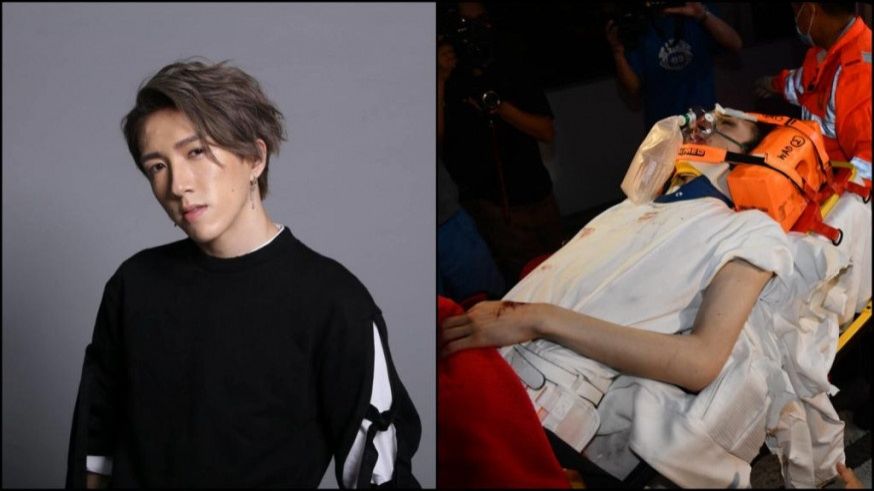
A Hong Kong court has ordered substantial compensation for a dancer left permanently paralysed after a catastrophic stage accident during a Cantopop concert two years ago. On June 15, the District Court awarded Mo Li Kai-yin HK$6.29 million (approximately RM3.32 million) in damages following the incident at Hong Kong Coliseum in July 2022, when a four-by-four-metre LED panel fell from above during a performance by boy band Mirror. The judgment represents a significant recognition of the life-altering consequences the then-30-year-old performer has endured since that fateful evening.
The court's detailed findings paint a sobering picture of Mo's condition and future needs. Judges determined that the injuries he sustained constitute what they formally described as "catastrophic" disability, entitling him to the maximum compensation available across multiple categories. These awards encompass permanent total incapacity payments, lifetime caregiving expenses, ongoing medical and rehabilitation costs, and periodic payments structured to support his long-term care requirements. The breadth of these compensation categories underscores the comprehensive nature of the court's assessment regarding the extensive support Mo will require for the remainder of his life.
The severity of Mo's injuries cannot be overstated. When the heavy LED screen struck him during the fourth of Mirror's planned 12-concert series, it caused a cervical spine dislocation that resulted in complete paralysis from the neck downward. Emergency surgery at Queen Elizabeth Hospital was immediately necessary, followed by intensive treatment and ongoing rehabilitation that has continued across multiple institutions in Hong Kong and internationally. Despite these interventions and the passage of two years, Mo remains dependent on others for virtually all aspects of personal care and daily functioning, unable to perform even basic activities without assistance.
The court's assessment highlighted the profound changes to Mo's circumstances and capabilities. The judgment noted that he now requires three full-time caregivers to provide round-the-clock assistance with personal hygiene, mobility, feeding, and all other aspects of daily life. More significantly, the court concluded that Mo is "incapable of ever leading or appreciating an independent adult life," a stark statement that reflects the permanent nature of his disability. This legal determination formed the foundation for the comprehensive compensation package, recognising that he will need continuous support and supervision indefinitely.
Mo's life trajectory before the accident reveals a dedicated performer building a multifaceted dance career. He first developed an interest in dance while completing his university studies between 2015 and 2019, eventually transitioning to professional performance in 2019. His work encompassed live concerts, television appearances, commercial advertisements, and music video productions. Beyond performing, he maintained an active teaching presence, instructing dance at four different studios including Studiodanz, the company that employed him at the time of the accident. This combination of performance and instruction positions had positioned him as an established figure within Hong Kong's dance community.
The court determined that Studiodanz, Mo's employer, bears responsibility for the incident and ordered the company to pay the full compensation award plus interest and legal costs. Notably, Studiodanz did not participate in the trial proceedings. The company had previously faced regulatory consequences, receiving a HK$132,000 fine for violations of occupational safety regulations related to the incident. This separate enforcement action by Hong Kong's labour authorities highlighted systemic failures in safety protocols and procedures at the venue, complementing the civil court's findings regarding employer liability.
Mo's family has made extraordinary personal sacrifices in response to his condition. His father, Reverend Derek Li Shing-lam, made the difficult decision to resign from his pastoral position and relocate from Canada to become his son's full-time caregiver. This arrangement continued until Reverend Li's death on April 25, after which the responsibility for Mo's care shifted to professional caregivers. The involvement of his father in the early period of recovery underscores both the emotional toll on the family and the intensive nature of care required immediately following such a traumatic injury.
Despite the severity of his paralysis, Mo has demonstrated remarkable resilience through his engagement with advanced rehabilitation programmes. Using cutting-edge therapeutic technologies including regenerative medicine approaches and implantable microstimulation devices, he has gradually regained limited but meaningful function. He has recovered some movement in his right arm and regained sensation in his bladder and bowel functions, modest but significant improvements that suggest potential for further gains. These developments have practical implications for his quality of life and independence, even within the constraints of his overall paralysis.
Recent progress offers a glimpse of Mo's determination to maximise his remaining capabilities. A video posted on his Instagram account in March documented him operating an electric wheelchair using movements in his right hand, demonstrating that even limited motor recovery can translate into meaningful independence in certain contexts. This achievement, while modest compared to his former abilities, represents months of intensive therapy and represents the kinds of incremental victories that characterise recovery from severe spinal injuries. The fact that he maintains an active social media presence also suggests engagement with his broader community despite his physical limitations.
For the Southeast Asian entertainment industry and broader society, Mo's case raises important questions about venue safety protocols, performer welfare, and the adequacy of legal remedies for catastrophic workplace injuries. While the compensation awarded is substantial by regional standards, it fundamentally cannot restore what Mo has lost—his mobility, independence, and career. The incident serves as a cautionary reminder of the inherent risks in live performance environments, where split-second failures in equipment maintenance or safety procedures can result in life-altering consequences. The court's judgment, though welcome for Mo and his family, underscores the importance of prevention over compensation, highlighting the need for rigorous safety standards across concert venues and performance spaces throughout the region.

