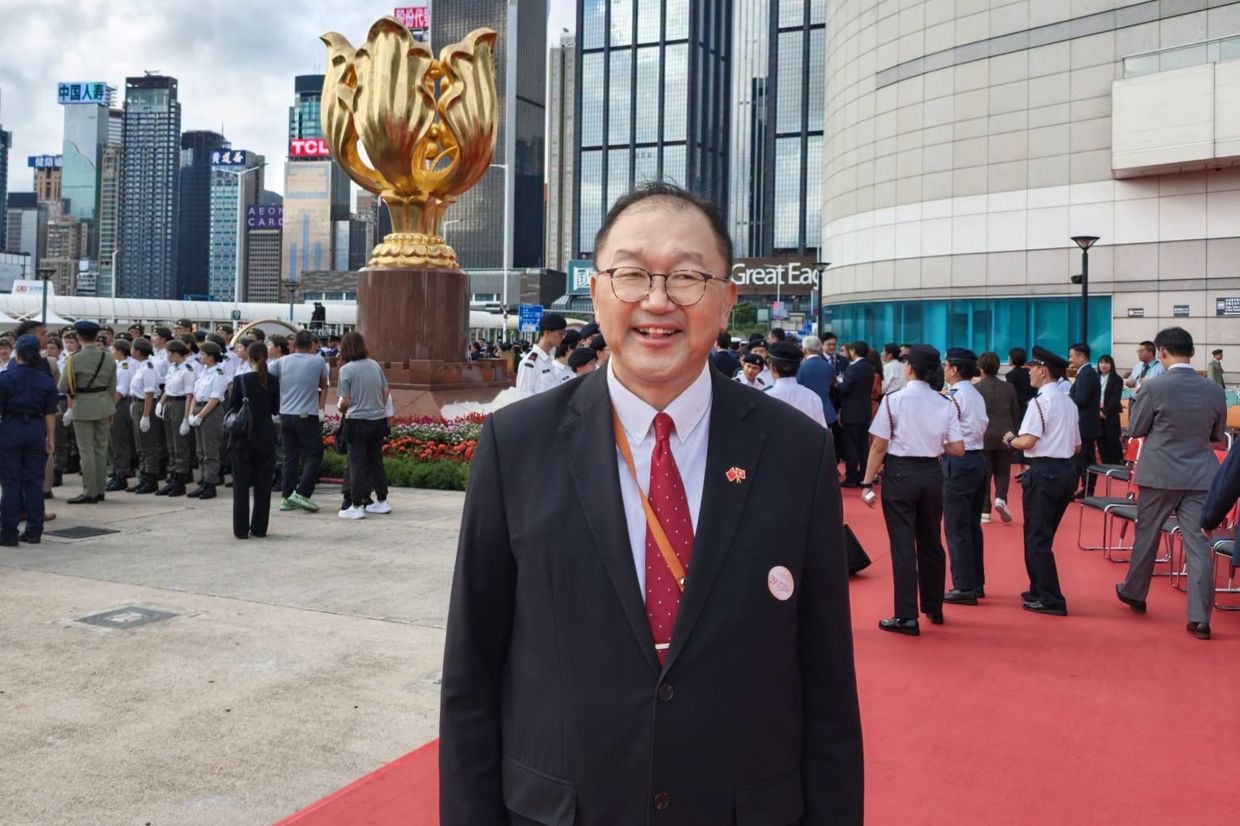
William Wong Kam-fai, a 66-year-old Hong Kong lawmaker, has become the first legislator to step down from the Legislative Council over a scandal in more than two decades, announcing his resignation on Friday following his arrest on suspicion of drink-driving and involvement in a hit-and-run incident. The move marks a significant moment in Hong Kong's political landscape, signalling a rapid conclusion to a serious lapse in judgment that has drawn scrutiny to legislative standards and the accountability mechanisms governing its members.
Wong's departure came just days after he crashed his vehicle into two parked cars near a staff residence on a university campus late Monday evening. The collision occurred at 10:46pm and resulted in one parked vehicle being struck and pushed into a second. His arrest that same night triggered an immediate reassessment of his political position, culminating in a carefully worded statement in which he expressed regret for the distress caused to both society and the legislature. In his resignation letter, Wong acknowledged that maintaining his seat while under police investigation would compromise the legislative body's operations, a rationale that resonates with Hong Kong's evolving standards for public conduct.
The legislator's decision to exit the chamber reflects broader expectations about the integrity expected from those holding high office in Hong Kong. Legislative Council President Starry Lee Wai-king acknowledged Wong's departure with appreciation for his service, noting that the resignation had been formally submitted on Friday. Beyond his role in Legco, Wong also served as a member of the Chinese People's Political Consultative Conference, China's top political advisory body, adding another dimension to the political fallout from the incident.
Political analysts have largely characterised Wong's swift resignation as a strategically sound move that minimises reputational damage to both the individual and the institution. Lau Siu-kai, a consultant at the semi-official Chinese Association of Hong Kong and Macau Studies think tank, argued that prompt withdrawal from office represents the optimal approach to preserving institutional credibility. He suggested that clinging to the position would have exposed the principle of patriots administering Hong Kong to criticism, a sensitive issue in the current political environment. The broader principle underlying this analysis suggests that resignation functions as damage control not just for Wong personally, but for the harmonious functioning of the legislature as a whole.
Lau further predicted that Wong would likely step down from his CPPCC position as well, and anticipated that central authorities would accept such a resignation given the severity of the circumstances. While expulsion of CPPCC members remains rare, the voluntary nature of Wong's anticipated withdrawal could facilitate smoother acceptance. Tam Yiu-chung, Hong Kong's former sole representative to the National People's Congress Standing Committee, concurred that resignation was the appropriate course, emphasising that the high standards expected of legislators made Wong's departure a prudent decision in light of such serious misconduct.
The departure of Wong, who represented the Election Committee constituency rather than a functional constituency, is unlikely to disrupt the day-to-day functioning of the legislature. This distinction matters because Election Committee representatives do not carry the sectoral representation responsibilities that functional constituency members do. Tam noted that the government retains discretionary authority over whether to conduct a by-election to fill the vacant seat, with no legal obligation to do so. The decision would hinge on multiple considerations, including the remaining duration of the current legislative term and budgetary constraints.
Precedent from the previous Legislative Council offers insight into how extended vacancies can be managed. When Stephen Wong Yuen-shan, also an Election Committee constituency lawmaker, departed in late 2022 to become chief of the government's think tank, his seat remained unfilled for approximately three years without a by-election being held. This precedent suggests that financial prudence, as noted by then-constitutional affairs minister Erick Tsang Kwok-wai in 2024, plays a role in such decisions, particularly when the end of a legislative term approaches.
Wong's resignation breaks a drought in legislative accountability that had lasted more than two decades. The previous legislator to resign over scandal was Gary Cheng Kai-nam, who withdrew from office shortly after securing his seat in September 2000. Cheng's case involved serious breaches including failure to disclose business interests, passing confidential government documents to a business associate, and conducting an extramarital affair. He subsequently faced criminal prosecution, receiving an 18-month prison sentence in 2001 after conviction on four counts: bribery, misconduct in public office, false accounting, and theft. The contrast between Cheng's protracted legal ordeal and Wong's swift voluntary departure underscores evolving institutional expectations.
Wong's suspension from administrative duties at his university employer reflects institutional recognition of the seriousness of the allegations. A spokeswoman for the university stated that the institution maintains rigorous standards regarding staff conduct and professional ethics, justifying the immediate suspension pending the outcome of the police investigation. The university acknowledged the gravity of the situation while appropriately refraining from prejudging the outcome of ongoing criminal proceedings.
The resignation also touches on broader questions about political standards and public accountability in Hong Kong's governance structure. For Malaysian and Southeast Asian observers, Wong's case illustrates how Asian democracies and semi-democratic systems are grappling with expectations that public officials maintain exemplary personal conduct. The incident demonstrates that even in systems with significant government influence over legislative proceedings, scandals involving personal misconduct can trigger rapid institutional responses that prioritise the institution's credibility. The relatively swift resolution suggests that Hong Kong's political establishment, despite centralising trends, retains mechanisms for managing crises of personal integrity among its members.
The broader implications extend to understanding how different forms of accountability operate in Hong Kong's political system. While Wong faced no formal expulsion process, his voluntary withdrawal—apparently facilitated by implicit pressure and institutional expectations—achieved the same practical outcome. This mechanism of managed resignation, distinct from formal disciplinary procedures, reflects how informal institutional norms can function as effectively as explicit rules in maintaining standards. For regional observers, the case demonstrates that even when formal democratic checks are diminished, reputational concerns and institutional preservation instincts can still incentivise accountability from public officials.

