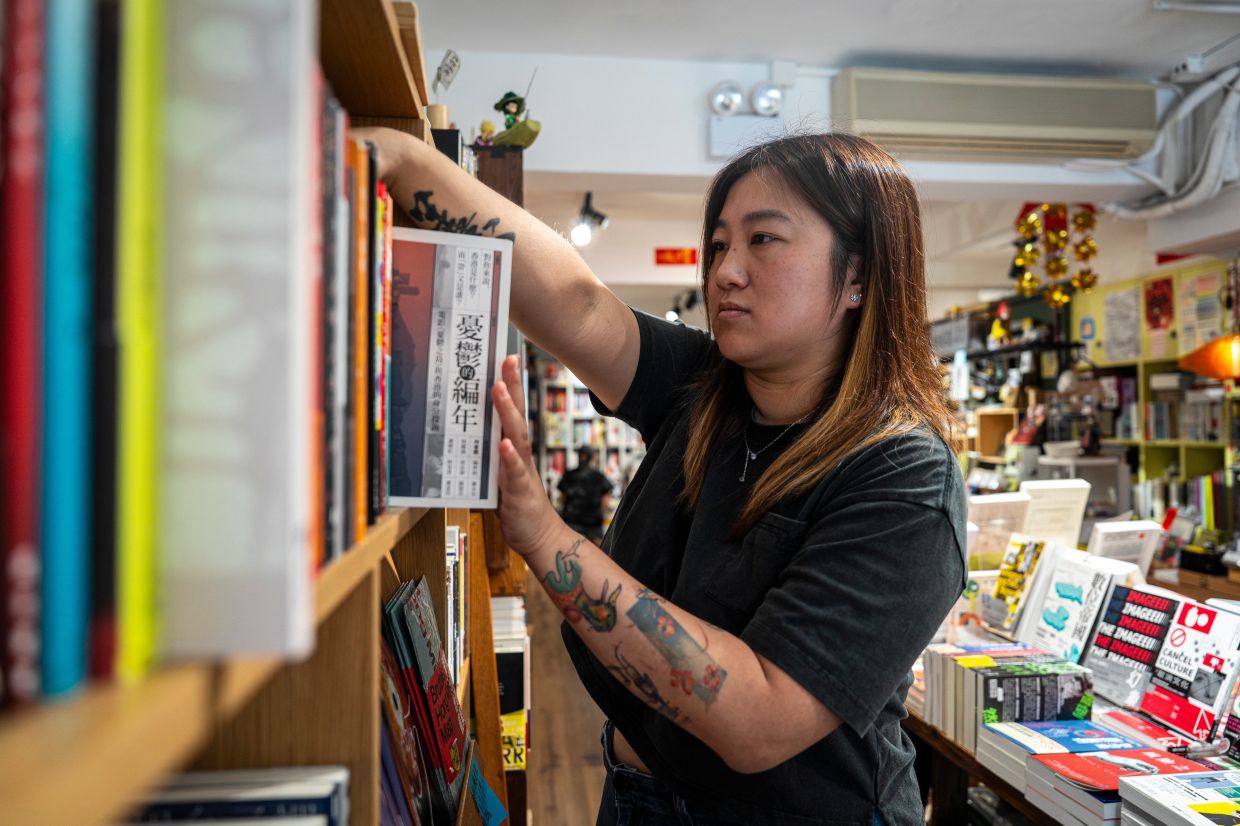
Hong Kong police have arrested two individuals on suspicion of selling publications deemed seditious and accepting funds from overseas political organisations, authorities announced Thursday following an operation conducted under the territory's recently implemented national security legislation. While official police statements have not released the names of those detained, local news organisations including Ming Pao have reported, citing unnamed sources, that one of the arrested is Leticia Wong, the owner of Hunter Bookstore and a former pro-democracy district councillor who has maintained a vocal presence in Hong Kong's civil society despite the intensifying crackdown on opposition voices.
The timing of the arrests, occurring just a week before Hong Kong marks the 29th anniversary of its handover to Chinese sovereignty in 1997, underscores how the Special Administrative Region continues to navigate the widening gap between Beijing's original commitments to preserve the city's distinct legal and civil liberties framework and the reality of increasingly restrictive enforcement actions. The detainees, who are said to manage a retail outlet in the Sham Shui Po district where Wong's bookstore operates, have been taken into custody under the 2024 national security law on suspicion of sedition, as well as under separate legislation pertaining to proceeds derived from indictable offences. Police investigations allege the pair displayed and sold materials with seditious content, including publications claimed to incite animosity toward Hong Kong's government, judiciary, and law enforcement institutions.
Wong's prominence in Hong Kong's pro-democracy movement, combined with her refusal to cease operations despite mounting official pressure, has made her bookstore a focal point in broader discussions about the boundaries of permissible expression under the city's current legal environment. A pro-Beijing newspaper report last year scrutinised an independent book fair hosted at her establishment, characterising it as embodying "soft resistance" through its programming and inventory. That same report highlighted the bookstore's intention to stock a biography of Jimmy Lai, the jailed media mogul and pro-democracy figurehead whose case has become emblematic of Hong Kong's evolving approach to political opposition.
Wong's own account of official harassment paints a picture of sustained administrative pressure applied through multiple enforcement channels. She disclosed to international media in 2024 that government authorities had targeted her shop on 92 separate occasions between July 2022 and June 2025, encompassing inspections, conspicuous police presence outside the premises, and warning letters citing alleged regulatory breaches. Beyond these direct interventions, Wong recounted how an anonymous letter prompted a planned event organiser at her bookstore to withdraw its booking, suggesting that intimidation extends beyond formal state action to create a chilling effect across civil society.
The bookstore sector has emerged as an unexpected battleground in Hong Kong's evolving struggle over permissible discourse. In March, police detained the proprietor and employees of another independent bookstore following similar allegations regarding the sale of seditious materials, with the Jimmy Lai biography once again featuring prominently in the investigation. Those individuals were eventually released on bail, though their cases remain unresolved, illustrating how the prosecutorial machinery operates with considerable discretion in determining which cases warrant continued detention and which merit release pending trial.
The invocation of sedition charges reflects authorities' emphasis on using the national security framework to restrict content deemed politically problematic, even when the materials in question consist of lawful publications freely available in other democracies. The offence of sedition, historically associated with colonial-era repression, has been resurrected as a central enforcement tool, shifting the burden onto booksellers to determine what inventory might trigger official action. This creates practical complications for independent publishers and retailers who operate in an increasingly opaque regulatory environment where the boundaries between legitimate commerce and criminal conduct remain poorly defined.
The involvement of alleged foreign funding accusations adds another dimension to Hong Kong authorities' enforcement strategy, reflecting broader concerns among Beijing officials about external influences on the city's civil society. The characterisation of bookstore operations as receiving support from "foreign political organisations" has become routine in official narratives, yet remains largely unsubstantiated in public statements. This rhetorical coupling of seditious content with foreign funding serves to delegitimise pro-democracy activities by suggesting they represent external interference rather than autonomous expressions of Hong Kong residents' political views.
Wong's trajectory from district councillor—a position she held through democratic election—to accused sedition peddler encapsulates the narrowing space for legitimate political participation in Hong Kong. The 2019 anti-government protests, which mobilised millions and prompted severe police responses, were followed by large-scale arrests of protest organisers, legislators, and activists under both the national security law and other criminal statutes. Wong's continued operation of her bookstore, rather than withdrawing from public life entirely, has positioned her as a persistent symbol of resistance, making her a natural target for authorities seeking to demonstrate the futility of continued dissent.
The Hong Kong government maintains that both security laws—the national security legislation and associated statutes—are indispensable for maintaining social stability and order. Officials argue that freedom of expression remains adequately protected within the city's legal framework, characterising restrictions on seditious speech as necessary safeguards against destabilisation rather than unjustified censorship. This framing reflects fundamentally different conceptions of liberty held between Hong Kong's administration and international human rights organisations, which have documented a consistent pattern of narrowing freedoms since the national security law's introduction in 2020.
For regional observers, particularly those in Southeast Asia where civil liberties concerns remain contested, Hong Kong's trajectory presents cautionary lessons about how security legislation, once enacted ostensibly for specific purposes, can expand in application and reach. The bookstore arrests demonstrate that enforcement extends beyond prominent political figures to encompass ordinary business operators whose commercial decisions—choosing which books to stock—become acts of political consequence. This expansion of criminal liability into the domain of independent commercial judgment raises fundamental questions about the sustainability of Hong Kong's marketised economy when entrepreneurial discretion itself becomes suspect.
The path forward for Wong and her co-detainee remains uncertain, contingent on prosecutorial decisions and judicial proceedings that will unfold under the same legal framework that produced the charges themselves. International observers and Hong Kong civil society groups have expressed concern that the arrests signal yet another escalation in official pressure on independent voices. Whether these cases result in convictions, acquittals, or negotiated outcomes may depend less on the technical legal merits than on the broader political environment and the extent to which Hong Kong authorities view the suppression of pro-democracy expression as essential to their governance objectives.

