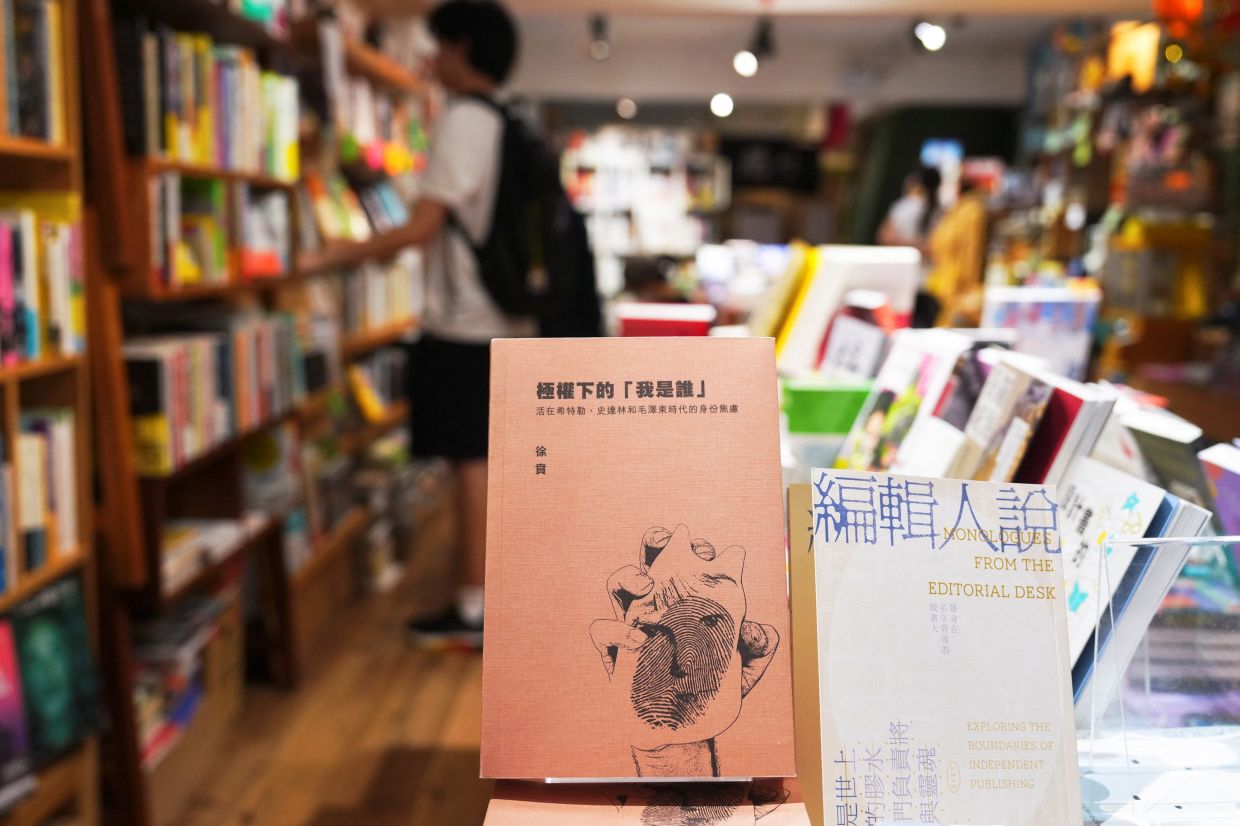
Hong Kong's chief security official has publicly warned booksellers that they bear responsibility for preventing titles in their shops from jeopardising national security, marking an intensification of pressure on the city's independent publishing sector. The statement from Secretary for Security Chris Tang came immediately after police arrested five individuals connected to two separate bookstores, representing the latest phase in a mounting crackdown targeting retailers of politically sensitive materials.
Tang framed the requirement as straightforward and comparable to food safety standards, suggesting booksellers must exercise due diligence over their inventory much as restaurateurs must ensure their products are not poisonous or contaminated. He rejected suggestions that authorities might publish an official list of prohibited books, contending that such a catalogue would actually impede effective enforcement against materials deliberately designed to harm the country. The official's remarks underscored the growing tension between regulatory demands and the practical challenges facing retailers attempting to navigate an increasingly restrictive publishing environment.
Wednesday's police operation targeted Have A Nice Stay, a bookshop founded by former journalists, and the established Greenfield Book Store. Authorities alleged that the five arrested individuals had displayed and distributed seditious materials intended to incite hostility against Hong Kong's government, judicial system, and law enforcement bodies. The store closures represent a continuation of enforcement activity that accelerated markedly during 2024, with three distinct rounds of arrests within four months demonstrating the authorities' sustained focus on independent retailers.
Have A Nice Stay had already announced plans to cease operations on 30 August, citing financial pressures and uncertainty over regulatory boundaries as primary factors in its decision to shutter. In a social media statement, the bookshop's operators articulated a crucial vulnerability facing the sector: the impossibility of comprehensively vetting every single volume in stock combined with profound ambiguity regarding which titles might be classified as problematic. This disclosure highlights the predicament confronting retailers operating under increasingly stringent security frameworks without access to transparent standards or comprehensive guidance.
The pattern of enforcement extends back several months, with each incident introducing fresh dimensions to the security concerns cited by authorities. In March, police arrested personnel at Book Punch, an independent bookstore, on suspicion of marketing seditious publications and distributing materials including a biography of Jimmy Lai, the imprisoned pro-democracy media entrepreneur who received a 20-year sentence in a national security prosecution. Subsequently, in June, officers detained two additional booksellers suspected of trafficking in seditious content while allegedly receiving financial support from foreign political entities, introducing allegations of external funding into the investigative framework.
These consecutive operations have generated substantial international attention and concern, with critics highlighting what they characterise as fundamentally unclear regulatory boundaries that expose booksellers to legal jeopardy despite good-faith compliance efforts. The absence of clearly defined parameters regarding which publications constitute threats to national security leaves the sector vulnerable to inconsistent enforcement and subjective interpretation by authorities. Industry participants and civil society observers have articulated deep apprehension regarding the cumulative effect on Hong Kong's reputation as a publishing hub and the implications for intellectual freedom across the territory.
Taiwan's democratically elected leadership has responded with pointed observations regarding Hong Kong's deteriorating freedom of expression environment. President Lai Ching-te utilised social media to emphasise the essential role that independent bookstores perform in preserving intellectual pluralism and guarding against ideological conformity. His comments reflected broader Taiwanese concern regarding the trajectory of freedoms in the neighbouring territory, particularly given the self-governing island's own contested political status within the regional geopolitical landscape.
Taiwan's Mainland Affairs Council has documented evidence that publishing industry participants have begun implementing self-censorship measures in response to Hong Kong's enforcement activity. Deputy Minister Liang Wen-chieh disclosed that certain Taiwanese publishers have proactively modified their catalogues when preparing submissions for Hong Kong book fairs, effectively pre-emptively withdrawing titles they fear might attract regulatory attention. This voluntary restriction of published offerings represents a significant spillover effect extending beyond Hong Kong's borders, demonstrating how enforcement patterns in one jurisdiction can suppress intellectual diversity across the entire region.
For Malaysian and Southeast Asian observers, the Hong Kong situation carries instructive implications regarding the tension between security frameworks and open information ecosystems. Malaysia itself has grappled with comparable questions regarding content regulation, and the Hong Kong experience provides a cautionary case study regarding how security-focused enforcement can progressively constrain the publishing sector and broader intellectual freedom. The absence of transparent criteria for determining which materials constitute security threats creates systemic vulnerability for anyone involved in the book trade.
The escalating pressure on Hong Kong's independent bookstores also reflects broader concerns about regulatory consistency across Asia-Pacific democracies and semi-autonomous territories. When official statements suggest that commercial actors bear responsibility for preventing harm without providing transparent standards by which to evaluate potential violations, the result is essentially governance by uncertainty. Booksellers cannot definitively determine whether their operations comply with requirements, obliging them to choose between accepting potentially prohibitive legal risk or withdrawing from the market entirely.
The cumulative effect of these enforcement campaigns risks fundamentally altering Hong Kong's character as a publishing and intellectual hub where diverse viewpoints have historically circulated relatively freely. The closure of established retailers and the documented self-censorship by publishers in neighbouring jurisdictions suggest a substantial contraction in the regional ecosystem for political and historical discourse. For readers, researchers, and citizens throughout East and Southeast Asia, this represents a narrowing of available perspectives and a potential impoverishment of public understanding of contested historical and political questions.
Moving forward, the Hong Kong situation will likely continue shaping how publishers, retailers, and civil society actors throughout the region assess their relationship to security regulations and content management. The lack of bright-line legal standards combined with demonstrated enforcement activity creates conditions under which participants rationally choose restrictive strategies, effectively delegating the role of censor to market actors themselves. This outcome may ultimately prove more consequential for freedom of expression than formal government censorship, as it operates through distributed decisions by commercial entities rather than centralised state action.

