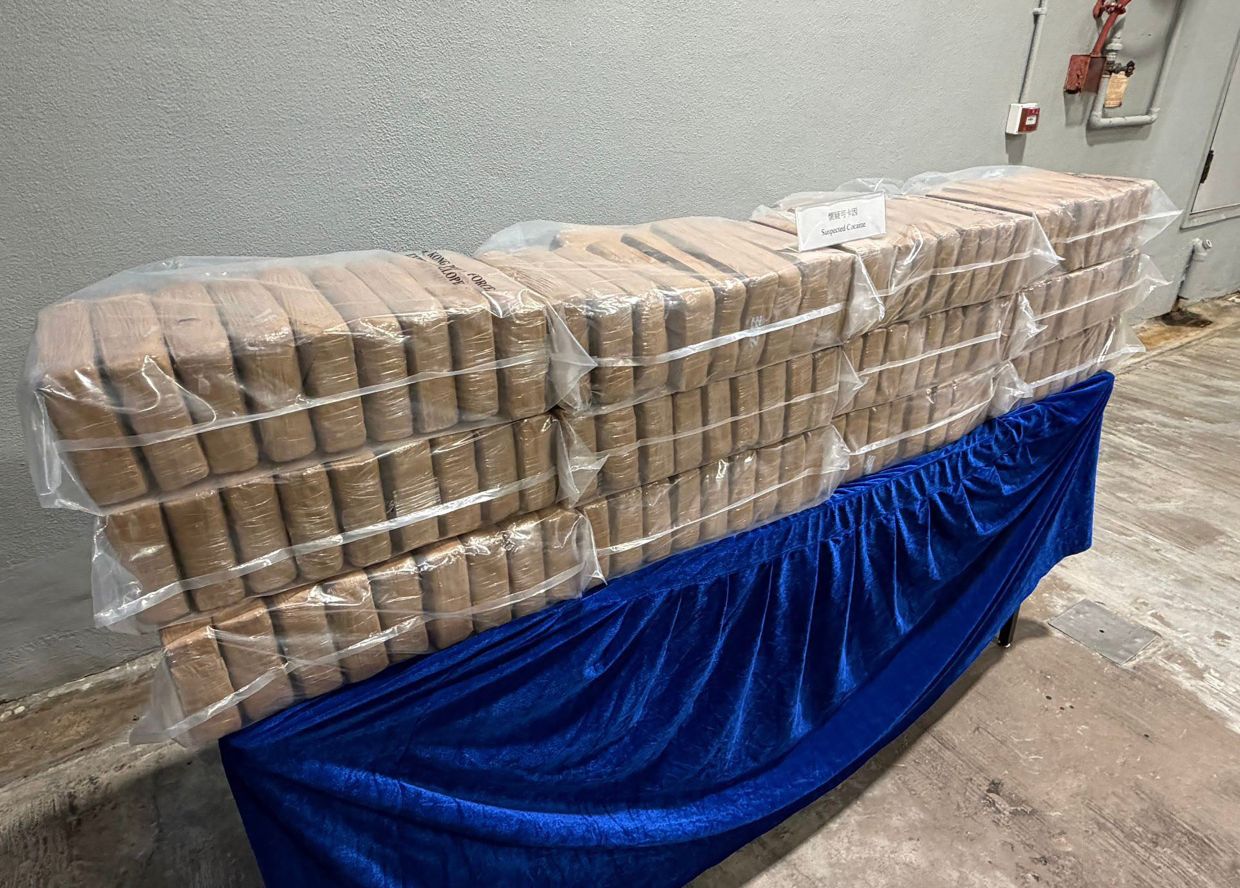
Hong Kong's narcotics enforcement unit has dismantled what appears to be a sophisticated maritime drug trafficking operation following the discovery of approximately 361 kilograms of cocaine distributed across two vessels in the Aberdeen Typhoon Shelter area. The raids, conducted over the course of a week, represent the most significant cocaine seizure the territory has recorded in the past year and underscore the evolving tactics employed by regional drug syndicates seeking to exploit Hong Kong's bustling maritime infrastructure for contraband smuggling.
The first seizure occurred on Friday when police officers boarded a yacht moored in the Aberdeen Typhoon Shelter and discovered 241 kilograms of cocaine concealed on board. Just days later, on Sunday, narcotics bureau personnel targeted a six-metre vessel anchored in close proximity to the site of the earlier operation, uncovering an additional 120 kilograms of the narcotic in the form of consolidated brick packages. The cumulative haul, valued at approximately HK$270 million on the street market, reflects the enormous financial stakes involved in international drug trafficking networks operating in Southeast Asian waters.
Investigators have determined that both seizures are likely connected to a single criminal enterprise rather than separate operations. The consistency in drug packaging, weight denomination, and the strategic positioning of the vessels—positioned near one another in the same anchorage—strongly suggests that the trafficking syndicate was employing multiple storage points to distribute its inventory across different vessels. This decentralized approach to narcotics storage may have been designed to minimize exposure if any single vessel came under law enforcement scrutiny, a tactic increasingly employed by organized crime networks seeking to evade detection.
The arrests made in connection with the investigation have already yielded several suspects. Following the initial Friday raid, police apprehended a suspected ringleader of the trafficking organization along with two additional core members of the operation. These individuals provided cover stories claiming unemployment or engagement in fishing activities—a common deception tactic employed by individuals involved in illicit maritime operations. On Monday, authorities arrested a 45-year-old local woman identified as the registered owner of the second yacht that was raided on Sunday, with police indicating she was unemployed and retained in custody for interrogation.
The significance of this case extends beyond the raw quantity of drugs seized. Hong Kong's position as a major international financial and logistics hub, combined with its deep-water harbors and complex waterway systems, has historically made it vulnerable to exploitation by transnational criminal organizations. The Aberdeen Typhoon Shelter, a traditional anchorage for fishing vessels and recreational boats, provides ideal cover for illicit maritime activity given the volume of legitimate vessel traffic in the area. Traffickers can blend their operations into the ordinary commercial and leisure maritime activity that characterizes the region.
For Southeast Asian governments and regional law enforcement agencies, the case serves as a reminder of the persistent threat posed by cocaine trafficking networks that operate across the Indo-Pacific region. While cocaine is traditionally associated with production in Latin America and trafficking through Atlantic routes, Southeast Asian waters have become increasingly valuable transshipment points for drugs destined for markets in East Asia and the Pacific. Hong Kong, in particular, remains a critical hub in this illicit supply chain due to its connectivity to global shipping networks and proximity to major consumption markets in mainland China.
The scale and organization evident in this operation suggest involvement by established criminal networks rather than opportunistic smugglers. The use of multiple vessels, the substantial quantities involved, and the apparent coordination across different anchorage points all point to a sophisticated trafficking enterprise with access to reliable supply sources and established distribution channels. The detention of individuals claiming to be unemployed or fishermen also suggests the syndicate recruits operatives from lower socioeconomic backgrounds, offering them financial incentives to facilitate maritime operations with limited awareness of broader organizational structure.
The recent seizure may prompt Hong Kong authorities to intensify maritime interdiction efforts and expand surveillance of harbors and anchorages traditionally used by fishing communities. Regional law enforcement cooperation will likely intensify as well, with intelligence sharing among Hong Kong police, mainland Chinese authorities, and other Southeast Asian maritime enforcement agencies designed to disrupt the supply chains feeding these trafficking operations. The success in identifying the connection between the two separate seizures demonstrates the importance of investigating yacht-based trafficking networks with a comprehensive rather than compartmentalized approach.
Looking forward, the case highlights the enduring challenge that maritime drug trafficking presents to modern law enforcement. The vastness of Southeast Asian waters, the volume of legitimate maritime commerce, and the relative ease with which vessels can change identity or registration creates a permissive environment for criminal organizations. While individual seizures of this magnitude represent significant operational successes, the underlying economic incentives driving the cocaine trade—substantial profit margins, persistent demand in Asian markets, and relatively low detection risks compared to other smuggling routes—suggest such operations will continue absent more comprehensive regional enforcement coordination and demand reduction initiatives.

