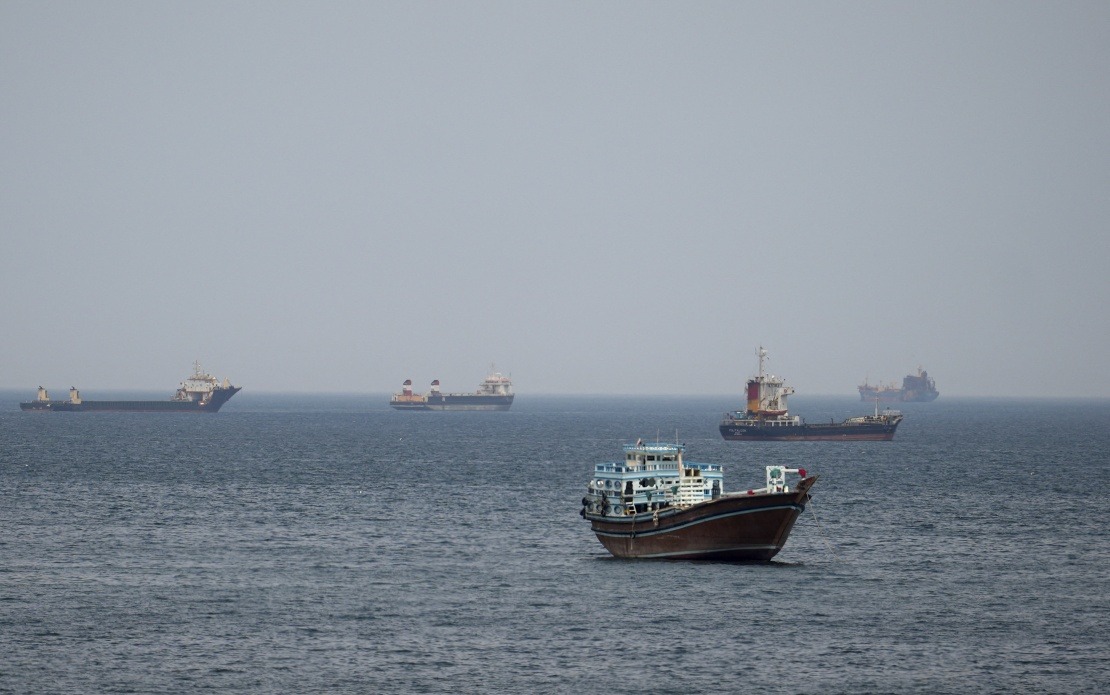
Oil tankers have resumed their passage through the Strait of Hormuz following the activation of an interim peace deal between Washington and Tehran on Thursday, marking a significant shift in one of the world's most strategically vital maritime corridors. The agreement, which aims to end months of military conflict, has prompted an immediate market response, with crude oil prices falling to their lowest levels since hostilities erupted on February 28. The breakthrough carries substantial implications for global energy security and Southeast Asian economies heavily dependent on stable oil supplies, though considerable uncertainties remain regarding the agreement's longevity and final terms.
The Strait of Hormuz, through which approximately one-fifth of the world's petroleum flows, represents a chokepoint of immense economic importance for oil-importing nations across Asia and beyond. Analysts anticipate that shipping through this critical waterway could soon return to pre-conflict normalcy, potentially stabilizing international energy markets that have experienced considerable volatility during the crisis. For Malaysia and other regional economies sensitive to energy price fluctuations and dependent on uninterrupted supply chains, this development offers cautious optimism regarding inflation pressures and transportation costs that have accumulated over recent months.
The interim arrangement provides a 60-day negotiating window during which delegations from both sides must achieve consensus on Iran's nuclear programme, the original flashpoint that triggered the conflict. Washington has sweetened its approach with a US$300 billion reconstruction fund for Iran alongside additional financial incentives designed to facilitate agreement. United States Vice President JD Vance, who will lead the American negotiating team, has signalled that limiting Tehran's long-range missile capabilities remains a priority objective for Washington, suggesting that foundational disputes over Iran's military capacity persist beneath the surface ceasefire.
President Donald Trump's original war objectives have proven substantially elusive. When he initiated hostilities nearly four months ago, his administration articulated ambitious goals including the destruction of Iran's nuclear weapons capacity, elimination of its ability to strike neighbouring states, cessation of support for regional proxy forces, and enabling Iranian domestic opposition to overthrow the government's hardline leadership. Despite initially demanding Iran's unconditional capitulation, Trump ultimately accepted an agreement that satisfied none of these stated conditions, a reversal that has drawn criticism from Republican allies in Congress who question whether the administration surrendered too much leverage to secure an unpopular conflict's conclusion.
Iran's Supreme Leader Ayatollah Moitaba Khamenei has characterized Trump's decision as driven by desperation rather than genuine strategic recalibration, signalling that forthcoming nuclear negotiations will prove contentious and demanding. His public warning that Tehran will reject American demands perceived as excessive establishes a confrontational tone for the delicate discussions ahead. This posturing reflects Iran's apparent confidence that withstanding the American military campaign has enhanced its negotiating position, a perception bolstered by its demonstrated capacity to maintain control over the Strait of Hormuz and extract valuable sanction waivers.
Tehran has notably asserted that it will continue managing traffic through the Strait of Hormuz during the 60-day interim period, issuing permits and directing vessel movements, though it has committed to imposing no charges for this service during the ceasefire window. This assertion of administrative control carries symbolic and practical significance, underscoring Iran's ability to influence one of global commerce's most essential corridors. For regional states and international shipping companies, this arrangement introduces elements of ambiguity regarding long-term procedures and potential future tariff structures.
The agreement's sustainability faces immediate challenges from escalating violence in Lebanon, where Israeli military forces have continued launching fresh airstrikes despite ceasefire arrangements. Over one million civilians have been displaced by the conflict, creating a humanitarian catastrophe that threatens to undermine the diplomatic breakthrough. The deal explicitly mandates permanent termination of Lebanese hostilities and restoration of that nation's territorial integrity and sovereignty, commitments that appear increasingly precarious given Israel's public disavowal of withdrawal plans and its release of maps depicting expanded occupation zones.
Trump has adopted an uncharacteristically critical stance toward Israel's Lebanese operations, marking a notable deterioration in bilateral relations between the two longtime allies. His pointed observation that attacking one's only remaining powerful ally represents questionable strategy reflects deepening frustration with Israeli military leadership's apparent disregard for American preferences regarding ceasefire implementation. This tension introduces unpredictability into Middle Eastern diplomacy and raises questions about the administration's willingness or capacity to enforce compliance among regional partners with conflicting objectives.
The agreement's fate hinges substantially on the extent to which Trump can pressure Israel toward genuine restraint, a test of diplomatic leverage that could define the ceasefire's credibility. Lebanese reconstruction and regional stability depend on convincing Israeli decision-makers that American political and military support hinges on adherence to ceasefire terms, a message that current rhetoric suggests remains ambiguous. For Southeast Asian nations with economic interests in Middle Eastern stability and concerns about energy supply disruption, Israel's behaviour in Lebanon represents a potential vulnerability that could unravel broader peace arrangements.
Malaysian policymakers and business leaders should monitor negotiations over Iran's nuclear programme with particular attention to implications for international sanctions regimes and their broader applicability to other geopolitical contexts. The outcome may establish precedents regarding how military coercion and negotiation interact in resolving regional disputes, lessons potentially relevant to various East Asian security concerns. Additionally, developments in the Strait of Hormuz warrant close observation given Malaysia's substantial reliance on secure maritime passages and stable energy markets.
The coming 60 days will prove decisive in determining whether this interim arrangement evolves into sustainable peace or merely provides breathing room before renewed conflict. Key indicators include the tenor and substantive progress of nuclear negotiations, Israeli behaviour in Lebanon, and American administration consistency in enforcing ceasefire provisions among all parties. Regional actors and global energy markets remain suspended between cautious optimism and persistent uncertainty, awaiting signals of whether the diplomatic breakthrough represents genuine conflict resolution or merely a temporary pause in protracted regional rivalries.
As these complex negotiations unfold, the international community faces a critical juncture in determining whether negotiated settlements can supersede military competition in resolving fundamental regional disputes. Success could establish positive precedents for conflict resolution in an era of great power competition, while failure might signal that military pressure yields only temporary truces rather than durable peace. For Malaysia and the broader Indo-Pacific region, the stakes extend beyond Middle Eastern affairs to encompass fundamental questions about international order, power dynamics, and the viability of negotiated solutions to geopolitical conflicts.

