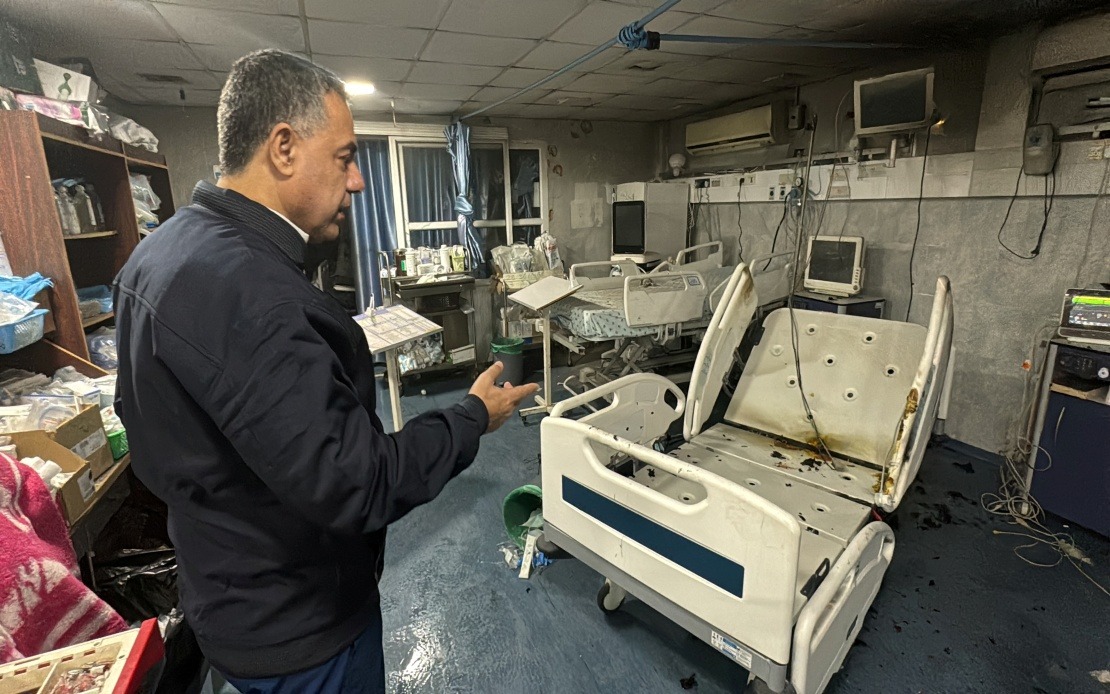
A prominent international medical human rights group has sounded an urgent alarm over the physical and mental condition of Dr Hussam Abu Safiya, the head of Kamal Adwan Hospital in northern Gaza, warning that his life may be in immediate danger whilst in detention in Israel's Nitzan Prison. The assertion comes after a legal representative of Physicians for Human Rights visited the detained hospital director on July 2 and documented evidence of severe trauma and deteriorating health since his transfer into custody.
According to the organisation's lawyer, Nasser Odeh, the visit revealed a deeply troubling picture of Dr Abu Safiya's current state. The physician bore fresh and serious injuries across his head, face, and neck regions, with pronounced bruising around his eyes, ears, and the sides of his neck that made his physical appearance difficult to recognise. Beyond visible trauma, Odeh documented additional medical concerns including laboured breathing and multiple episodes where Dr Abu Safiya lost consciousness during their meeting, raising questions about potential internal injuries or neurological complications.
The conditions under which Dr Abu Safiya was presented for this legal consultation further underscore concerns about his treatment. Prison authorities shackled both his hands and feet throughout the visit, whilst masked guards maintained a close presence around him. This level of restraint during a meeting with his legal representative is itself a point of contention for human rights monitors, who typically expect reduced security measures during privileged attorney-client communications.
Physicians for Human Rights, which has established itself as a critical independent monitor of medical ethics and detention practices throughout the Middle East conflict, has now formally renewed its demands for Dr Abu Safiya's immediate release. The organisation further called for the release of other healthcare workers whom it alleges are being held in detention without formal charges or access to proper legal proceedings, raising questions about due process protections in the broader detention system.
Naji Abbas, who heads the Prisoners and Detainees Department at the human rights organisation, characterised the lawyer's detailed account as among the most disturbing testimonies the group has documented since the conflict's intensification. Abbas highlighted particularly Dr Abu Safiya's own statement during the visit, in which the detained physician expressed genuine fear that he would be killed whilst remaining in custody. Such a statement from a medical professional under these circumstances carries significant weight in assessments of psychological distress and reasonable concern for personal safety.
The timeline of Dr Abu Safiya's deteriorating condition appears directly linked to his legal challenges against his detention. According to the human rights group's assessment, his physical and health situation worsened noticeably after he contested the continuation of his detention during a court proceeding, suggesting a possible causal connection between his exercise of legal rights and the subsequent deterioration. This pattern, Abbas argued, demonstrates the urgent need for an immediate and independent investigation into the circumstances of his confinement.
The implications of this case extend beyond one individual physician. For Southeast Asian observers and policymakers, the situation raises broader questions about detention standards, medical professional protections under international law, and the mechanisms through which civil society organisations can effectively monitor treatment of detainees in conflict zones. The detention of healthcare workers during active conflict presents particular complexity, as medical personnel typically occupy a protected status under international humanitarian law, though interpretations of that protection remain contested.
For Malaysia and the region, this case carries added relevance given ASEAN's stated commitment to humanitarian principles and the responsibility to protect civilians, including medical personnel. The treatment of healthcare workers in conflict situations has direct implications for humanitarian access, the functioning of medical systems in war zones, and ultimately the welfare of civilian populations who depend on healthcare infrastructure. When hospital directors face detention and alleged mistreatment, the broader healthcare system's capacity to serve affected populations becomes compromised.
Physicians for Human Rights Israel explicitly stated that Israeli authorities bear full legal and moral responsibility for the health, safety, and continued life of any individual placed in their custody. This assertion reflects established principles of international law regarding state responsibility for detainees. The organisation's call for urgent intervention appears designed to mobilise both international attention and pressure on authorities to ensure immediate medical assessment and appropriate care for Dr Abu Safiya.
The documentation by the organisation's lawyer represents an important accountability mechanism in contexts where detention conditions may be opaque and formal oversight limited. The detailed recording of physical injuries, health symptoms, and Dr Abu Safiya's psychological state provides contemporaneous evidence that can support future investigations or proceedings. For regional observers, this underscores the critical role that international and local human rights organisations play in monitoring detention practices and maintaining records when institutional safeguards may be insufficient.
The situation also highlights ongoing tensions in conflict zones regarding the balance between security concerns and humanitarian obligations. Whilst authorities in detention facilities maintain that security measures are necessary, human rights groups contend that the treatment documented crosses thresholds of acceptable practice and potentially violates international standards for humane treatment of detainees. This fundamental disagreement over appropriate detention practices remains central to broader debates about conflict management and civilian protection in the region.

