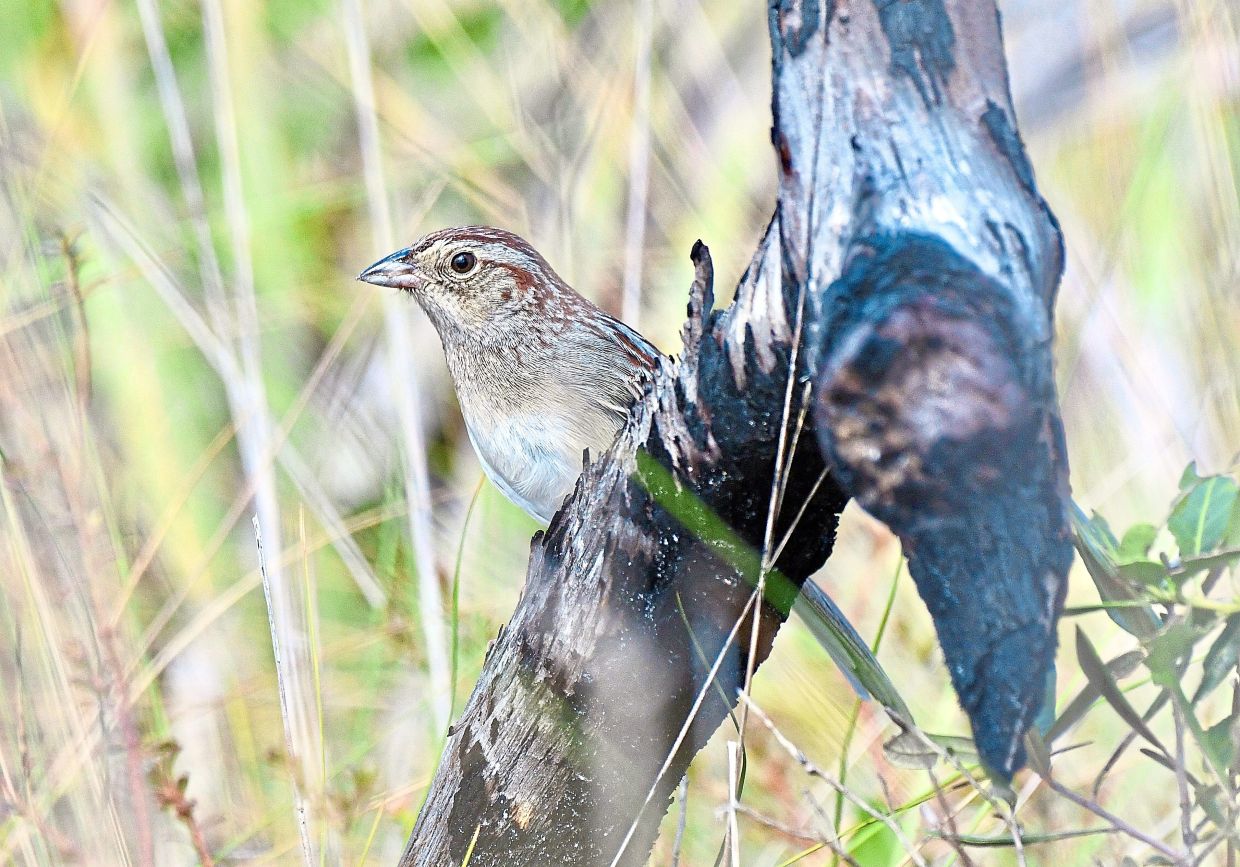
In the flatwoods of South Florida, diminutive brown Bachman's sparrows emerge from dense undergrowth to perch on pine branches and sing. Although the melodies sound remarkably similar to human listeners, individual populations of these birds employ up to 120 distinct song types, a vocal repertoire that rivals human linguistic diversity in scope. Like language itself, birdsong remains fluid across generations, with each cohort of birds consciously selecting which vocalizations to retain, refine, or abandon entirely. A single sparrow typically masters only 48 of the songs circulating within its community, leaving researchers with a compelling question: what determines which tunes young birds choose to adopt from their elders?
For decades, ornithologists have pursued this question by examining social and cultural variables. Young songbirds traditionally copy successful breeding males or those displaying elaborate physical ornamentation, suggesting that sexual selection and social hierarchies drive vocal learning. This framework has dominated the field, offering a plausible mechanism for understanding how bird cultures develop and change. Yet a new investigation into Bachman's sparrows, published in March 2026, introduces an entirely different variable into this equation: the surrounding landscape itself.
Researchers working with Florida Atlantic University's behavioral ecology programme propose that geography and weather patterns fundamentally alter how successfully sparrow songs travel through space. Dense trees, thick shrubs, and wind currents scatter or absorb certain sound frequencies, degrading some vocalizations more severely than others as they propagate across distances. The hypothesis suggests that young sparrows inherently avoid learning corrupted songs, creating a filtering mechanism through which environmental factors inadvertently shape which melodies persist in the population and which gradually disappear.
To test this theory, researchers recorded both rare and common Bachman's sparrow songs and then replayed them in various natural settings where the birds typically forage—among closely spaced trees, across exposed windy areas, and other acoustically challenging environments. The results proved striking: rarer song types consistently failed to transmit clearly through these conditions, while common songs retained their acoustic integrity. This distinction held even when comparing songs of identical structural design, suggesting that degradation itself—not inherent musical differences—influenced their survival rates.
The acoustic adaptation hypothesis underlying this work extends beyond sparrows. Nature offers numerous examples of how habitat shapes animal communication. Howler monkeys in dense tropical rainforests employ low-frequency bellows that penetrate vegetation effectively, while tree frogs living beside rushing streams have evolved piercing croaks capable of cutting through ambient water noise. In each case, environmental pressures appear to select for vocalizations that overcome local acoustic challenges. Yet the scientific record remains mixed; a comprehensive analysis of 5,085 songbird species suggested that sexual selection—not environmental acoustics—may constitute the primary driver of vocal variation, complicating any single-factor explanation.
Even within Bachman's sparrows, acoustic clarity may represent merely one component of a vastly more intricate system determining which songs younger birds choose to imitate. Rindy Anderson, the Florida Atlantic researcher leading the project, acknowledged that social and cultural mechanisms likely carry equivalent weight in shaping vocal traditions. The interplay between environmental filtering, sexual selection, and cultural transmission remains poorly understood, with each factor potentially amplifying or diminishing the influence of others depending on local conditions.
The significance of this discovery lies partly in its methodological rigor. Previous experiments with other songbird species hinted that birds preferentially learn undegraded songs, but controlled laboratory settings could not fully replicate the complex acoustic environment in which birds naturally develop. By conducting field-based studies, researchers demonstrated that environmental degradation shapes learning choices in realistic conditions—a distinction that validates the acoustic adaptation hypothesis while acknowledging substantial scientific uncertainty.
David Wheatcroft, an ornithologist at Stockholm University not involved in the research, observed that the finding achieves logical consistency: songs failing to transmit effectively through habitat should prove harder to learn and thus rarer in populations. Yet he noted the counterintuitive aspect—that researchers managed to isolate acoustic degradation as a significant variable despite countless other factors potentially influencing song rarity. This methodological accomplishment opens avenues for investigating how different environmental variables interact to shape avian vocal cultures across geographic regions.
For tropical Asia and Southeast Asia, this research carries implications as habitat degradation accelerates across the region. As forests fragment and urban noise intensifies, bird populations face altered acoustic environments that may reshape vocal traditions within single generations. Species-specific song dialects that have persisted for centuries could shift dramatically, with some regional variants potentially disappearing as environmental noise and habitat loss degrade their acoustic transmission. Understanding these mechanisms becomes crucial for conservation efforts aimed at preserving both biodiversity and the complex cultural knowledge embedded within animal populations.
The broader implications extend to human understanding of how evolution operates beyond genetic mechanisms. Cultural evolution in animals—including birdsong variation—responds to environmental pressures just as genetic traits do, yet through pathways involving learning, choice, and social transmission. This research suggests that habitat modification and climate change affect wildlife not merely through direct physiological stress, but through more subtle mechanisms altering the transmission and preservation of learned behaviors across generations. As Malaysia and neighbouring nations navigate rapid environmental change, recognizing these pathways becomes essential for predicting how wildlife populations will adapt.
Anderson emphasized that acoustic factors represent a single piece within a substantially larger puzzle governing birdsong evolution. The interplay between environmental acoustics, sexual selection, social learning, and cultural transmission likely varies across species and habitats, defying any universal explanation. Yet by documenting how physical environment influences which songs propagate effectively, researchers have added critical nuance to theories of vocal learning and cultural change. The Bachman's sparrow study thus exemplifies how biological research conducted in specific local contexts can illuminate broader principles governing how animals communicate, learn, and transmit knowledge across time.

