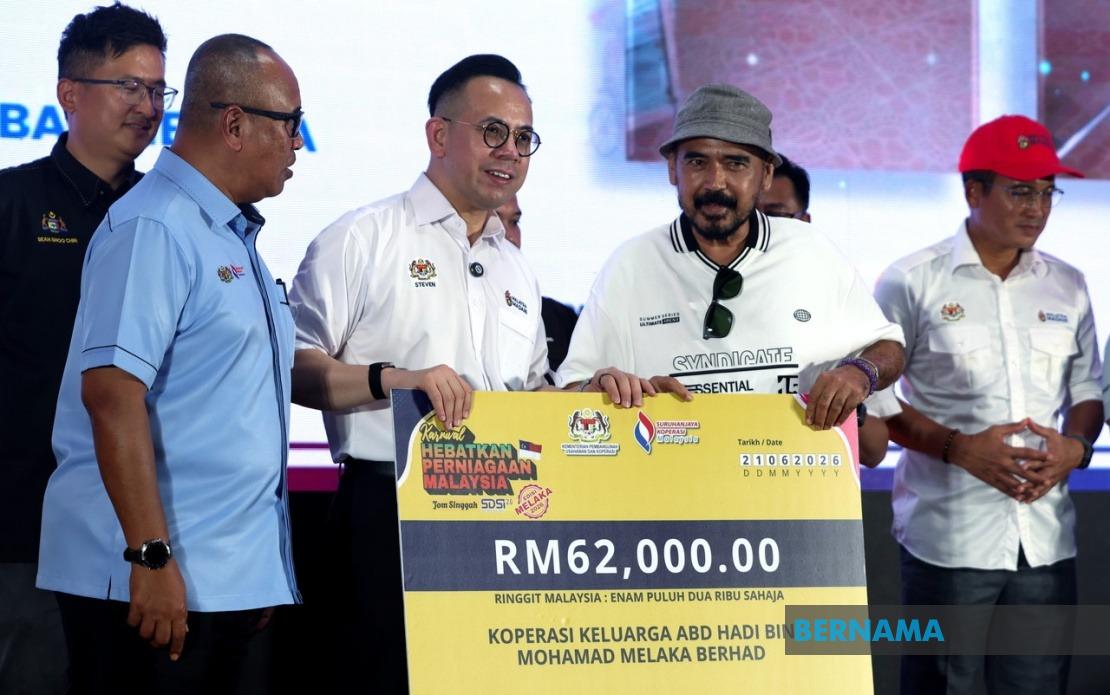
The Empowering Malaysian Businesses Carnival 2026 (HPM 2026) wrapped up its three-day run in Melaka with impressive results, generating RM8.45 million in aggregate business matching value and financing potential. Organised by the Ministry of Entrepreneur Development and Cooperatives (KUSKOP), the carnival ran from June 19 to 21 and demonstrated strong market interest in entrepreneurship support initiatives across Malaysia's business community.
The event's reach extended beyond formal business transactions. More than 70,000 visitors passed through the carnival venue, indicating substantial public engagement with the initiatives designed to strengthen Malaysia's enterprise ecosystem. Beyond networking opportunities, entrepreneurs and traders achieved direct product sales totalling RM532,802.77, providing immediate revenue uplift for participating vendors and reflecting consumer appetite for locally-produced goods showcased at such gatherings.
The core business-matching component proved particularly effective. A total of RM6.4 million in matching value emerged from 72 dedicated sessions that paired 25 prospective entrepreneurs with established business networks and investment opportunities. This structured approach to facilitating connections demonstrates how organised platforms can accelerate deal-making and reduce friction in accessing business partnerships that might otherwise take considerably longer to materialise through conventional channels.
Financing accessibility, a critical bottleneck for Malaysian micro, small and medium enterprises, also received meaningful attention. Fifty-five MSMEs participated in dedicated financial interaction sessions, collectively identifying RM2.05 million in potential financing arrangements. This component addresses a persistent challenge in Malaysia's entrepreneurial landscape, where access to capital frequently constrains growth ambitions even among viable, well-managed operations.
The Melaka carnival represents the third instalment in the HPM 2026 series, with momentum building toward subsequent events. KUSKOP has already scheduled the next carnival for Penang, slated for July 17 to 19 at the Penang Waterfront Convention Centre (PWCC). This progression across major Malaysian cities reflects a deliberate geographic strategy to ensure entrepreneurial support reaches diverse regional economies and business ecosystems beyond the Klang Valley.
The HPM initiative itself forms part of a broader strategic agenda championed by KUSKOP Minister Steven Sim Chee Keong. The carnival infrastructure supports implementation of the ABCD framework—an acronym encompassing Accelerating Productivity, Bureaucracy Reduction, Capital Accessibility and Developing Market Access. This comprehensive approach recognises that entrepreneurial success requires simultaneous intervention across multiple dimensions: operational efficiency, regulatory simplification, financial resources and market opportunity.
The carnival model itself warrants examination as policy implementation. By consolidating business matching, financing interactions, direct sales opportunities and ministerial support within unified events, KUSKOP creates high-efficiency touchpoints where entrepreneurs encounter multiple value streams simultaneously. This concentrated approach reduces transaction costs for participants compared to pursuing various government support mechanisms through separate channels and agencies.
For Malaysian SMEs specifically, the availability of such platforms carries particular significance. The domestic MSME sector comprises millions of enterprises operating across diverse sectors, yet many remain disconnected from formal business networks and financial institutions. Carnivals like HPM 2026 provide accessible on-ramps for operators who might lack resources or networks to independently navigate institutional environments. The RM2.05 million in identified financing potential suggests genuine banking and lending appetite exists for qualifying MSME propositions when structured introductions occur.
The direct sales component—RM532,802.77 across three days—deserves particular attention for what it reveals about consumer behaviour. The carnival environment apparently created conditions conducive to purchase decisions that mightnot occur through conventional retail or e-commerce channels. This implies that experiential, in-person business events retain relevance in an increasingly digital commercial landscape, particularly for building consumer trust in locally-produced products and supporting emerging brands seeking market penetration.
Geographically, the Melaka event's success establishes momentum for the Penang instalment and suggests potential for expanded carnival series covering other major Malaysian centres. Penang's positioning as a northern economic hub, combined with its established reputation as a trading and light manufacturing centre, creates natural synergies with entrepreneurship initiatives. The PWCC venue selection indicates KUSKOP is securing established convention infrastructure rather than relying on temporary installations, suggesting institutional commitment to the carnival model as a sustained policy instrument.
The HPM 2026 series ultimately reflects recognition that Malaysian economic policy increasingly emphasises direct engagement with SME stakeholders rather than purely top-down regulatory instruments. The carnival approach embodied this philosophy, creating spaces where entrepreneurs, financiers, government agencies and customers interact organically around shared interests. For Malaysia's development trajectory, particularly as the nation navigates middle-income challenges requiring increased productivity and innovation, such platforms connecting capital, networks and markets to dispersed entrepreneurial talent represent meaningful infrastructure investments beyond conventional government spending.

