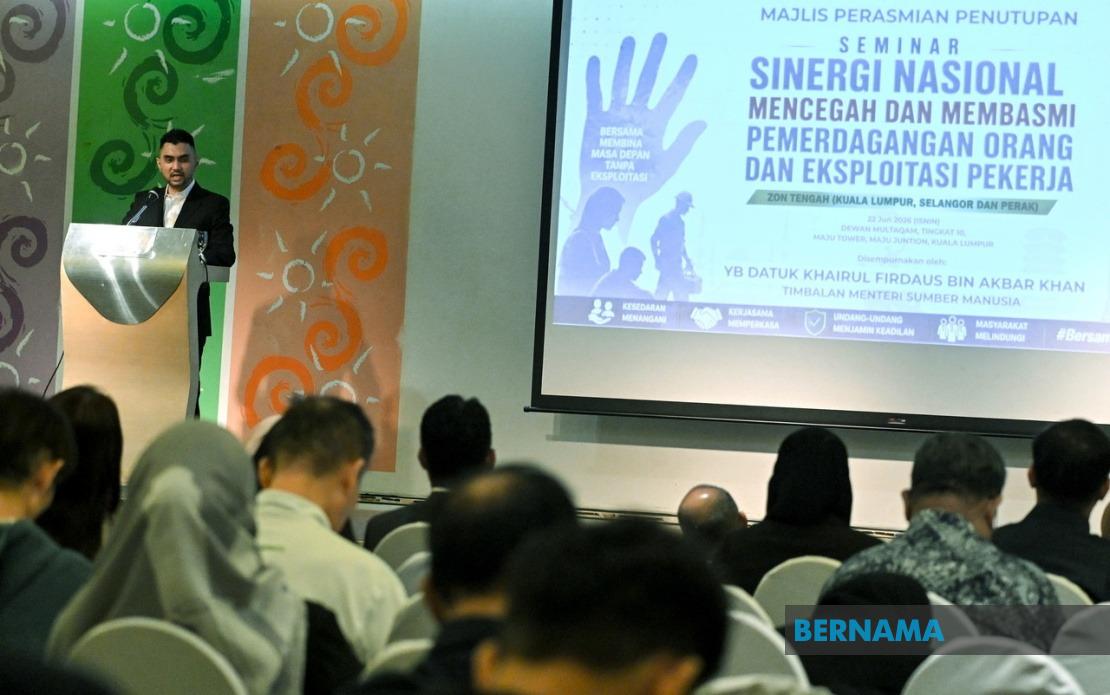
Malaysia's efforts to combat human trafficking and forced labour appear to be showing measurable results, with the number of victims rescued declining sharply over the past three years. According to data presented by Deputy Human Resources Minister Datuk Khairul Firdaus Akbar Khan at a national seminar in Kuala Lumpur on June 22, the Peninsular Malaysia Manpower Department documented 70 rescued victims in 2023, a figure that contracted to just 10 in 2024. This year has seen initial momentum with 17 rescues in early 2025, followed by only four cases through May 2026, suggesting either genuine progress or a shifting pattern in how trafficking networks operate within the country.
The government attributes this encouraging downward trajectory to the cumulative effect of multiple enforcement and prevention initiatives implemented across various agencies and jurisdictions. Datuk Khairul Firdaus emphasised that the declining rescue figures reflect the success of coordinated anti-trafficking campaigns and heightened awareness among law enforcement personnel, employer groups, and the general public. The figures represent cases where authorities actively identified and extracted individuals from exploitative situations, ranging from illegal work arrangements to conditions tantamount to modern slavery.
However, the Deputy Minister himself cautioned against unbridled optimism about these statistics. He acknowledged a critical blind spot in Malaysia's anti-trafficking framework: many victims remain hidden from official records because their situations go unreported either to authorities or to civil society organisations equipped to document them. This dark figure problem—the gap between recorded and actual incidents—is particularly acute in sectors characterised by migrant labour, informal employment networks, and isolated working environments such as agriculture, construction, and domestic service. The true scale of human trafficking in Malaysia may be substantially larger than official figures suggest, creating a false sense of security among policymakers.
To address trafficking comprehensively, the government has undertaken a nationwide campaign of labour-related enforcement operations. Between January and May 2026 alone, authorities conducted 386 enforcement operations with a labour-exploitation focus across the country. These operations generated 311 formal investigation papers, indicating that each enforcement action uncovered potential violations worthy of deeper scrutiny. This scale of enforcement activity represents a significant mobilisation of resources and institutional attention, suggesting that combating trafficking and forced labour has become embedded within Malaysia's broader labour inspection and workplace compliance framework.
Malaysia's anti-trafficking commitment extends beyond domestic initiatives to international cooperation mechanisms. The government has ratified protocols under the International Labour Organisation framework and is working to harmonise its enforcement actions with global standards on forced labour. This alignment matters because human trafficking networks operate across borders, and unilateral efforts prove insufficient without coordinated action among neighbouring countries and trading partners. Malaysia's participation in ILO protocols signals to international investors, trading partners, and civil society that the country takes seriously its obligations to eliminate exploitative labour practices.
The National Synergy Seminar on Preventing and Eradicating Human Trafficking and Labour Exploitation represents one component of a broader consciousness-raising strategy. The seminar series, which has travelled across multiple regions of Peninsular Malaysia, aims to educate stakeholders about the forms human trafficking takes, the vulnerability factors that put individuals at risk, and the reporting mechanisms available to potential witnesses. The North Zone seminar in Sungai Petani, Kedah on May 18 and the South Zone programme in Kluang, Johor on June 8 preceded the Central Zone event, collectively engaging almost 1,000 participants drawn from government agencies, employers, non-governmental organisations, and community leaders.
These regional seminars serve multiple strategic purposes within Malaysia's anti-trafficking infrastructure. They disseminate knowledge about warning signs and victim identification procedures, build networks among enforcement agencies and civil society groups that might otherwise operate in silos, and create reporting pathways that empower ordinary citizens to become part of the solution. Participants gain exposure to case studies and best practices, learning how trafficking manifests across different sectors and demographic groups. For Malaysian readers, understanding these seminar series matters because awareness campaigns designed to equip communities with information represent a crucial complement to law enforcement efforts.
The effectiveness of any anti-trafficking strategy ultimately depends on the capability and coordination of multiple actors. Malaysia's approach integrates labour department enforcement, criminal investigation, workplace inspection regimes, and community awareness into a theoretically comprehensive response architecture. The declining victim rescue numbers could reflect genuine success in deterring trafficking networks, improved victim identification within formal sectors, or a retreat of trafficking activity to more clandestine forms less likely to trigger law enforcement intervention. Without richer data on trafficking prevalence, vulnerability patterns, and victim demographics, it remains difficult to interpret the trend with certainty.
For Malaysian workers and families with members in higher-risk sectors or those contemplating overseas employment, the persistence of trafficking and forced labour creates real dangers. The government's enforcement activities and awareness campaigns provide some assurance that authorities are actively monitoring workplaces and responding to suspected violations. However, the acknowledged gap between reported and actual cases underscores the importance of personal vigilance, community networks that share information about unsafe employers, and access to support services for workers who experience exploitation. Knowledge of rights, familiarity with reporting channels, and connections to trustworthy advisors represent crucial protective factors that individuals and families can cultivate.
The regional dimension of Malaysia's anti-trafficking work deserves consideration as well. Many trafficking victims in Malaysia originate from neighbouring countries, while some Malaysian nationals experience trafficking abroad. Effective regional cooperation, mutual legal assistance, and harmonised labour standards across Southeast Asia would strengthen protections and reduce incentives for networks to exploit cross-border vulnerabilities. Malaysia's international engagement on these issues therefore has implications extending beyond national borders to affect the wellbeing of workers throughout the region.
Moving forward, Malaysia faces the challenge of sustaining enforcement momentum while expanding victim identification and support services. The declining rescue figures, interpreted generously, suggest that preventive efforts may be working. Yet the persistent possibility of unreported cases demands continued investment in awareness-raising, worker education, and institutional capacity-building among frontline enforcement personnel. The government's stated commitment to combating forced labour through ILO alignment and coordinated enforcement represents a framework within which further progress can be measured and achieved.

