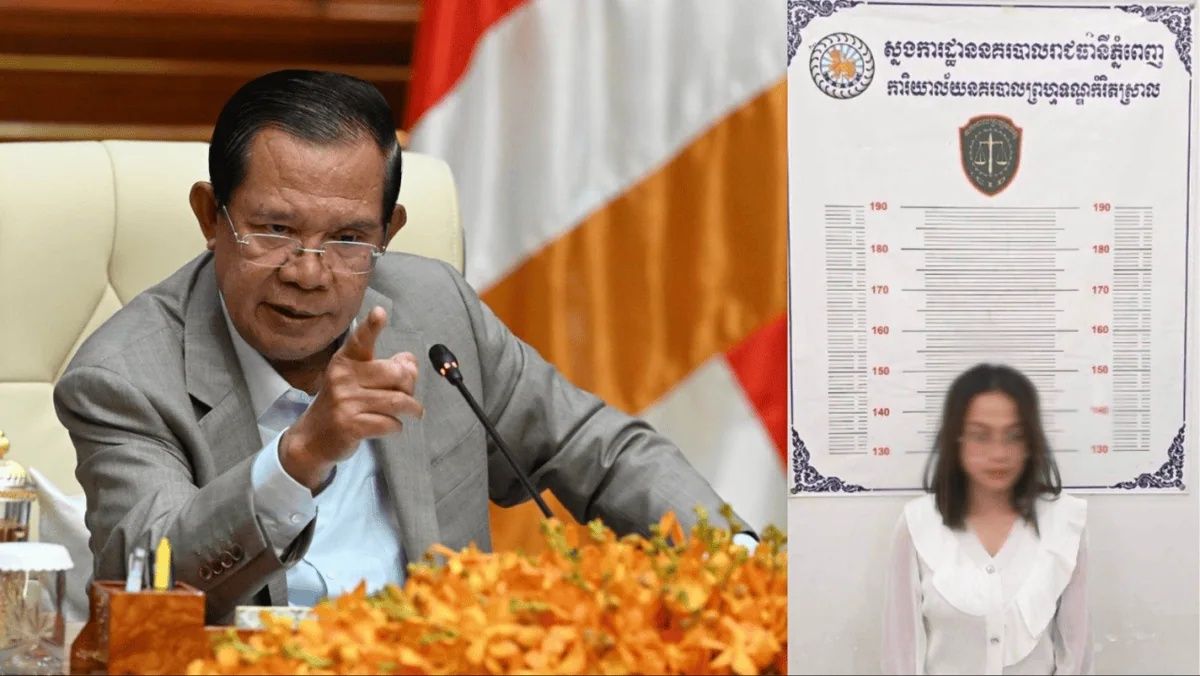
Cambodia's Senate president Hun Sen has ordered the National Council for Women and the Ministry of Women's Affairs to serve as plaintiffs in legal proceedings against individuals deemed to have used offensive language that diminishes women and compromises Khmer cultural values. The directive emerged during an August 14 meeting between Hun Sen and representatives of the council, signalling a new government emphasis on prosecuting what officials characterise as breaches of social propriety and national dignity through verbal conduct.
The move reflects growing concerns within Cambodia's leadership about the use of abusive language in public discourse, particularly against state representatives and uniformed personnel. Hun Sen drew attention to a recent case involving an unnamed woman accused of using foul language to denigrate government bodies and state employees, noting that authorities had already brought her and her husband in for questioning and secured a formal written apology. This intervention suggests Cambodian officials view such incidents not merely as personal disputes but as matters of state concern warranting official intervention.
A second case cited by Hun Sen involved a woman identified as Chenda Sovannary, who allegedly engaged in a verbal confrontation with a military soldier during a disagreement surrounding a mobile phone transaction. Hun Sen expressed bewilderment at what he characterised as disproportionate disrespect, questioning why any woman would direct insulting remarks at a soldier over such a mundane commercial matter. He expanded his critique beyond military personnel, asserting that derogatory language toward construction workers or other ordinary citizens similarly warranted legal consequences, positioning the issue as a broader matter of social cohesion rather than isolated incidents.
Hun Sen's position on the matter attempts to frame protective legislation as morally neutral rather than repressive. He argued that enforcing standards of respectful public conduct parallels the content moderation policies that major technology companies voluntarily implement through their community guidelines and ethical standards. This comparison suggests that Hun Sen views his government's proposed mechanisms as analogous to private sector self-regulation rather than state suppression. However, critics may perceive a distinction between voluntary corporate policies and state-mandated legal prosecution, particularly in a Southeast Asian context where press freedom concerns remain pronounced.
The Senate president specifically instructed the National Council for Women to establish dedicated monitoring teams focused on identifying and tracking cases involving insulting or profane language on social media platforms, particularly Facebook, which remains the dominant social networking service across Cambodia. This surveillance mechanism reflects the government's intention to extend oversight into digital spaces where younger Cambodians increasingly conduct public discourse. The emphasis on social media monitoring underscores concerns about the difficulty of containing potentially inflammatory speech in an era of rapid information dissemination.
To operationalise these enforcement mechanisms, Hun Sen mandated collaboration among multiple state institutions including the Ministry of Interior, the Ministry of Information, the Ministry of Culture and Fine Arts, and the Ministry of Post and Telecommunications. This inter-ministerial coordination suggests the government views the initiative as a comprehensive governance matter rather than a narrowly focused women's rights initiative. The breadth of institutional involvement indicates that enforcement will touch on law enforcement, public communications, cultural stewardship, and telecommunications regulation simultaneously.
Hun Sen characterised the proposed legal framework as defending rather than restricting fundamental rights. He asserted that measures to preserve women's dignity and national values should not be misinterpreted as authoritarian governance, instead presenting them as necessary protective actions in keeping with international norms and practices. This rhetorical positioning attempts to preempt criticism from civil society organisations and international observers who have historically scrutinised Cambodia's approach to freedom of expression.
The directive raises significant questions about the boundaries between legitimate governance and potential overreach in defining and enforcing social norms. While protecting individuals from harassment represents a recognised policy objective, the vagueness of terms such as "social morality" and "national dignity" creates interpretive ambiguity that could extend legal consequences beyond clearly harmful conduct. The practical application of such laws may depend heavily on the discretion of prosecutors and judges, potentially creating disparities in enforcement.
For Malaysia and other Southeast Asian nations observing Cambodia's legal development, this initiative reflects broader regional tensions between promoting social cohesion and protecting individual expression rights. Cambodia's approach differs from Malaysia's existing defamation and sedition frameworks but shares similar concerns about preserving social stability and respect for state institutions. The case demonstrates how different Southeast Asian governments navigate comparable questions about the proper scope of legal regulation over public discourse.
The involvement of the National Council for Women as a plaintiff in prosecution cases represents an unusual institutional role, transforming what might traditionally be classified as a criminal or defamation matter into a women's rights protection mechanism. This framing potentially shifts the legal and political dynamics of such cases, allowing the council to exercise prosecutorial discretion beyond its typical advisory functions. Whether this expanded role effectively protects vulnerable women or simply provides the state with additional enforcement channels remains contested.
Cambodia's experience with such directives illustrates the complex relationship between democratic governance and social regulation in post-conflict societies. Hun Sen's emphasis on national dignity and social values reflects the Cambodian government's continued preoccupation with maintaining social stability in a country that experienced severe conflict and remains in a delicate state of political equilibrium. Whether these legal mechanisms genuinely address women's safety concerns or serve broader political objectives will likely emerge through implementation patterns over coming months.

