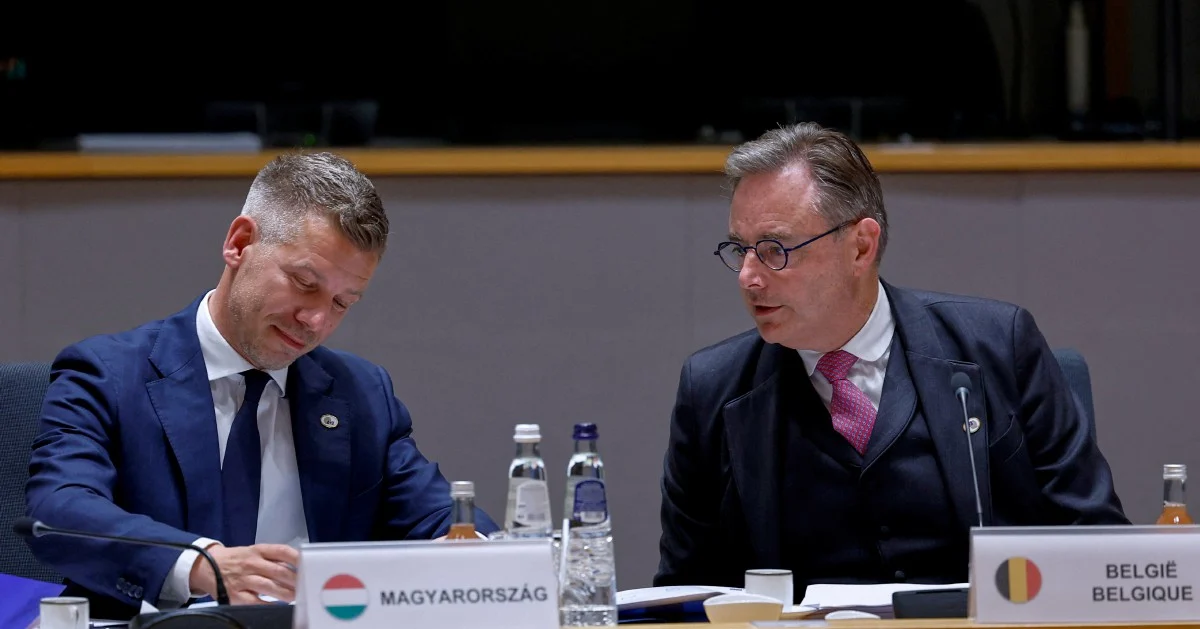
Hungary is poised to adopt sweeping anti-corruption legislation as Prime Minister Peter Magyar pursues an ambitious reformist agenda, with the immediate goal of persuading Brussels to release substantial financial allocations that have been frozen due to longstanding governance issues.
The parliamentary vote scheduled for Tuesday represents a critical juncture in Magyar's effort to reset relations with EU institutions and member states that have grown increasingly frustrated with Budapest's handling of judicial independence and rule-of-law standards. The new measures are designed to signal a genuine commitment to institutional transparency and accountability—issues that have plagued Hungary's standing within the European bloc for several years.
These funds, which amount to billions of euros, have been subject to withholding mechanisms within the EU's budget framework. Brussels has employed financial pressure as leverage to encourage member states to strengthen their democratic institutions and combat corruption effectively. For Hungary, unlocking this capital is essential not only for economic development but also for restoring diplomatic credibility within the Union's decision-making structures.
Magyar's ascension to the premiership itself signals a potential shift in Hungary's political trajectory. His reform-focused platform contrasts with approaches that prioritized nationalist narratives and centralised executive power. The anti-corruption legislation being advanced under his administration reflects an apparent recognition that sustaining EU membership and accessing EU resources requires demonstrable alignment with Union values, particularly regarding judicial independence, transparency, and the rule of law.
The specifics of the proposed measures appear designed to address concerns that have been raised systematically by EU institutions and watchdog organisations. These typically include strengthening mechanisms for prosecuting public officials accused of graft, enhancing financial disclosure requirements, and establishing more robust oversight of government contracting processes. Such reforms, if properly implemented, could address the structural weaknesses that have historically allowed corruption to flourish within Hungarian governance.
For Southeast Asian observers, Hungary's predicament offers instructive parallels. Many regional governments have faced similar EU or international scrutiny regarding corruption and institutional quality. The mechanism by which Brussels has withheld funding—using financial incentives to encourage democratic reform—represents a significant enforcement tool that international bodies in Asia largely lack. The European approach demonstrates how transnational organisations can leverage economic interdependence to encourage compliance with governance standards.
The timing of these reforms also carries regional implications. Hungary's reinvigoration of anti-corruption efforts could influence the broader EU trajectory on governance issues, potentially affecting how strictly Brussels applies its standards across all member states. This may have downstream effects on EU policy toward third countries, including those in Southeast Asia seeking closer trade and investment relationships with the bloc.
Magyar's administration appears conscious that legislative reforms alone will not suffice. Implementation and enforcement of anti-corruption measures remain critical. EU institutions have repeatedly noted that many countries possess legally sound frameworks that fail in execution. The credibility of Hungary's reform effort will ultimately depend on whether these measures translate into tangible prosecutions, asset recovery, and institutional behavioural change rather than remaining symbolic gestures.
The parliamentary approval expected Tuesday will mark the beginning rather than the conclusion of Hungary's reform trajectory. Brussels and other EU member states will monitor whether the anti-corruption apparatus functions independently and whether it holds powerful figures accountable regardless of political affiliation. The genuine test will emerge over months and years as these institutions operate within their new legal parameters.
Beyond the immediate financial considerations, Hungary's anti-corruption drive reflects broader pressures within the EU regarding institutional divergence. Wealthier Western European member states have grown concerned about governance gaps that might undermine the Union's collective credibility on the international stage. By advancing anti-corruption measures, Magyar positions Hungary as willing to converge toward European norms rather than charting an increasingly isolated institutional path.
For Malaysian and other Southeast Asian readers engaged in regional governance debates, Hungary's experience underscores how international institutional pressures and financial incentives shape domestic policy reform. The EU's ability to withhold funds and condition continued membership benefits on governance improvements represents a mechanism that Asian regional organisations have not developed with comparable force. This difference partly explains why governance convergence occurs more readily within the EU framework.
The Hungarian parliament's expected approval of these measures therefore carries significance well beyond Budapest. It demonstrates that sustained international pressure, when coupled with domestic political realignment, can produce tangible shifts in institutional direction. Whether these changes prove durable and consequential will inform ongoing international debates about corruption, governance, and the mechanisms through which transnational bodies encourage compliance with shared standards.

