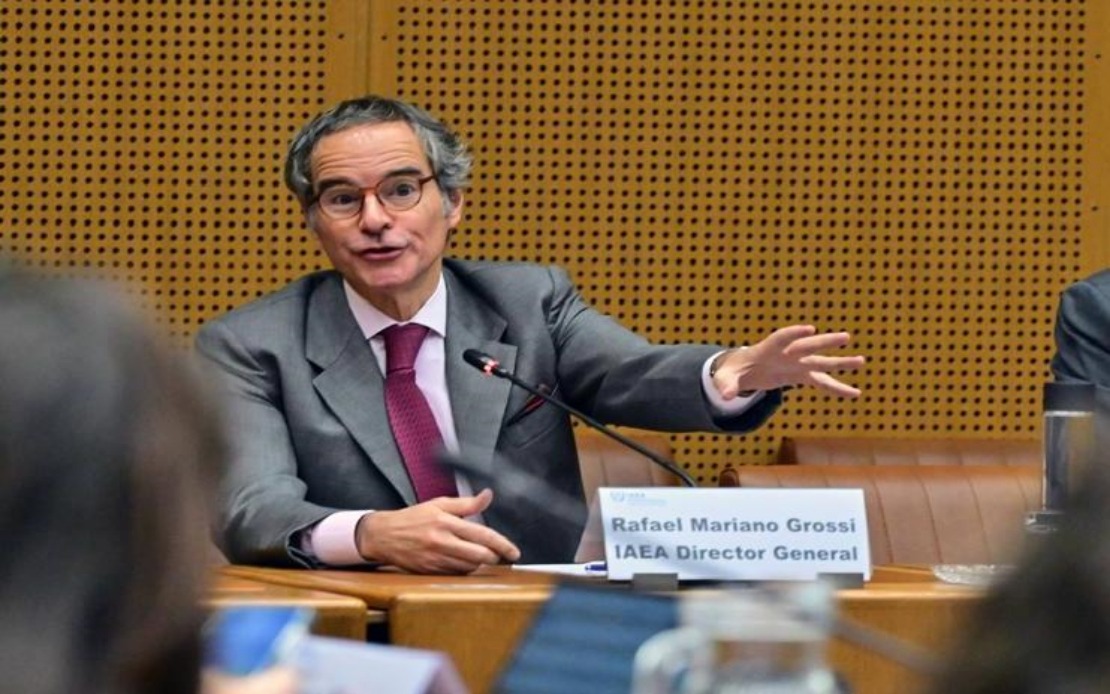
The chief of the United Nations' nuclear regulatory body has made an urgent appeal for sustained diplomatic engagement as American and Iranian representatives converge on Switzerland for consequential direct negotiations. International Atomic Energy Agency Director General Rafael Mariano Grossi underscored the necessity of allowing diplomatic channels to function freely at what he described as a pivotal moment in international relations, signalling the UN agency's commitment to the process unfolding on the global stage.
Grossi, speaking through social media platform X, highlighted the critical juncture facing the two nations and their international interlocutors. His intervention reflects the IAEA's institutional stake in any eventual nuclear settlement between Washington and Tehran, organisations that have been locked in escalating tensions over Iran's atomic programme for nearly two decades. The timing of Grossi's statement was deliberate, arriving just hours before the scheduled Sunday talks in Burgenstock were set to commence, demonstrating the nuclear watchdog's desire to shape the negotiating atmosphere.
The IAEA director travelled to Burgenstock to meet with Swiss Foreign Minister Ignazio Cassis, using the occasion to review the trajectory of recent developments regarding Iran's nuclear activities and to assess how the UN agency might contribute meaningfully to the forthcoming negotiations. During these discussions, Grossi expressed gratitude for Switzerland's historical backing of the IAEA's work and commended the Alpine nation's unwavering commitment to multilateral problem-solving at a time when such commitment has become increasingly rare among major powers.
Swiss diplomacy, long a cornerstone of international mediation efforts, played a facilitating role in the lead-up to the direct talks. Cassis separately engaged with Iranian Foreign Minister Abbas Araghchi ahead of the Sunday meeting, positioning Switzerland as an honest broker capable of bridging the substantial gap between American and Iranian positions. The Swiss government's willingness to host such sensitive negotiations reflects both its diplomatic tradition and its strategic neutrality, qualities that have made the country an attractive venue for resolving intractable international disputes.
The groundwork for these talks was laid through an unexpected development on Wednesday, when US President Donald Trump and Iranian President Masoud Pezeshkian signed the Islamabad Memorandum of Understanding, creating the diplomatic conditions necessary for the delegations to sit across from one another in direct conversation. This accord, struck in Pakistan's capital, represented a significant shift in the tone and tenor of bilateral relations, though observers cautioned that signing agreements and implementing substantive policy changes remain distinct endeavours.
The timing holds particular significance for Southeast Asia and the broader Indo-Pacific region, where any resolution of US-Iran tensions carries implications for regional stability and international commerce. Maritime trade corridors connecting Asia to Europe traverse waters where Iranian naval forces operate, and any escalation in American-Iranian hostilities invariably affects shipping costs and security for nations like Malaysia that depend heavily on unrestricted global trade. Conversely, a diplomatic breakthrough could restore predictability to energy markets and reduce insurance premiums on commercial vessels traversing sensitive waterways.
For Malaysia specifically, the outcome of these negotiations matters on multiple registers. As a Muslim-majority nation with substantial commercial ties to both Western powers and the Islamic Republic, Malaysia has historically maintained a balanced posture in international affairs. A stable resolution in the nuclear standoff would strengthen the broader architecture of international law and the non-proliferation regime, institutions on which smaller nations like Malaysia depend for protection against more powerful neighbours and for the enforcement of rules-based order in regional affairs.
The Islamabad Memorandum represented an extraordinary moment of diplomatic movement in a bilateral relationship that had appeared frozen for years. Yet international observers tempered their enthusiasm with caution, noting that signings of preliminary agreements often mask disagreements on implementation, sequencing of measures, and verification mechanisms. The Swiss talks would test whether the goodwill implied by the Pakistan accord could translate into substantive progress on the contentious specifics of Iran's nuclear programme, international inspections, and the phased relief of economic sanctions.
Grossi's emphasis on affording diplomacy every opportunity to flourish carried a subtext of urgency. Should these negotiations collapse, the alternative trajectories—further military escalation, economic sabotage, or technological escalation in Iran's atomic work—posed risks not merely for the two principals but for global security writ large. The IAEA chief's intervention was thus not merely symbolic but reflected genuine concern within the international community that this window of negotiating opportunity might prove brief and unrepeatable.
The composition and mandate of the delegations arriving in Burgenstock would prove revealing in determining whether serious negotiation would occur or whether the gathering represented theatre masking continued deadlock. Technical experts from both sides, if meaningfully engaged rather than merely present, could identify practical pathways forward on issues of enrichment levels, stockpile declarations, and inspection access that have poisoned the relationship for years. The presence or absence of flexibility on these technical questions would signal to observers whether the diplomatic opening held genuine prospects for meaningful accord.
Swiss hosting of such talks also reflected broader shifts in international mediation, as traditional great power brokers find their influence diminished by polarisation and mistrust. Switzerland's careful cultivation of relationships across ideological divides, combined with its institutional memory of successful past negotiations, positioned it as an actor capable of facilitating progress when others could not. The country's role in these talks illustrated how middle powers and neutral nations retain crucial functions in an increasingly fragmented international system.

