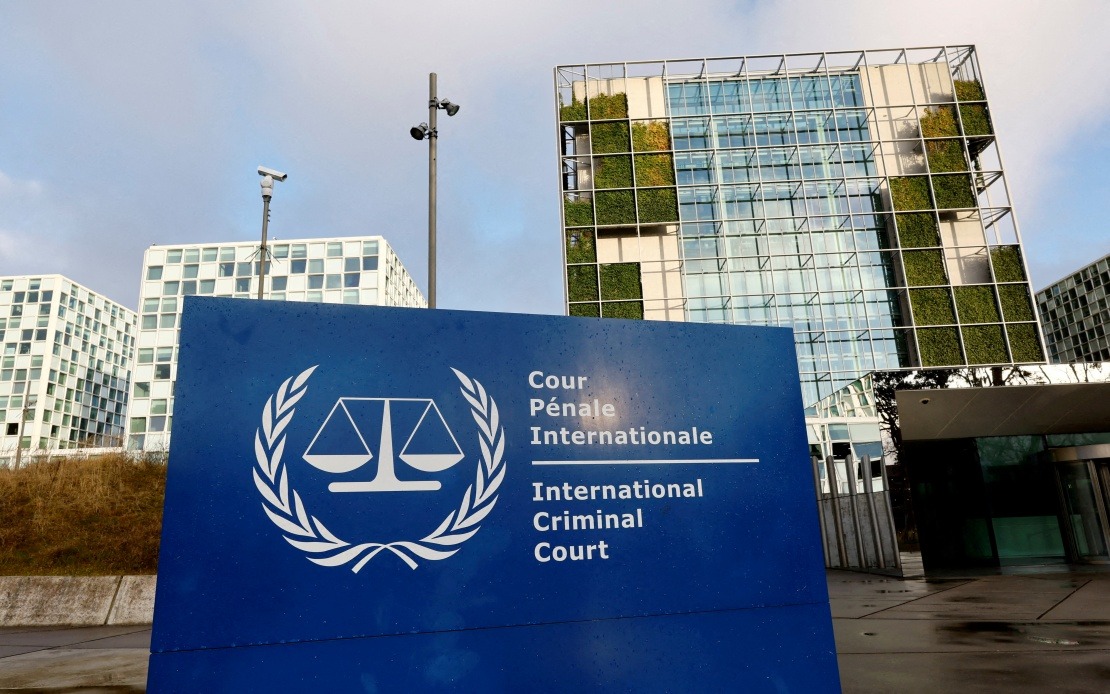
The International Criminal Court issued a forceful rebuke on Wednesday after the United States imposed fresh sanctions against the institution's top leadership, marking an escalation in tensions between Washington and the Hague-based tribunal. The latest round of American penalties targets ICC President Tomoko Akane of Japan and Abdoulaye Seye, a senior trial lawyer in the prosecutor's office. The court's response was unequivocal, characterizing the measures as a "flagrant attack" on the judicial institution's fundamental independence.
With these new designations, the scope of US sanctions against ICC personnel has expanded considerably. Nine of the court's eighteen judges, both deputy prosecutors, a former chief prosecutor, and one additional staff member now face American financial penalties. The accumulation of targeted individuals underscores a sustained campaign by Washington to pressure the institution, raising questions about the long-term sustainability of the court's operations and its ability to attract personnel.
The ICC's statement positioned the sanctions as not merely an attack on individual officials but as a direct threat to the institutional framework upon which international justice depends. The court emphasized that it operates with a mandate granted by its States Parties—a coalition spanning multiple regions and political alignments. By targeting judges and prosecutors for executing their official duties, the court argued, the United States undermines the legitimacy of international legal mechanisms and jeopardizes the broader international order built on law rather than force.
For Malaysia and Southeast Asian nations, this dispute carries significant implications. Several ASEAN members are ICC States Parties, meaning they have formally committed to supporting the court's jurisdiction and accountability mechanisms. The tension between the United States and the ICC creates diplomatic complications for regional countries that maintain defence and security relationships with Washington while also being bound by Rome Statute obligations. This dynamic forces policymakers to navigate between competing geopolitical and legal commitments.
The ICC further warned that such coercive measures have cascading consequences that extend beyond the institution itself. When threats and economic pressure are deployed against court personnel, the court maintained, victims of international crimes lose confidence in their ability to access justice. This is particularly acute for survivors of mass atrocities who have exhausted domestic remedies and turned to the ICC as a mechanism of last resort. The court's concern reflects a genuine tension: sanctions against prosecutors and judges can deter capable individuals from serving the institution, potentially degrading its capacity to investigate and prosecute serious crimes.
The dispute also illuminates broader questions about how powerful states interact with international institutions they did not ratify or do not control. The United States, which signed the Rome Statute in 2000 but never ratified it, retains the ability to impose unilateral sanctions on ICC officials. This asymmetry—where non-member states can effectively punish member states and their institutions—challenges the legitimacy and effectiveness of multilateral frameworks designed to constrain state behaviour through law.
The court's statement included a reaffirmation of its commitment to "independence and impartiality," echoing language from the Rome Statute that established its legal foundations. This rhetorical stance serves multiple purposes: it reassures States Parties that the institution remains committed to neutral adjudication, it demonstrates that external pressure will not alter the court's judicial reasoning, and it appeals to international law constituencies beyond government circles. The ICC's reference to support from member states, civil society organizations, and international law advocates signals that it retains constituencies willing to defend its legitimacy despite American opposition.
The timing and nature of these sanctions reflect long-standing American concerns about ICC jurisdiction over its own nationals and allies. Previous controversies involved ICC investigations into situations affecting American personnel and Israeli officials. The targeting of the court's current leadership suggests that Washington views the institution as sufficiently independent—or obstructionist from its perspective—to warrant economic coercion.
For Southeast Asian nations, this confrontation presents a test case for regional diplomatic positioning. Whether ASEAN countries issue joint statements supporting the ICC, remain silent, or tacitly align with American pressure will reveal the region's actual commitment to international law principles. The choice carries consequences for how these nations are perceived within international justice circles and by the United States State Department.
The ICC's assertion that it will "fully discharge its mandate" regardless of American measures represents a statement of institutional resolve, yet the practical constraints are evident. Sanctions make it harder to recruit international staff, complicate financial transactions, and create legal uncertainty for individuals serving the court. Even if the court maintains its judicial independence in theory, the ability to execute its mandate depends on adequate resources and personnel willing to endure American financial penalties.
Looking forward, this dispute may accelerate discussions within the ICC about diversifying its funding sources and reducing dependence on contributions from countries with close ties to the United States. It may also strengthen the resolve of non-aligned nations to support the institution more vocally, viewing it as a bulwark against unilateral enforcement of international law by powerful states. For Malaysia and comparable middle powers, the stakes involve choosing whether to strengthen multilateral justice mechanisms or accommodate pressure from major powers that resist those mechanisms.

