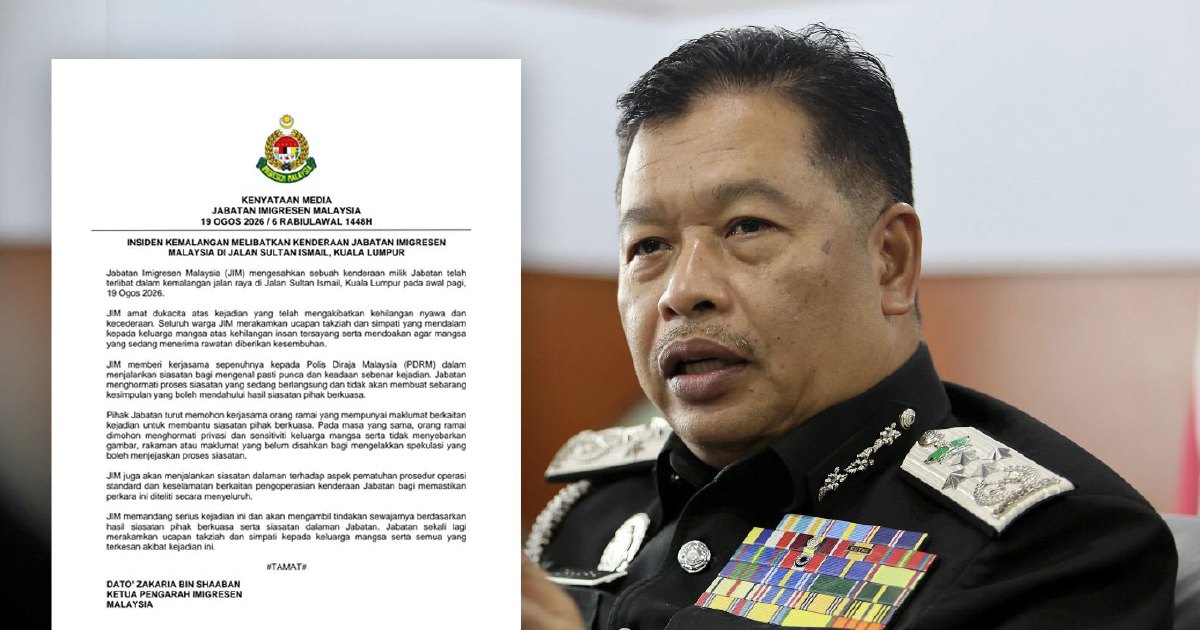
The Immigration Department has announced it will conduct a comprehensive internal investigation into compliance with standard operating procedures and safety measures following a fatal traffic incident involving a departmental vehicle that occurred along Jalan Sultan Ismail in the early hours of today. The incident has prompted immediate scrutiny of the agency's operational protocols and safety frameworks governing vehicle use and road operations.
The decision to launch an internal probe reflects the department's commitment to examining whether established procedures were properly followed at the time of the accident. This investigation will focus on multiple dimensions of departmental accountability, including adherence to safety protocols, vehicle maintenance standards, and driver conduct guidelines. Such internal reviews are standard practice following serious traffic incidents involving government vehicles, particularly those that result in fatalities.
Jalan Sultan Ismail, a major thoroughfare in central Kuala Lumpur, has been the site of numerous vehicular incidents over the years. The location's traffic conditions, visibility factors, and flow patterns will likely form part of the investigation's scope. Understanding the circumstances that led to this specific incident requires detailed examination of road conditions, vehicle speed, weather factors, and any other variables that may have contributed to the accident.
For the Immigration Department, the investigation carries significant organisational implications. The agency oversees border control, visa processing, and related functions that require high operational standards. Any findings regarding lapses in vehicle safety or compliance procedures will need to be addressed through policy adjustments or additional training initiatives. The integrity of government operations depends on consistent adherence to established safety protocols across all departmental activities.
The incident also raises broader questions about vehicle safety standards across Malaysian government agencies. How departmental fleets are maintained, how drivers are trained and monitored, and what safety measures are in place during operations are matters of public interest. This investigation may inform wider discussions about improving safety protocols across the public sector, particularly given the volume of government vehicles operating daily on Malaysian roads.
The Immigration Department's rapid response in announcing an investigation demonstrates an institutional commitment to transparency and accountability. Conducting internal reviews promptly sends a message that the department takes such incidents seriously and is willing to examine its own operations critically. However, the effectiveness of internal investigations depends on their thoroughness and the willingness to implement findings honestly.
The timing and context of the accident merit attention. Understanding exactly when during the early morning hours the incident occurred, what the vehicle was engaged in, and who was involved are crucial details that will shape the investigation's focus. The Immigration Department will need to coordinate with other relevant authorities, including traffic police and emergency services, to compile a complete picture of the event.
From a regulatory perspective, this incident underscores the importance of maintaining robust oversight of government vehicle operations. While the Immigration Department may have existing safety protocols in place, any gaps identified through this investigation should be addressed systematically. This might involve updating driver training programs, enhancing vehicle inspection procedures, or revising policies on vehicle deployment and operational hours.
The implications extend beyond the Immigration Department itself. Malaysian civil society and stakeholders in road safety will be watching to see how the investigation unfolds and what recommendations emerge. Public confidence in government agencies depends partly on their demonstrated ability to investigate and address internal failures transparently. The findings and any resulting corrective actions will be scrutinised as indicators of institutional integrity.
For the broader context of road safety in Malaysia, this incident is a reminder that all road users, regardless of whether they operate private or government vehicles, bear responsibility for safety compliance. The Investigation will likely generate insights that could inform public discourse about safer driving practices and enhanced safety measures across all vehicle categories. The Immigration Department's willingness to examine its own operations sets a precedent for accountability in the public sector.
The investigation process itself will take time to complete comprehensively. Gathering evidence, interviewing relevant personnel, reviewing documentation, and analysing contributing factors requires careful, systematic work. Malaysian observers should expect that detailed findings and recommendations will eventually emerge, providing greater clarity about the circumstances and any organisational lessons to be learned.
Ultimately, the fatal accident on Jalan Sultan Ismail highlights the ongoing challenge of road safety in Malaysia's urban environment. As the Immigration Department proceeds with its internal probe, attention will remain on whether the investigation yields meaningful reforms that could prevent similar incidents in future. The agency's response to this tragedy, measured through the depth and honesty of its investigation, will reflect its broader commitment to operational excellence and public safety.

