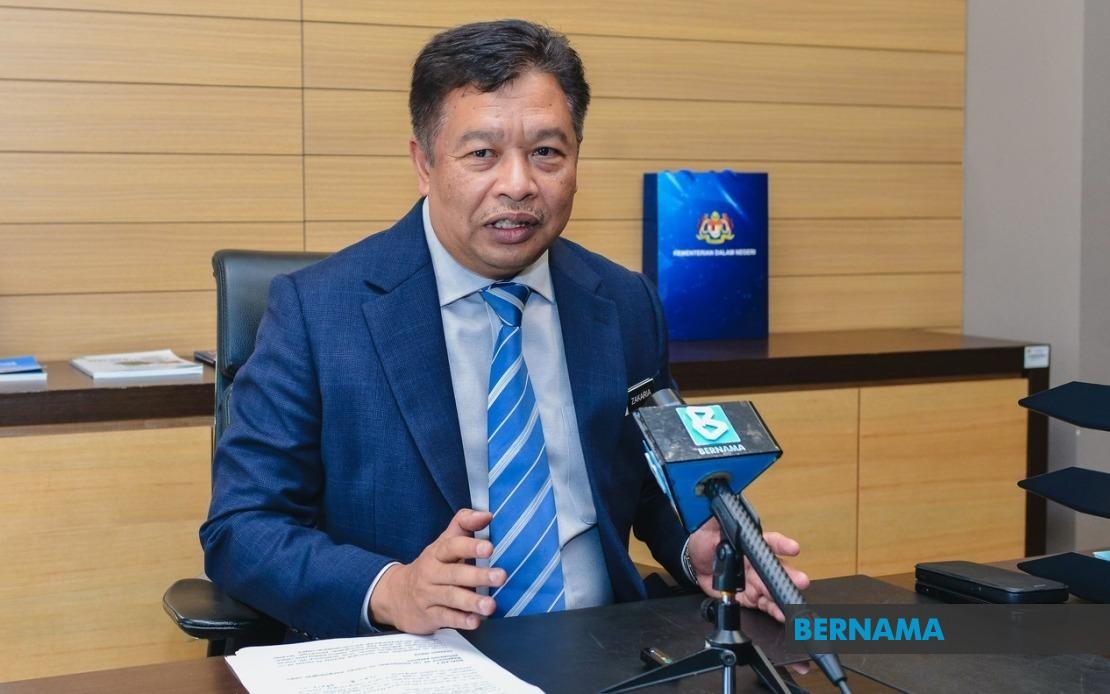
Immigration authorities in Johor have moved into peak readiness mode as the state braces for elections this weekend, with officials pledging seamless passage for the thousands of Malaysian voters expected to cross from Singapore. Datuk Zakaria Shaaban, who heads the Immigration Department (JIM), outlined an intensive monitoring framework designed to prevent the kind of system failures that might disrupt voting participation. The election cycle presents particular logistical challenges for border management, since a substantial number of registered voters maintain employment in Singapore and must return home to exercise their democratic rights.
The two major gateways handling the expected surge—Sultan Iskandar Building (BSI) at the JB Sentral-Woodlands crossing and Sultan Abu Bakar Complex (KSAB) at Tanjung Kupang via the Second Link—represent critical infrastructure in one of Asia's highest-traffic border corridors. These checkpoints collectively process roughly 300,000 travellers on ordinary days, making them among the world's busiest international gateways. Preparing for an election day influx requires more than standard operations; it demands contingency planning, system redundancy, and staffing flexibility that extends well beyond routine border management.
Zakaria confirmed that current inspection systems are functioning normally across both complexes, operating on existing platforms rather than newly implemented technology that might introduce unforeseen complications. This deliberate choice to maintain proven infrastructure reflects pragmatism in election logistics—avoiding system upgrades days before a major vote. Should technical problems emerge, the department has positioned a technical team on continuous alert to identify and resolve issues instantly. The director-general emphasized that election day demands a problem-free environment, recognizing that preventable delays could prevent eligible voters from fulfilling their civic responsibilities.
Critically, immigration authorities have prepared manual backup procedures that would activate if electronic systems fail at either checkpoint. These contingency protocols ensure that even a complete technological breakdown would not halt the inspection process, though manual procedures would necessarily reduce throughput and potentially create temporary congestion. The readiness of these backup measures signals sophisticated election planning that acknowledges real-world possibilities while maintaining commitment to uninterrupted border flow. Such preparations acknowledge lessons learned from previous elections when infrastructure limitations created bottlenecks affecting voter turnout.
The Home Ministry has layered additional assurances on top of Immigration Department commitments. Datuk Seri Saifuddin Nasution Ismail, the Home Minister, previously confirmed that his ministry would personally oversee travel facilitation for voters working in Singapore, with a comprehensive mitigation strategy activated should disruptions occur. This ministerial-level engagement underscores the political significance of ensuring voting access across borders, recognizing that marginal participation changes could influence electoral outcomes in a tightly contested election. Coordinated high-level oversight between Immigration and Home Ministry demonstrates institutional recognition that border operations directly impact democratic processes.
The 16th Johor State Election will see 172 candidates vying for 56 seats, with polling scheduled for Saturday, July 11. Early voting commences on July 7, providing an alternative pathway for some cross-border workers unable to return on the main voting day. This staggered voting schedule distributes demand across multiple days, potentially easing pressure on the two major checkpoints during peak periods. For Malaysian voters with flexibility in timing, early voting offers an opportunity to avoid weekend congestion and still participate fully in state-level democratic representation.
The geopolitical reality of the Malaysia-Singapore border adds complexity to election planning. Unlike domestic state elections where voters travel within a single country, the Johor election involves transnational participation. Thousands of Malaysian citizens maintain permanent residency in Johor while working across the causeway, creating a genuinely cross-border electorate. This arrangement, while economically logical given regional integration and Singapore's role as a financial hub, creates administrative challenges that most election authorities never face. The scale—potentially tens of thousands returning across causeway routes—multiplies the significance of any bottleneck.
The Second Link and BSI-Woodlands corridor represent vital conduits in Malaysia's regional economic infrastructure, not merely election-day pathways. Disruptions affecting border flow carry consequences extending far beyond voter participation, potentially impacting the routine cross-border commerce and commuting that defines this region's integrated economy. Election preparations therefore must balance voting access with preservation of normal economic function, ensuring that election-related measures do not create cascading disruptions throughout the bilateral relationship and regional supply chains dependent on these corridors.
From a Southeast Asian perspective, the Malaysian example demonstrates how modern democracies operating within integrated regional economies must adapt electoral mechanisms to accommodate transnational participation. The region's economic interdependence—particularly the concentration of professional talent across borders—increasingly produces electorates distributed beyond traditional geographic boundaries. How Johor manages this election offers relevant experience for other Southeast Asian jurisdictions wrestling with similar demographic and economic realities. Successful cross-border voting facilitation validates democratic inclusion while acknowledging contemporary patterns of regional mobility.
The technical and logistical preparations announced by immigration authorities reflect Malaysian institutional maturity in managing complex electoral mechanics. Rather than viewing transnational participation as problematic, authorities have designed systems acknowledging it as permanent electoral reality. The commitment to continuous system monitoring, the development of manual backup procedures, and ministerial-level coordination all suggest that democratic participation—regardless of voters' temporary geographic location—remains a core institutional priority. For Malaysian voters working in Singapore and concerned about their ability to participate, these assurances provide concrete evidence of systematic preparation rather than ad-hoc improvisation.

