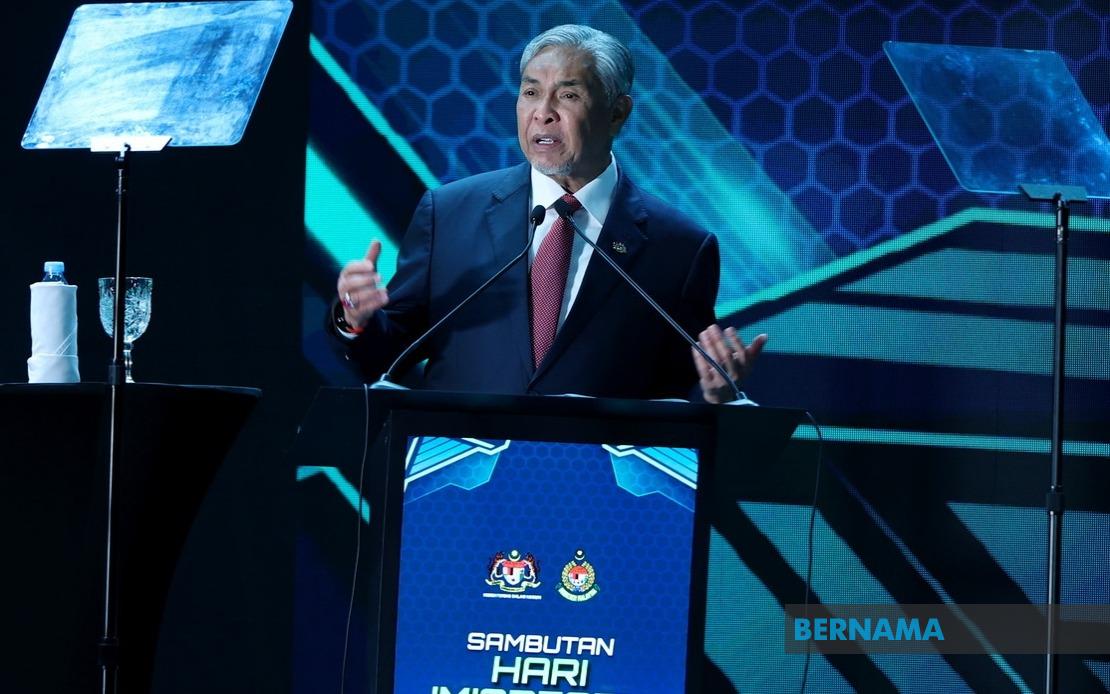
Deputy Prime Minister Datuk Seri Dr Ahmad Zahid Hamidi has thrown his weight behind efforts to overhaul the Immigration Officer Service Scheme, signalling high-level political backing for reforms that advocates argue are overdue given the department's strategic importance to national security and the economy. Speaking at the 2026 Immigration Day celebration in Cyberjaya, Ahmad Zahid endorsed Home Minister Datuk Seri Saifuddin Nasution Ismail's proposal to restructure senior positions and create more advancement opportunities within the Immigration Department's professional ranks.
The deputy premier's endorsement carries substantial weight within government circles, as it represents a rare moment of cross-ministerial alignment on public sector reform. By publicly supporting the initiative at a ceremonial event dedicated to the Immigration Department, Ahmad Zahid has effectively elevated the proposal beyond routine bureaucratic consideration, placing it squarely before senior government machinery responsible for public service restructuring. This backing suggests the issue has gained traction among Malaysia's top leadership, potentially accelerating what might otherwise be a lengthy approval process involving multiple government agencies.
Central to the reform discussion is the recognition that the Immigration Department functions as one of Malaysia's most significant revenue-generating arms, a role that remains underappreciated in public discourse. As the country's third-largest revenue producer, the department generates substantial income through visa issuances, passport processing, and immigration-related services. This financial contribution alone justifies improved compensation and career progression for officers who manage these functions, yet their service conditions have historically lagged behind comparable government agencies with less direct income-generation responsibility.
The proposed restructuring addresses two interconnected challenges facing the department: the need to retain experienced personnel and the requirement to create compelling career pathways that motivate officers throughout their professional lives. By expanding opportunities for promotion and redefining strategic posts, the reforms aim to prevent brain drain that has historically plagued frontline security agencies. Malaysia's competitive job market means talented immigration officers can migrate to better-remunerated private-sector roles unless government service remains sufficiently attractive, particularly at mid-career levels where experience translates into immediate private-sector value.
Ahmad Zahid's remarks specifically referenced the need for consideration by Chief Secretary to the Government Tan Sri Shamsul Azri Abu Bakar and Public Service director-general Tan Sri Wan Ahmad Dahlan Abdul Aziz, effectively directing these officials to prioritise the proposal in their policy deliberations. This procedural specificity suggests the deputy premier anticipates potential bureaucratic obstacles and is attempting to pre-empt resistance by signalling executive-level commitment to the initiative. Such interventions, though common in Malaysian governance, are rarely so publicly articulated unless a minister anticipates institutional resistance.
Beyond the service scheme reforms, Ahmad Zahid emphasised the fundamental importance of maintaining integrity and professionalism among immigration personnel, framing their work as a sacred trust rather than mere employment. His exhortation that officers "serve not because someone is watching, but because every action is a trust bestowed upon us by the nation" reflects concerns about operational standards that occasionally surface in public discourse. Immigration departments worldwide grapple with corruption risks given officers' authority to determine entry and access, making ethical culture paramount to institutional legitimacy.
The immigration service occupies a uniquely sensitive position within Malaysia's security apparatus. Officers represent the literal frontline between Malaysia and the outside world, making decisions daily that affect national security, economic vitality, and humanitarian obligations. They manage complex visa determinations that influence investment flows and tourism revenues, whilst simultaneously screening for security threats and managing irregular migration. This multifaceted responsibility justifies treating immigration officers as strategic national assets rather than routine civil servants, a perspective Ahmad Zahid's remarks reinforce.
For Southeast Asian context, Malaysia's immigration pressures differ substantially from regional neighbours. The country simultaneously manages inbound tourism and foreign investment flows, irregular maritime arrivals from conflict zones, and skilled worker recruitment essential for maintaining economic competitiveness. This complexity means immigration officers must possess sophisticated judgment capabilities and cultural sensitivity alongside security acumen, competencies that premium compensation and career progression help attract and retain. Regional peers including Singapore and Thailand allocate significantly higher resources to immigration administration, partly reflecting understanding that these agencies merit investment commensurate with their responsibilities.
The timing of this initiative reflects broader civil service concerns about competitiveness in attracting talent. Malaysia's public sector has faced persistent challenges recruiting and retaining skilled personnel as private-sector opportunities expand, particularly in technology and professional services sectors. Immigration, law enforcement, and other security agencies have proven especially vulnerable to poaching, as officers' specialised training and security clearances make them attractive to private security firms and corporate compliance roles. Proactive salary restructuring and career development are preventive measures against degradation of institutional capacity through attrition.
Politically, the Home Minister's proposal and the Deputy Prime Minister's support signal recognition that immigration administration deserves priority investment despite competing budgetary pressures elsewhere in government. This alignment between defence and finance-related portfolios suggests the proposals have survived initial cost-benefit scrutiny and bureaucratic scepticism. In Malaysian governance contexts, such cross-ministerial backing substantially increases implementation likelihood, as it signals that resource allocation negotiations have achieved consensus among relevant stakeholders.
The proposed reforms also reflect evolving international standards for immigration administration. Contemporary best practice emphasises professionalisation of border management, recognising that security effectiveness correlates with officer training quality, morale, and institutional stability. Countries investing in immigration officer development typically achieve better outcomes across security screening, facilitation of legitimate travel, and customer service metrics. Malaysia's aspiration to maintain sophisticated immigration procedures whilst managing high processing volumes reasonably justifies the proposed enhancements.
Implementation of the restructuring will require detailed work by human resources and budget specialists, but political backing from both the Home Minister and Deputy Prime Minister substantially improves prospects for successful advancement through approval processes. The officials specifically named by Ahmad Zahid now face implicit pressure to demonstrate responsiveness to this high-level priority. Pending formal approval, the immigration service should expect meaningful reforms within the next budgetary cycle, potentially including expanded senior officer positions and enhanced compensation structures for mid-career advancement.

