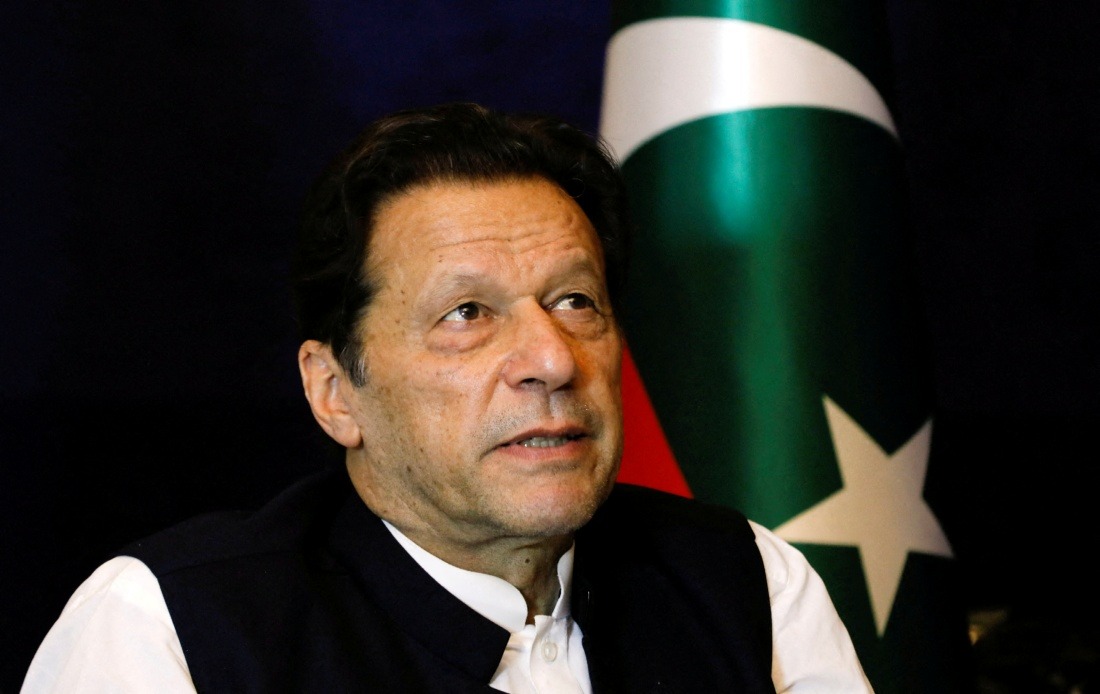
Former Pakistani Prime Minister Imran Khan was returned to Adiala Jail on Friday morning after undergoing a comprehensive medical examination at a government hospital in Islamabad, marking another chapter in the legal struggles facing the 73-year-old politician who led the nation between 2018 and 2022. The examination took place in the early hours of Friday following a directive from Pakistan's Supreme Court, which had determined that Khan's health status needed independent professional assessment whilst he remains incarcerated on convictions he categorises as politically motivated.
Pakistan's Information Minister Attaullah Tarar confirmed the development in a statement posted on social media, revealing that Khan had been transported under tight security arrangements during the night of August 20 and 21 to undergo the medical check. The transfer itself underscores the sensitive nature of Khan's detention and the high-profile status he continues to maintain despite his imprisonment. His sister, Uzma Khan, accompanied him throughout the entire medical process, ensuring family representation during what authorities characterise as a routine health verification procedure.
The medical team that examined Khan comprised specialists across multiple disciplines, including a cardiologist, ophthalmologist, and general physician, reflecting the Supreme Court's apparent concern for maintaining rigorous health standards during incarceration. These doctors collectively assessed Khan's current physical condition and formally declared him medically fit, according to Tarar's official statement. The involvement of multiple specialists suggests the court was attempting to establish an authoritative baseline of Khan's health status that could not be easily contested by either his legal representatives or political supporters outside the prison walls.
The decision to conduct the examination at Pakistan Institute of Medical Sciences (PIMS) rather than the originally mandated Shifa International Hospital reveals the volatile security dimensions surrounding Khan's case and the broader political sensitivities it has generated within Pakistan. Authorities cited security concerns created by PTI party workers gathered outside Shifa International Hospital as the justification for the venue change. This shift in location demonstrates how Khan's detention has become intertwined with public demonstrations and security management challenges that extend beyond the confines of the prison system itself.
Despite the venue alteration, Tarar's statement confirmed that medical professionals from Shifa International Hospital participated in the examination at PIMS, suggesting an attempt to maintain credibility and consistency with the Supreme Court's original directive. This hybrid arrangement appears designed to satisfy both security requirements and the court's apparent intention to ensure Khan's medical evaluation met appropriate professional standards. The inclusion of Shifa specialists served as a form of quality assurance whilst accommodating the government's security concerns about maintaining order at the primary hospital.
Khan's detention stretches back to August 2023, when he was initially imprisoned following multiple convictions across several distinct cases. Since then, the Pakistan Tehreek-e-Insaf (PTI) party he founded has consistently alleged that these prosecutions represent a coordinated campaign to eliminate him from Pakistani politics. The party contends that the legal proceedings are instruments of political suppression rather than genuine judicial accountability. These allegations have become central to ongoing debates within Pakistan regarding the independence of the judiciary and the rule of law in the country.
The Supreme Court had previously permitted Khan to remain hospitalised until a scheduled hearing on September 16, indicating the judiciary maintains oversight of his detention conditions. This arrangement suggests the court may be monitoring Khan's situation more closely than typical criminal cases, perhaps reflecting awareness of international scrutiny regarding his imprisonment and broader concerns about democratic governance in Pakistan. The scheduled September hearing indicates that further legal proceedings addressing Khan's status and welfare remain pending.
Khan's former position as a cricket World Cup champion gives his imprisonment particular resonance within Pakistani public consciousness, as his sporting legacy remains deeply embedded in national identity. His transition from celebrated athlete to controversial political figure has made his current legal troubles subjects of intense domestic and international attention. This background distinguishes his case from ordinary criminal proceedings and contributes to the political dimensions that his PTI party consistently emphasises when characterising the prosecution as motivated by factors beyond strict legal merit.
The medical examination incident reflects broader patterns of contestation surrounding Khan's imprisonment, where even routine administrative procedures become occasions for disputes over security, venue selection, and the involvement of family members. Each step of his detention appears subject to legal challenge or negotiation, suggesting that his case represents a fundamentally contested situation within Pakistan's political and legal systems. The involvement of the Supreme Court in directing specific procedures like medical examinations indicates a level of judicial engagement that suggests recognition of the case's significance beyond conventional criminal matters.
For Malaysian observers, Khan's situation illustrates how political imprisonment and judicial independence issues can unfold in South Asian democracies, offering comparative perspective on the importance of maintaining institutional safeguards against politicised prosecutions. The case demonstrates how legal systems can become instruments of political competition when institutional checks prove insufficient. The involvement of multiple government agencies, the security concerns surrounding his movements, and the necessity of family representatives attending medical procedures all suggest a detention environment shaped substantially by political considerations rather than purely criminal justice considerations.
The Supreme Court's continued involvement in arranging Khan's medical care and the scheduling of future hearings indicates that his legal situation remains in flux, with courts attempting to balance security concerns, due process requirements, and political sensitivities. The September 16 hearing will likely determine whether Khan's imprisonment continues under existing convictions or whether legal developments might alter his status. Until that date, Khan remains incarcerated despite the court's apparent efforts to maintain oversight of his incarceration conditions and ensure adherence to minimum health and welfare standards.

