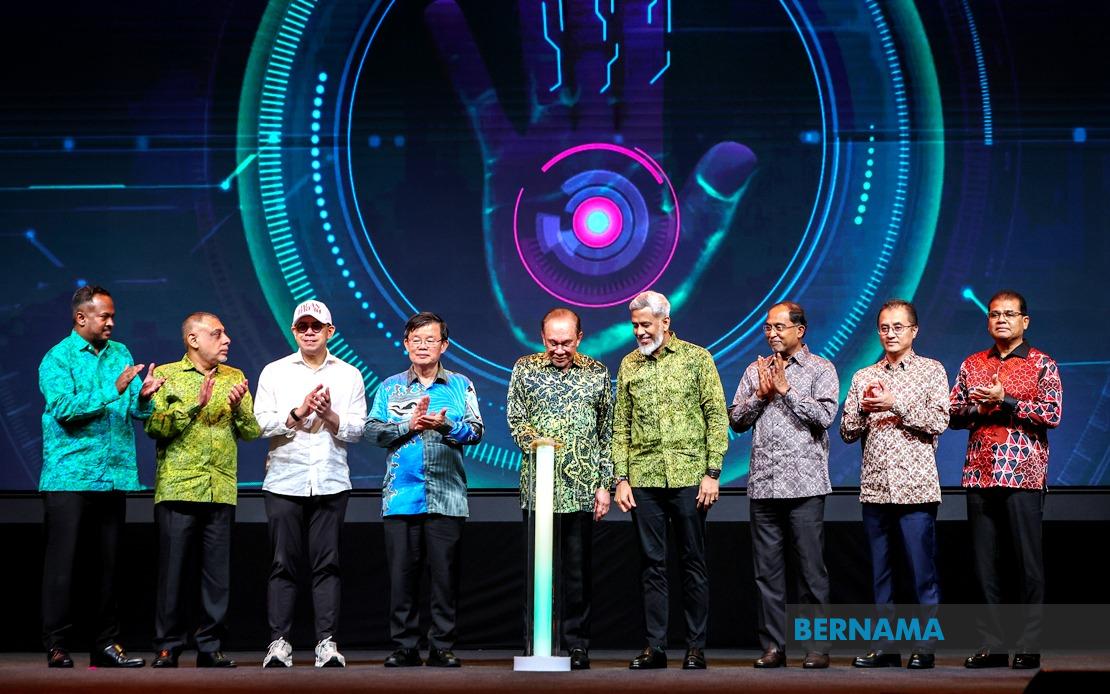
Prime Minister Datuk Seri Anwar Ibrahim has thrown his weight behind the Indian Muslim Transformational Framework 2030 (IMTF2030), describing it as a pivotal initiative capable of reshaping opportunities for Malaysia's estimated 800,000 Indian Muslims while simultaneously advancing the government's broader Malaysia MADANI development programme. Speaking at the framework's launch in Butterworth, Anwar positioned the blueprint as more than simply a community development roadmap—rather, he framed it as evidence of strategic thinking and determination within a minority community often overlooked in national economic and social planning conversations.
The IMTF2030, championed by Pertubuhan Gabungan MUKMIN Nasional (MUKMIN), represents a significant departure from ad-hoc community initiatives towards structured, long-term transformation planning. Anwar's remarks underscore the government's recognition that inclusive development—which forms a cornerstone of Malaysia MADANI—requires deliberate engagement with diverse communities and acknowledgement of their specific circumstances and aspirations. By endorsing this framework publicly, the Prime Minister is signalling that minority community empowerment is not peripheral to national development but integral to it.
Central to Anwar's endorsement was his challenge to the narrative of victimhood sometimes associated with minority communities. He emphasised that the Indian Muslim community possesses genuine capability, commitment and resolve to drive meaningful change independently, provided they have supportive policy environments and access to resources. This framing sidesteps patronising approaches while maintaining government commitment to partnership. The Prime Minister also subtly reinforced the importance of community-driven solutions as complements to government programmes, a philosophy increasingly important as Malaysia navigates complex social cohesion challenges.
The framework itself is ambitious in scope and measurable in its targets. MUKMIN aims to mobilise RM50 million specifically for scholarships and talent development, an investment reflecting understanding that educational equity remains fundamental to intergenerational mobility within minority communities. The proposed upskilling of 50,000 individuals addresses a critical gap in workforce development, particularly relevant given Malaysia's transition towards high-value economic sectors where technical skills and digital literacy command premium returns.
Entrepreneurship features prominently within the IMTF2030 strategy, with plans to transform 2,500 enterprises through digitalisation and develop 500 enterprises leveraging artificial intelligence and digital technology. These targets acknowledge that meaningful wealth creation for minority communities requires moving beyond traditional commerce into higher-margin, technology-enabled sectors. The proposed generation of up to RM250 billion in cumulative economic value, while ambitious, reflects confidence that structured support can unlock significant entrepreneurial potential currently constrained by limited access to capital, networks and market information.
The establishment of 50 export-ready Malaysian brands within the Indian Muslim community would represent a qualitative shift in global economic visibility for this demographic. Currently, few internationally recognised Malaysian brands with direct association to Indian Muslim entrepreneurship exist, despite Malaysia's own profile as a Muslim-majority nation. This initiative could leverage Malaysia's positioning in regional and global markets to create competitive advantages for community enterprises, while simultaneously enriching Malaysia's cultural and economic soft power.
Supply chain participation constitutes another significant dimension, with frameworks targeting RM10 billion in local procurement opportunities. This approach recognises that minority economic advancement need not be confined to standalone enterprises but can be structurally integrated into larger corporate value chains. Such integration typically ensures more stable income streams and knowledge transfer compared to isolated small business models. For Malaysian manufacturers and traders, deepening minority supplier networks also enhances supply chain resilience and diversity.
The MUKMIN Future Leaders Scholarship programme, which has already secured commitments exceeding RM10 million and created over 400 scholarship opportunities, addresses educational access—a traditional barrier to upward mobility. Importantly, this programme mobilises private sector participation alongside community resources, suggesting a co-investment model that distributes responsibility and ensures buy-in across stakeholders. Educational investments by and for minority communities often generate multiplier effects as scholarship recipients return to mentor and employ others from similar backgrounds.
Anwar's exhortation to the Indian Muslim community to serve as a bridge for unity while championing community interests reflects the delicate balance required in plural societies. He explicitly validated the community's right to pursue its own advancement while implicitly warning against framing this as zero-sum competition with other communities. This articulation is particularly important in Malaysia's contemporary political context, where communal sensitivities remain acute and minority aspirations are sometimes portrayed as threats to majority interests—a narrative that discourages constructive engagement.
The presence of Chief Minister Chow Kon Yeow, Minister of Higher Education Datuk Seri Dr Zambry Abdul Kadir and Minister of Entrepreneur and Cooperatives Development Steven Sim at the launch event signals cross-government commitment to the framework's implementation. Sustained realisation of IMTF2030 targets will require coordination across education, entrepreneurship support, and economic development portfolios—functions distributed across multiple ministries and agencies. Securing public commitment from these ministers publicly establishes accountability and facilitates resource allocation.
For Malaysian policymakers, the IMTF2030 template offers lessons applicable to development of other minority communities within Malaysia. Structured, multi-year frameworks with specific measurable targets, diversified investment streams, and explicit links to broader national development agendas typically perform better than episodic assistance. The framework also demonstrates that minority community empowerment and Malaysia MADANI objectives are complementary rather than conflicting—inclusive development inherently strengthens social cohesion and distributes growth more equitably.
Regionally, Malaysia's engagement with minority community development through frameworks such as IMTF2030 distinguishes its approach from some neighbours and potentially positions it as a model for pluralistic development. As other Southeast Asian nations grapple with balancing majority and minority interests, Malaysia's documented experience—both successes and challenges—provides valuable reference points. The Indian Muslim community's own initiatives, supported by government partnership, demonstrate that minority groups can meaningfully participate in shaping their own futures rather than remaining passive policy recipients.

