Malaysia's anti-poverty initiative has reached nearly 8,000 households since its launch, marking a significant expansion of the government's social safety net for vulnerable populations. The People's Income Initiative (IPR) has demonstrated measurable progress in its core objective of supporting lower-income families, with 7,787 beneficiary households documented by the Economy Ministry as of early July. This achievement reflects growing uptake of a programme designed specifically to complement Malaysia's existing poverty alleviation framework and address interconnected challenges of food insecurity and rising living expenses.
The programme operates as part of a broader strategic approach to economic resilience at household level. Rather than functioning in isolation, IPR integrates with established welfare systems to create a more comprehensive safety net. The initiative explicitly targets three interrelated outcomes: ensuring consistent access to adequate nutrition, generating sustainable employment pathways, and reducing financial pressure from escalating costs of living. These objectives acknowledge that poverty in contemporary Malaysia stems not from single causes but from compounding pressures that household-level income cannot adequately address, particularly among those already economically marginalised.
Evidence of genuine economic uplift emerges from income benchmarks achieved by programme participants. The Economy Ministry highlighted that some beneficiaries have successfully increased their monthly earnings beyond RM2,000, a threshold representing substantial progress for families typically living well below this level. This outcome proves significant because it demonstrates that IPR functions not merely as a subsistence support mechanism but as a pathway toward economic independence. The movement beyond poverty classification carries implications for long-term household stability, including improved capacity to manage healthcare costs, educational investment in children, and resilience against unexpected financial shocks.
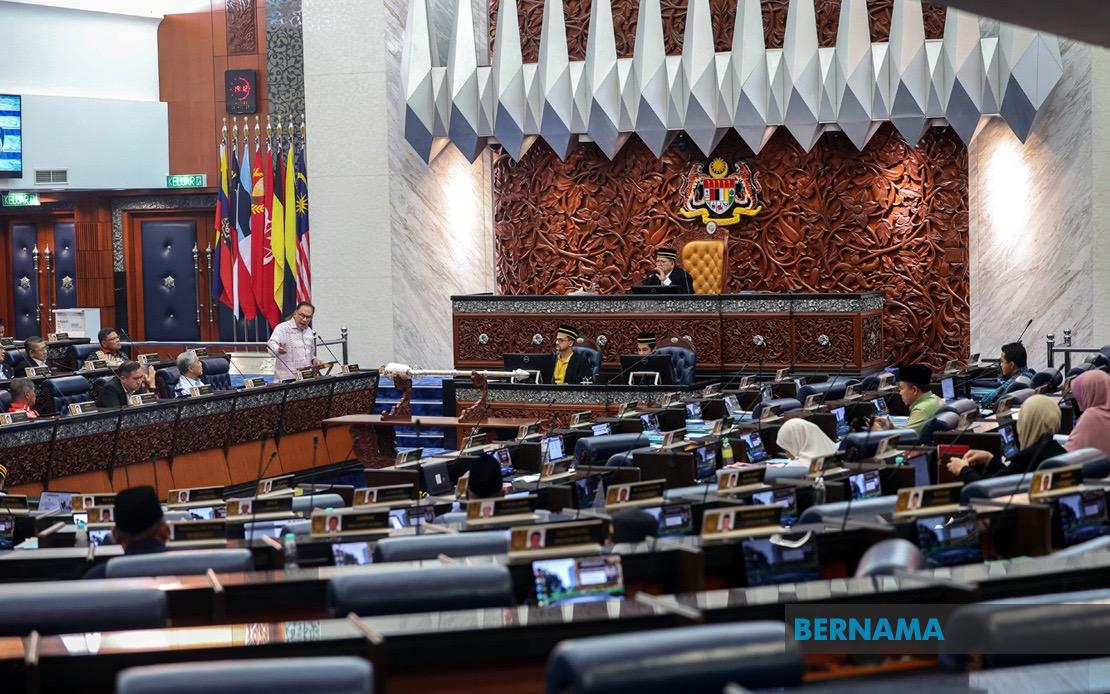
The parliamentary inquiry that prompted the ministry's disclosure came from Wan Ahmad Fayhsal Wan Ahmad Kamal, representing Machang under the Pan-Malaysian Islamic Party banner. His question specifically requested detailed assessment of IPR's effectiveness trajectory across its operational period, reflecting legislative scrutiny of programme outcomes. Such oversight remains important for accountability, particularly given substantial public resource allocation required to sustain initiatives supporting thousands of households. The parliamentary response mechanism ensures that social welfare programmes remain subject to regular performance evaluation and public disclosure.
Beyond direct income support, the Economy Ministry's response revealed parallel developments in data infrastructure that underpin modern poverty reduction efforts. The Main Data Base system known as PADU functions as a foundational tool enabling targeted delivery of assistance programmes. By aggregating household information across government systems, PADU theoretically allows policymakers to identify those meeting eligibility criteria and prevent resource leakage toward ineligible recipients. This technological approach represents a significant shift from traditional welfare administration, which often relied on incomplete information and resource allocation mechanisms vulnerable to inefficiency.
The integration capacity of PADU has expanded substantially during IPR's implementation period. As of June 2026, the ministry documented that 204 government agencies had established continuous data-sharing relationships with the central database system. This institutional interconnection creates infrastructure for coordinating welfare delivery across multiple touchpoints of government service. When citizens interact with education, health, housing, or employment agencies, data flows into PADU to maintain updated profiles informing future assistance decisions. Such systematic integration theoretically enhances the precision of targeting while reducing administrative burden on applicants repeatedly verifying their circumstances.
Data-sharing applications represent a secondary benefit stream from PADU infrastructure. The Economy Ministry reported approval of 27 distinct data applications derived from government agency submissions as of June 2026, enabling implementation of new programmes and policies grounded in more accurate household information. These applications extend beyond poverty relief into broader domains of public service improvement, from healthcare delivery optimisation to educational resource allocation. The stated objectives encompass enhanced service effectiveness, improved citizen wellbeing outcomes, accelerated service digitalisation, and evidence-based policy research. This multipurpose functionality suggests that PADU's institutional value transcends any single programme.
For Malaysian citizens and policymakers, the IPR results indicate measurable progress in addressing poverty dimensions that have resisted solutions through previous frameworks. The three-year timeframe represents sufficient duration to assess whether an initiative generates genuine traction or merely displaces populations between welfare categories. The documentation of nearly 8,000 beneficiary households and income achievements suggests that IPR participants experienced material improvement in their economic circumstances. However, context matters significantly: whether 7,787 households represents success depends substantially on the scale of eligible populations, programme targeting precision, and whether similar cohorts receive equivalent support.
The relationship between IPR implementation and PADU development reveals an important contemporary pattern in Malaysian governance. Modern poverty reduction programmes increasingly depend on sophisticated data systems enabling precision targeting. This approach theoretically improves efficiency by concentrating limited resources where need is greatest. However, it also creates administrative complexity and potential vulnerability to data security risks that require careful institutional management. The Economy Ministry's emphasis on PADU integration suggests confidence that data-driven welfare delivery represents the policy direction for Malaysian social protection going forward.
Regional implications warrant consideration as Southeast Asia grapples collectively with poverty persistence despite economic growth across member states. Malaysia's documented success in generating measurable household income improvements through IPR offers a potential model for neighbouring countries designing their own initiatives. The explicit focus on food security and employment opportunity creation addresses priorities common across the region. Similarly, the PADU infrastructure approach reflects technological sophistication increasingly accessible to middle-income Southeast Asian nations seeking to modernise welfare administration.
Future programme expansion appears likely given documented demand and demonstrated outcomes. The 7,787 beneficiary figure represents programme performance under initial implementation conditions, potentially with resource constraints or targeting limitations that could shift through subsequent years. Parliamentary questioning suggests legislative interest in scalability and broader application of lessons learned. Whether IPR evolves toward more substantial reach or maintains current scope depends on budgetary decisions and political prioritisation of anti-poverty objectives within competing government expenditure demands.
The Economy Ministry's characterisation of IPR response as "highly encouraging" and outcomes as "impressive" reflects the positive framing typical of government programme reporting. Independent evaluation research would provide additional perspective on whether observed income improvements prove durable, whether beneficiaries experience sustained economic advancement, and whether programme design could achieve superior outcomes through alternative implementation approaches. Transparency regarding both achievements and remaining challenges would strengthen public confidence in IPR's sustainability and effectiveness as Malaysia advances its poverty eradication agenda.

