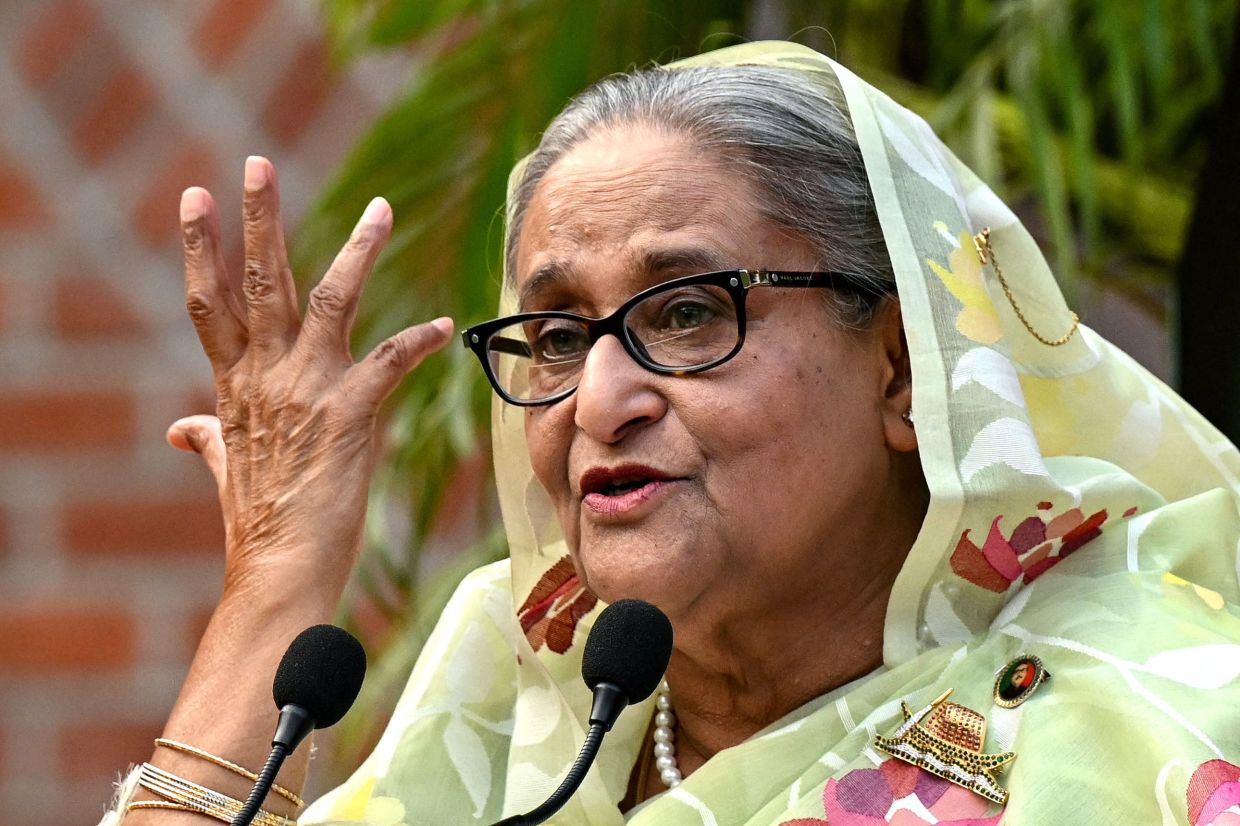
India has moved to separate itself from the planned virtual address of Bangladesh's exiled former Prime Minister Sheikh Hasina, with New Delhi's foreign ministry clarifying that the event being organised in the capital is entirely a private media initiative with no governmental involvement whatsoever. The statement came after Bangladesh sought formal clarification from the Indian government regarding its position on Hasina's scheduled appearance at an event hosted by the Foreign Correspondents' Club of South Asia in New Delhi on August 5, which will commemorate the second anniversary of the student-led uprising that brought down her administration in 2024.
The timing of this clarification reflects the delicate diplomatic balancing act New Delhi must perform between respecting freedom of expression and maintaining constructive relations with its neighbouring state. Indian foreign ministry spokesperson Randhir Jaiswal stated at a routine media briefing that Wednesday's gathering would be organised entirely by a private media entity, emphasising that the government neither participated in organising the event nor endorsed any statements that might be made during the proceedings. This deliberate disassociation underscores India's desire to avoid being drawn into the contentious political dynamics between Hasina and Bangladesh's current administration.
Meanwhile, Bangladesh has taken aggressive measures to control the narrative within its own borders, with Information Adviser Zahed Ur Rahman issuing a stern warning to the country's media outlets against reporting on or publicising Hasina's remarks. The restriction is grounded in a December 2024 order issued by Bangladesh's International Crimes Tribunal that explicitly prohibits all media entities and social media platforms from broadcasting, publishing, or otherwise disseminating Hasina's speeches, statements, interviews, or any audio or video messages. This tribunal directive reveals Dhaka's determination to limit the former premier's ability to communicate with her supporters and the broader public within Bangladesh.
The 78-year-old Hasina has remained in India since fleeing Bangladesh following the student-led demonstrations that toppled her government in 2024. Her situation has become increasingly precarious domestically, as she was sentenced to death in absentia in 2025 on charges related to crimes against humanity, specifically for her government's harsh response to the uprising. Despite dismissing the verdict as legally invalid, the death sentence represents a significant legal and political obstacle to any attempt at reconciliation or return to Bangladesh. Her decision to make her first public appearance since exile through a virtual address represents a calculated political move to maintain relevance and communicate directly with her remaining political base.
Hasina's appearance will mark a notable moment in her exile, as she is scheduled to speak alongside her son, Sajeeb Wazed Joy, and other speakers at the New Delhi forum. While her aides have remained notably tight-lipped about the specific content of her remarks, Hasina herself revealed to Reuters last month that she and members of her Awami League party are planning to return from exile around December and present themselves before Bangladesh's courts. This intention, if carried out, would represent a dramatic test of how Bangladesh's new government, led by Prime Minister Tarique Rahman following February's election, manages the continued presence of the nation's most prominent political opposition figure.
Hasina's supporters have signalled their defiance of Bangladesh's restrictions, with her aide Abu Obaidha Arin declaring that the scheduled event would proceed as planned. Arin's statement that Dhaka's efforts to silence dissent cannot extinguish voices operating beyond the country's borders carries implications for the broader debate about political speech and exile rights in South Asia. The rhetoric reflects the fundamental tension between a state's interest in controlling political narratives within its territory and the challenges of suppressing the speech of exiled political figures who remain influential among opposition supporters.
Bangladesh's concerns about Hasina's political activities extend beyond this single address, with State Minister for Foreign Affairs Shama Obaed Islam indicating that Dhaka has repeatedly raised with New Delhi its worries about Hasina and other Awami League leaders making political statements from Indian soil. This persistent complaint signals that Bangladesh views the problem not as an isolated incident but as part of a broader pattern of political organising by opponents of the current government operating from Indian territory. The repeated démarches to India suggest frustration with what Dhaka perceives as insufficient curbs on political dissent against its current administration originating from within India.
The episode also underscores Bangladesh's ongoing pursuit of Hasina's extradition from India, a request that has not been granted despite the formal death sentence and charges against her. India's historical reluctance to extradite political figures, combined with practical questions about whether Indian law would even permit such extradition, has left Hasina in a protected position within Indian territory. The extradition issue has become a sore point in bilateral relations, with Bangladesh viewing India's refusal as tacit support for a political opponent.
The broader context of bilateral relations between India and Bangladesh has been strained since Hasina's ouster, though both countries have recently signalled a willingness to normalise ties under Bangladesh's new government. Prime Minister Tarique Rahman's administration, which assumed office following elections in February, appears more focused on stabilising the country and building constructive relationships than on pursuing vendetta politics. However, the handling of Hasina's exile and her continued political activities remains a test of whether India-Bangladesh relations can genuinely improve when one neighbour harbours the other's most significant political opponent.
For Malaysian observers and the broader Southeast Asian region, the situation illustrates the persistent complexities surrounding exile politics and interstate relations in South Asia. The case demonstrates how the presence of exiled political figures in neighbouring countries can create diplomatic friction even when formal extradition requests remain unresolved. The restrictions Bangladesh has imposed on media coverage of Hasina's address also reflect broader trends in South Asia regarding state control over information and the challenges of maintaining democratic freedoms during periods of political transition and contested legitimacy.
The August 5 address represents a crucial moment for Hasina's political future, as it will be her first significant public communication since fleeing Bangladesh. Whether her remarks are able to reach her intended audience within Bangladesh, despite official restrictions, will depend on the effectiveness of social media and informal networks in circumventing state controls. The virtual format itself is telling, suggesting that any physical return to Bangladesh remains fraught with danger for the exiled leader.

