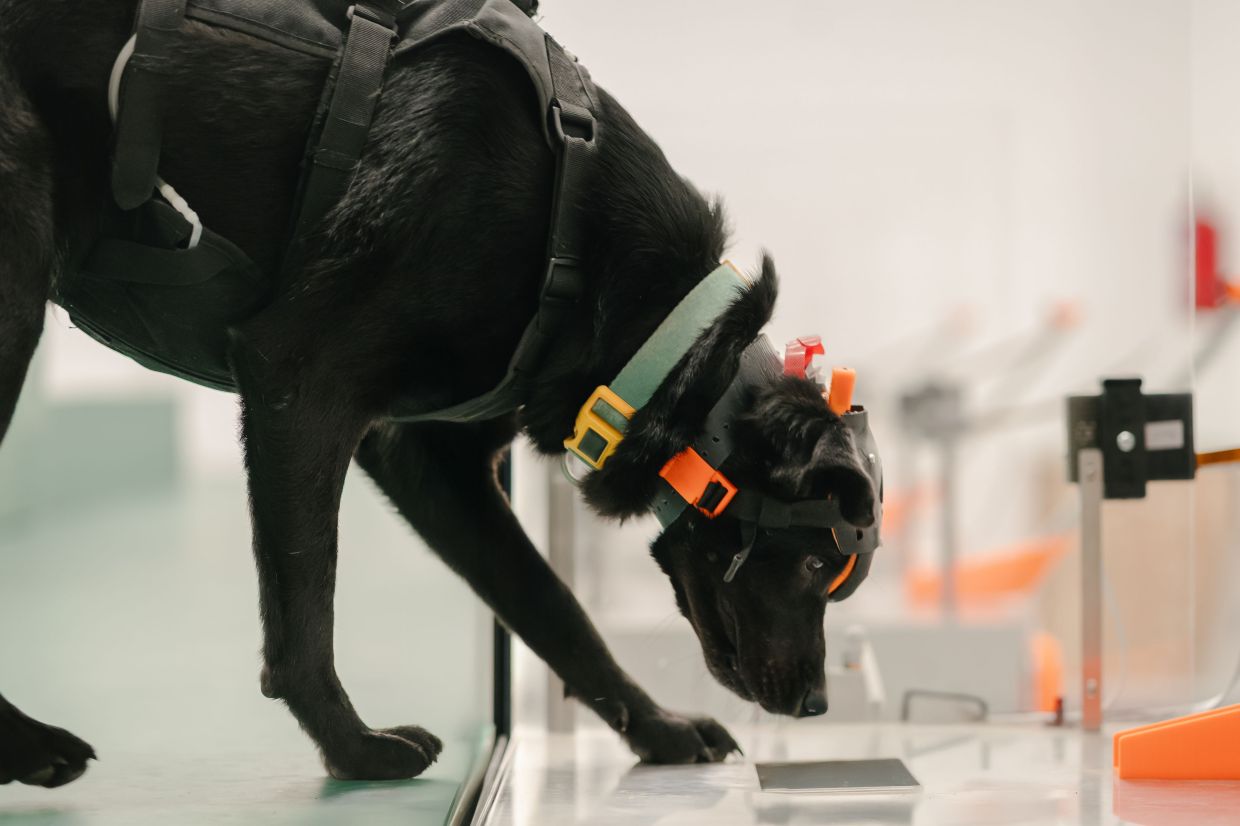
On a rural holding outside Bengaluru in southern India, a team of beagles, labradors and Dutch shepherds clock in each day not for traditional security work but for a more pressing mission: identifying the molecular signatures of cancer in human breath. Dognosis, a two-year-old firm, has designed an unconventional approach to one of Asia's most pressing public health challenges by redirecting the dog's extraordinary sense of smell—capabilities honed for detecting drugs and explosives—toward diagnosing the disease that claims nearly a million Indian lives annually.
The company's method is elegantly simple yet technologically sophisticated. Patients breathe into masks that are transported to Dognosis's facility, where the dogs encounter these samples in a game-like environment. Sensors and artificial intelligence then decode complex signals including the animals' movement patterns, respiratory changes, electrical activity in the brain and body language to identify whether a sample contains biomarkers indicating cancer. Crucially, this process requires no imaging equipment, blood work or invasive biopsies—interventions that remain inaccessible to the vast majority of Indians seeking cancer screening.
The scale of India's cancer burden underscores why such innovation matters. The International Agency for Research on Cancer identified India as having the world's third-highest incidence of new malignancies, with an estimated 1.5 million fresh cases and over 900,000 deaths recorded in 2024 alone. Approximately one in ten Indians face a meaningful risk of developing cancer before reaching age 75, with breast cancer leading the registry, followed by oral cavity, lung and cervical variants. Yet the screening infrastructure remains threadbare: merely 1.9 percent of Indian women surveyed between 2019 and 2021 reported ever undergoing cervical cancer screening, whilst less than one percent had accessed breast or oral examinations. Among men, just 1.2 percent indicated they had been screened for oral malignancies.
Dognosis's approach gains credibility from peer-reviewed evidence. In a Phase 2 trial published in the Journal of Clinical Oncology, the company demonstrated approximately 90 percent sensitivity in identifying early-stage cancers across seven broad categories encompassing more than twenty distinct cancer types. Remarkably, dogs trained on ten specific cancer signatures subsequently identified an eleventh variant they had never previously encountered, suggesting the animals' olfactory recognition may extend beyond their explicit training parameters. Co-founder Akash Kulgod framed the endeavour as attempting to locate undiagnosed cancer cases within vast populations where symptomatology remains absent.
The financial backing reflects investor confidence in the model's viability. Dognosis has secured US$1.5 million through a pre-seed funding round in 2024, supplemented by subsequent capital injections from early-stage investors including Accel India and Caffeinated Capital of San Francisco. Kulgod indicated this capital provided sufficient runway for two years of operations aligned with the company's projected expansion trajectory. The dogs themselves live on the two-acre farm facility, receiving daily walks, play sessions and enrichment activities, with their actual detection work comprising just thirty minutes to an hour daily and structured as reward-based games involving treats.
The company's expansion timeline reflects both ambition and pragmatism. Dognosis plans to launch an at-home multi-cancer prescreening examination across India next year, positioning the test at several thousand rupees to maximise accessibility within the Indian market. The enterprise envisions processing one million tests annually within the medium term, expanding its canine workforce to thirty animals and compressing turnaround periods to a single week. International expansion beckons as well, with Kulgod indicating that establishing a facility in the United States could occur between late 2027 and early 2028, positioning the model for deployment across multiple continents.
However, significant hurdles remain before such aspirations materialise. The company must demonstrate that its accuracy rates withstand scrutiny across substantially larger and more demographically diverse patient populations—a far different proposition than controlled laboratory conditions. Building logistical infrastructure capable of processing millions of breath samples annually, maintaining sample integrity during transit and storage, and establishing quality consistency across distributed facilities presents formidable operational challenges. Equally daunting is the psychological and professional barrier: convincing clinicians and patients alike to embrace a screening paradigm built around animal olfactory capacity rather than conventional medical instrumentation demands substantial cultural and institutional change.
Recognition of these complexities comes from established medical voices. Pankaj Chaturvedi, deputy director of the Centre for Cancer Epidemiology at Tata Memorial Centre in Mumbai, cautioned that emerging diagnostic technologies should complement rather than displace existing screening infrastructure, highlighting the importance of integration within established systems rather than wholesale replacement. This perspective reflects a legitimate concern about concentrating screening capacity around a single methodology, however innovative.
Dognosis is already advancing toward real-world validation. The company initiated its Phase 3 trial in April across ten hospital sites distributed throughout India, with recruitment targets of approximately 10,000 participants over twelve months. This study examines asymptomatic individuals at elevated cancer risk alongside survivors monitoring for disease recurrence, with positive findings referred for conventional diagnostic pathways including imaging and tissue sampling. The regulatory pathway also favours the company: Kulgod asserts that the test functions as a prescreening tool rather than a diagnostic device, category distinction that exempts it from India's device regulatory requirements, which apply only to formal diagnostic instruments.
If Phase 3 validation succeeds, Dognosis plans to introduce the test in Bengaluru next year before scaling across India through partnerships with diagnostic laboratory networks and healthcare delivery organisations. The company's success would represent not merely a technological breakthrough but a potential paradigm shift in how resource-constrained healthcare systems address preventive medicine at population scale. For Southeast Asia, where cancer incidence continues rising whilst screening programmes lag behind infrastructure needs, the model's potential extends beyond India's borders into a region collectively facing tens of millions of unscreened at-risk individuals. The fundamental question now centres on whether canine olfaction, married to artificial intelligence, can translate laboratory success into sustained public health impact.

