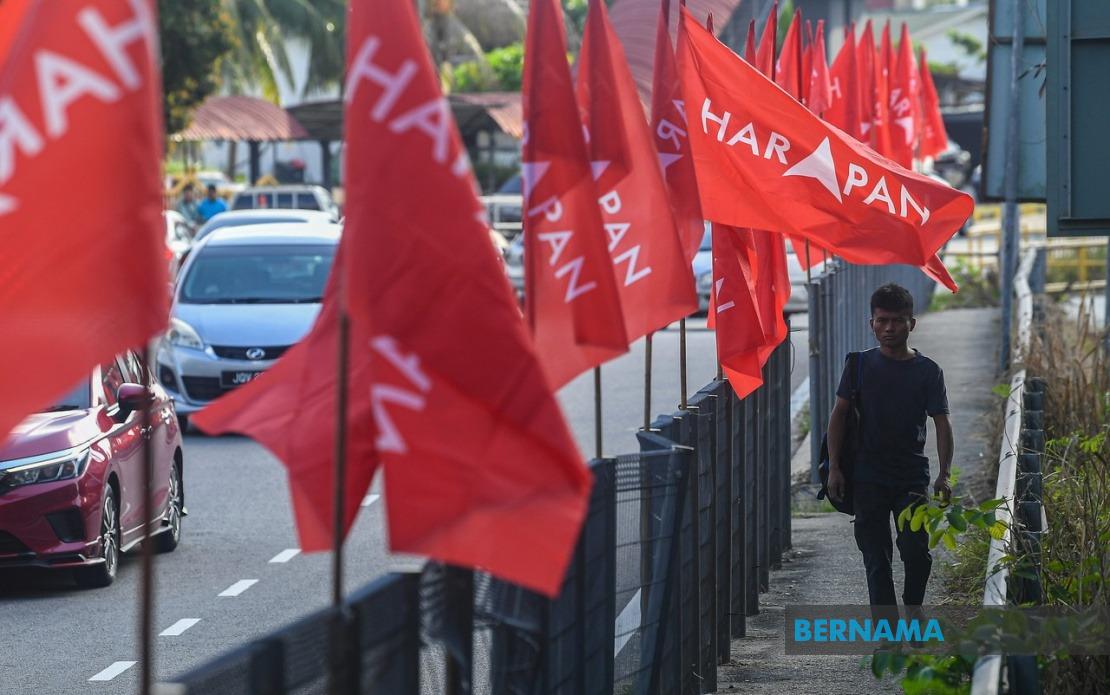
The Indian community in Johor holds disproportionate electoral power in the upcoming state election, according to Parti Keadilan Rakyat (PKR) Central Leadership Council member Dr Gunaraj George, who has urged the minority group to back Pakatan Harapan (PH) to cement political stability and drive forward the MADANI reform programme. Though numerically smaller than other communities in the state, Indian voters could prove decisive in almost 25 mixed and marginal State Legislative Assembly constituencies, making their participation strategically crucial for the 56-seat contest scheduled for July 11.
Dr Gunaraj's appeal frames the election as more than a routine choice between candidates. Rather, he positions it as a pivotal moment determining whether Malaysia maintains its current trajectory of institutional reform, economic development, and political predictability, or regresses into the uncertainty that characterised earlier periods. The stakes he identifies extend beyond Johor: investor confidence, job creation, and the nation's broader economic prospects depend on avoiding renewed political turbulence, particularly given current global headwinds including geopolitical tensions and elevated living costs.
The timing of the Johor poll carries weight in Malaysia's current economic context. With supply chain disruptions, inflation pressures, and regional instability affecting growth prospects across Southeast Asia, Dr Gunaraj contends that Malaysian businesses and international investors require governmental consistency and proven competence. A fractured political landscape, he warns, would undermine confidence precisely when the economy needs bolstering. This argument holds particular resonance for minority communities whose economic mobility often depends on stable institutional frameworks and equitable policy environments.
The MADANI Government's track record with Indian community welfare serves as Dr Gunaraj's cornerstone justification for PH support. The administration increased allocations to the Malaysian Indian Transformation Unit (MITRA) from RM100 million to RM150 million—ending a decade of budgetary stagnation—with Prime Minister Datuk Seri Anwar Ibrahim pledging further progressive increases. Beyond the headline figure, Dr Gunaraj emphasises that MITRA now operates under enhanced transparency and parliamentary accountability, addressing longstanding concerns about resource utilisation and governance that plagued previous iterations.
Educational investment represents another pillar of the government's outreach to Indian constituencies. Funding for Tamil National-Type Schools (SJKT) has expanded, addressing deteriorating enrolment trends that have alarmed community leaders for years. Simultaneous initiatives—including maintenance grants for places of worship like temples, expanded Technical and Vocational Education and Training (TVET) pathways, and targeted assistance for economically disadvantaged students—create a comprehensive framework aimed at improving educational and economic mobility across Indian households.
Financial relief measures form a third dimension of the MADANI Government's engagement with lower-income voters of all communities, including Indian Malaysians. Sumbangan Tunai Rahmah (STR) and Sumbangan Asas Rahmah (SARA) cash transfers, alongside support for micro, small, and medium enterprises, directly alleviate household pressures during periods of inflation and economic uncertainty. For communities disproportionately represented in small business and informal sectors, these interventions carry tangible significance.
Dr Gunaraj's electoral calculus rests on the assumption that demonstrated government performance will translate into sustained support. By itemising concrete achievements rather than relying on aspirational messaging, his argument presupposes that Indian voters evaluate candidates and parties primarily through the lens of material outcomes and institutional improvements. This performance-based framing departs from appeals grounded in identity politics or historical grievance, instead emphasising rational economic interest alignment.
The broader institutional reform agenda underpinning MADANI receives less specific attention in Dr Gunaraj's statement yet remains integral to PH's positioning. Anti-corruption drives, governance improvements, and inclusive economic policymaking constitute the architecture within which community-specific initiatives operate. For educated, politically engaged segments of the Indian community—particularly professionals and entrepreneurs—these systemic reforms carry significance equal to targeted welfare measures.
The election's significance extends beyond Johor's borders. As a crucial state economically and politically, Johor's outcome influences perceptions of PH's broader electoral viability and governmental legitimacy. A decisive PH victory, powered partly by minority community backing, would signal successful coalition-building across demographic lines and validate the MADANI agenda's cross-communal appeal. Conversely, a weakened performance would invite questions about whether targeted initiatives adequately address community concerns or whether political fragmentation runs deeper than government programmes can remedy.
Dr Gunaraj's emphasis on the Indian community's pivotal role, while strategically calibrated to mobilise voters, reflects genuine electoral mathematics. In Malaysia's competitive, multi-ethnic political environment, elections frequently turn on turnout variations and shifts in marginal constituencies rather than wholesale realignments. Minority communities concentrated geographically in specific constituencies can indeed determine outcomes despite comprising smaller proportions of total voters, especially when mainstream communities split their preferences.
For Indian Malaysian readers, the election presents a moment to assess whether current government policies substantively improve community welfare or merely constitute symbolic gestures. The specificity of Dr Gunaraj's claims—verifiable figures like RM100 million to RM150 million increases, identifiable programmes like MITRA and SJKT funding—invites scrutiny rather than blind trust. Voters can examine implementation quality, accessibility, and whether allocations reach intended beneficiaries or suffer from bureaucratic leakage.
The MADANI Government's performance-based campaign approach carries inherent risks alongside opportunities. By staking its legitimacy on concrete achievements, the administration faces accountability for programme effectiveness. Should TVET expansion fail to generate promised employment outcomes, should MITRA transparency initiatives prove superficial, or should SJKT funding increases mask declining educational standards, the credibility underlying Dr Gunaraj's electoral appeal would erode. Conversely, demonstrated success creates momentum extending beyond immediate electoral cycles.
Ultimately, Dr Gunaraj's appeal to Indian voters rests on a proposition linking their electoral participation to systemic political stability and community-specific material advancement. Whether this linkage proves sufficiently compelling to mobilise historically swing-prone minority voters depends on factors beyond any individual's rhetorical power: the actual delivery of promised benefits, the perceived sincerity of cross-community engagement, and assessments of whether alternatives offer meaningfully different prospects.

