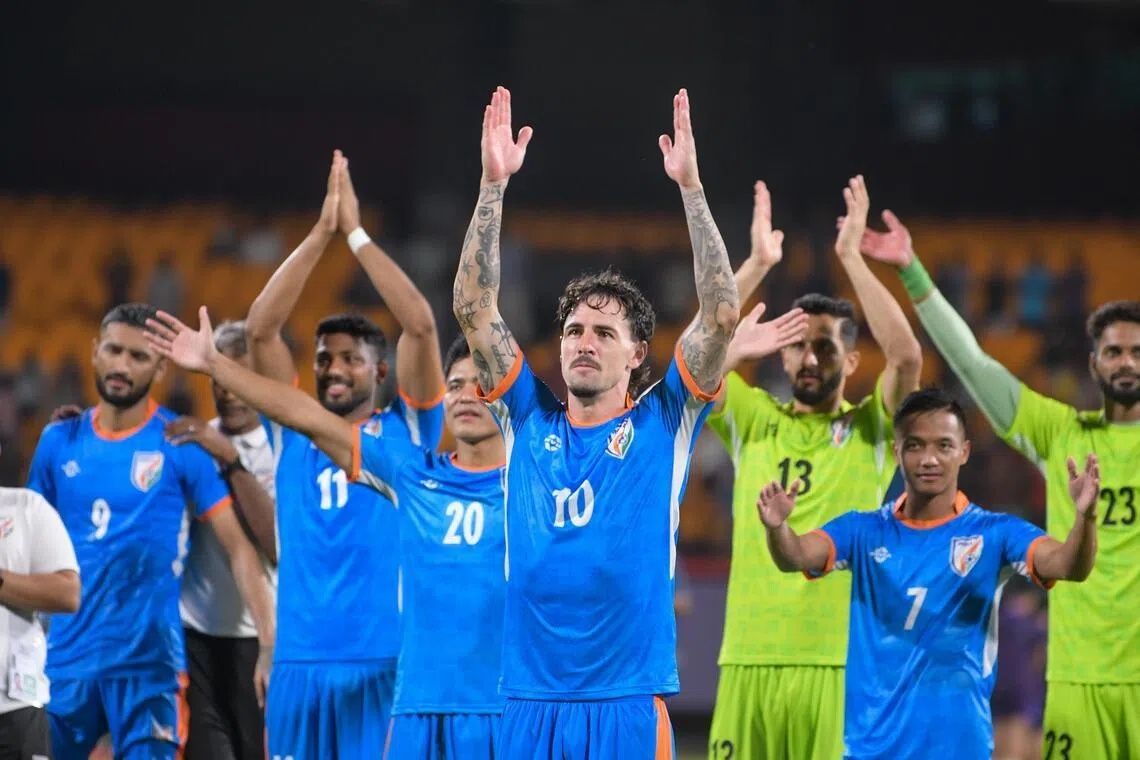
India's government is contemplating a significant departure from its decades-old sporting eligibility rules, exploring a Sports Passport scheme that could fundamentally reshape the nation's competitive standing in global athletics. The initiative, which has been forwarded to the Prime Minister's Office by the Ministry of Youth Affairs and Sports, would grant athletes with Indian ancestry or overseas citizenship status the ability to compete under the Indian flag without necessitating full naturalisation. This proposal arrives at a moment when Indian sports enthusiasts have found themselves celebrating athletes of Indian descent representing rival nations at major tournaments, a source of considerable frustration within the country's sporting communities.
The impetus for this reconsideration stems partly from a wave of recognition that has swept through global sport in recent years. During the 2026 FIFA World Cup qualification campaign, Indian football supporters identified numerous competitors with Indian family connections playing for other nations: Tahsin Mohammed Jamshid, a 19-year-old forward for Qatar with Malayalee heritage; Diogo Costa, Portugal's goalkeeper whose grandfather hailed from Goa; Sarpreet Singh, a midfielder for New Zealand with Punjabi parentage; and Samuel Moutoussamy, a midfielder for the Democratic Republic of the Congo whose father is Tamil. These discoveries highlighted what many perceived as a lost opportunity, particularly acute given that India's men's football team failed to qualify for the World Cup, with a FIFA ranking of 139, while the women's team sits at 69th globally.
The proposed Sports Passport framework would extend eligibility to holders of Overseas Citizen of India (OCI) status and Person of Indian Origin (PIO) designations, categories that recognise individuals of Indian heritage who have taken up foreign citizenships. This approach circumvents India's prohibition on dual citizenship, a restriction shared by several Asian neighbours including Singapore, Malaysia and Japan. According to sources cited by sports news website Khel Now, the detailed proposal currently under review emphasises potential impact across football, basketball and tennis, with officials estimating a decision timeline of six to eight months. The framework represents a strategic reversal of policy implemented in 2008, when India's sports ministry mandated that only Indian passport holders could represent the nation, a requirement intended to protect opportunities for local athletes competing against their overseas counterparts.
The global precedent for such arrangements already exists and has proven effective for competing nations. Several countries have successfully implemented comparable systems without requiring full citizenship acquisition. Qatar's Mission Passport, which granted Tahsin permission to represent the Gulf nation, functions precisely in this manner, providing foreign-born athletes a pathway to international competition whilst maintaining their original citizenship. Spain, Turkey and Bahrain have similarly established mechanisms to attract talented athletes from diaspora communities, leveraging global mobility to strengthen national squads. These examples demonstrate that the innovation India contemplates is neither unprecedented nor experimentally risky, yet represents a calculated strategic decision to compete more effectively on the world stage.
The historical precedent within India itself further contextualises this proposal's significance. Decades before the 2008 restriction took effect, Indian teams in swimming, rugby and tennis regularly featured overseas-origin players competing under the national banner. This earlier era of openness reflected different strategic priorities, but the policy shift inward reflected legitimate concerns about domestic player development and opportunity distribution. However, the evolving landscape of international sport has complicated this calculus. Sports lawyer Nandan Kamath, managing trustee of the GoSports Foundation, articulates the conceptual tension: while Indian law prohibits dual nationality, international sporting bodies operate under entirely different nationality frameworks. FIFA regulations, for instance, permit athletes to represent any nation they can demonstrate genuine ancestral or residential connection with, creating fundamental misalignment between India's immigration law and sporting governance standards.
The scale of India's diaspora represents an untapped reservoir of potential sporting talent. With over 37 million overseas Indians constituting the world's largest immigrant community, the nation possesses unique demographic advantages that few countries can match. This population concentration aligns with India's broader National Sports Policy 2025, which designates diaspora engagement as a strategic priority for national development. The demographics and geographic distribution of overseas Indian communities mean that recruitment efforts could potentially identify athletes possessing both competitive pedigree and meaningful cultural connection to India, distinguishing this approach from recruitment models reliant purely on mercenary considerations.
For Indian football specifically, the potential transformative impact looms particularly large. Despite commanding a population exceeding 1.4 billion people, India has consistently underperformed in international football relative to its demographic scale, ranking 139th globally in men's competition. This disparity stems from interconnected structural challenges: cricket's overwhelming cultural and financial dominance has channelled talent and resources away from alternative sports; administrative inefficiencies have hampered development programmes; and grassroots infrastructure remains inadequate across much of the nation. A sports passport framework could accelerate competitive improvement in football and related team sports without requiring complete overhaul of these systemic deficiencies, functioning as what some analysts describe as a strategic shortcut to immediate competitive gains.
The proposal's timing connects directly to India's anticipated bid to host the 2036 Olympic Games, according to experts involved in policy discussions. Successfully staging and performing well at an Olympics would substantially elevate national prestige and demonstrate sporting development across multiple disciplines. The cricket-centric allocation of sporting resources and attention has historically disadvantaged football, basketball and tennis, creating competitive gaps that sports passport eligibility could help narrow. Recent failures—the men's football team's non-qualification for both the 2026 FIFA World Cup and AFC Asian Cup 2027—underscore the urgency many policymakers perceive regarding performance enhancement strategies.
One concrete illustration of the proposal's potential impact emerges from the case of Ryan Williams, an Australian forward who navigated India's current citizenship requirements to represent the national team. Williams' eligibility derived from dual heritage: his father is English, whilst his mother was born in India and represented Australia after migration. Obtaining Indian citizenship required relinquishing his Australian passport, a process consuming over a year despite his clear eligibility. Remarkably, within four minutes of his AFC Asian Cup qualifier debut against Hong Kong, Williams scored the fastest goal in Indian men's national team debut history, demonstrating immediate competitive contribution. Yet his case also illustrates the practical friction inherent in current arrangements—the extended timeline and irreversible citizenship surrender deter many potentially eligible athletes from pursuing representation.
Critical perspectives on the proposal, however, warrant serious consideration. Some observers contend that importing foreign-born talent represents an inadequate response to deeper structural problems constraining Indian sport. Arata Izumi, a Japanese midfielder who surrendered his passport to acquire Indian citizenship in 2012, cautions that sustainable national teams require coherent domestic development ecosystems rather than reliance on parachuted international acquisitions. The concern centres on whether sports passport holders would possess sufficient emotional and cultural investment in Indian success, or whether representation would devolve into purely professional arrangements lacking the national commitment that characterises genuinely competitive teams. These critiques highlight the distinction between tactical short-term improvements and strategic long-term sporting development.
The Ministry of Youth Affairs and Sports and All India Football Federation have maintained silence regarding specific proposal details, reflecting either ongoing deliberations or institutional caution regarding public commitment prior to governmental decision-making. However, the proposal's circulation to the Prime Minister's Office indicates serious consideration at the highest policy levels. Implementation would require legislative and regulatory modifications, necessitating substantial bureaucratic and political consensus. The government's estimated decision timeline of six to eight months suggests neither hasty implementation nor indefinite postponement, positioning the initiative as a genuine policy priority within India's sports governance apparatus.
For Malaysian and broader Southeast Asian sporting communities, the Indian initiative carries strategic implications. Regional talent mobility dynamics could shift substantially if India successfully implements sports passport eligibility, potentially creating competitive recruitment landscapes for neighbouring nations' athletes. Malaysia's own sporting development challenges—particularly in football—might prompt parallel policy reconsideration regarding overseas-origin athlete eligibility. The regional precedent of Singapore's sporting success despite tight citizenship restrictions contrasts with India's approach, suggesting multiple pathways toward competitive excellence. India's decision will likely influence how other developing Asian nations conceptualise the relationship between citizenship law and sporting nationality, potentially catalysing broader regional reassessment of athlete eligibility frameworks and diaspora engagement strategies in sport.
Ultimately, the Sports Passport proposal represents India's acknowledgment that global sporting competition has fundamentally evolved, with talent mobility and diaspora engagement now constituting standard elements of competitive strategy. Whether implemented as proposed, substantially modified, or abandoned following further deliberation, the initiative reflects serious consideration of how nations can optimise their competitive positioning whilst respecting their own legal and cultural frameworks. The proposal's resolution will signal India's strategic priorities regarding sporting development, diaspora relationships and the balance between domestic player protection and international competitive ambition.

