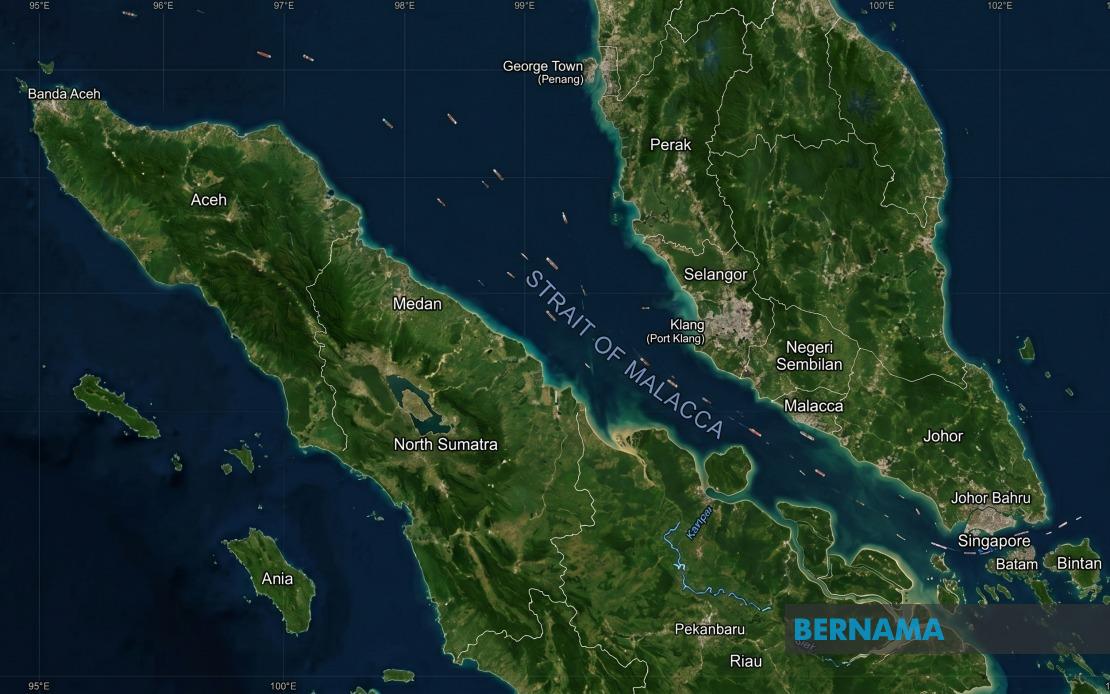
The governments of Indonesia and Singapore have jointly reaffirmed their determination to protect the Strait of Malacca during President Prabowo Subianto's meeting with Singapore Prime Minister Lawrence Wong at Istana Merdeka in Jakarta. The two leaders, speaking at a joint press conference on Monday, stressed that their nations share fundamental interests in preserving peace and upholding international maritime law within this globally critical waterway. Their statements underscore renewed focus on a region through which roughly one-quarter of the world's traded goods pass annually.
Both countries have committed to working alongside Malaysia and Thailand to maintain security and safeguard the freedom of navigation that underpins global commerce. This multilateral approach reflects growing acknowledgment that the Strait of Malacca—bordered directly by Indonesia and Singapore—requires coordinated action among regional stakeholders to remain secure and accessible. The commitment aligns with the 1982 United Nations Convention on the Law of the Sea, which establishes the legal framework governing maritime activities in international waters.
During their annual Leaders' Retreat, President Prabowo articulated Indonesia's core position: the Strait must remain open to all parties while being protected from threats that jeopardise legitimate commerce and safety. This framing addresses evolving maritime challenges beyond traditional piracy, reflecting contemporary concerns about maritime security. The strait's vulnerability to disruption has significant implications for Southeast Asian economies, particularly Malaysia, which depends heavily on transshipment and port operations connected to this waterway.
President Prabowo identified multiple dimensions requiring ongoing protection, including prevention of pollution, mitigation of maritime accidents, and countering piracy activities. These concerns reflect both environmental stewardship and operational safety—issues that affect not only the three bordering nations but also the broader international community relying on this passage. The articulation demonstrates Indonesia's sophisticated understanding of maritime governance beyond conventional security threats.
The bilateral meeting, the second annual retreat between these leaders, reflects the deepening strategic partnership between Southeast Asia's largest and most developed economies. The timing is particularly significant given Indonesia's recent presidential transition and Singapore's consistent positioning as a maritime hub. Wong's visit to Jakarta signals continuity in bilateral ties despite recent leadership changes in Jakarta, reassuring regional partners about stability in key relationships.
Beyond the Strait of Malacca, the leaders discussed broader regional and global challenges affecting both nations. Their conversation on regional dispute resolution, emphasising dialogue and diplomacy, carries implications for multiple ongoing issues across Southeast Asia, from territorial matters to trade tensions. The explicit reaffirmation of ASEAN's commitment to peaceful resolution stands as a counterweight to external pressures and demonstrates the bloc's collective stance on international conduct.
The mention of addressing misunderstandings and misperceptions through open dialogue as friends suggests both leaders recognise potential friction points within regional relationships. This diplomatic language reflects sophisticated statecraft—acknowledging differences while maintaining partnership frameworks. For Malaysian readers, this emphasis on multilateral coordination directly affects how the Strait of Malacca is governed and protected, influencing shipping costs, insurance premiums, and commercial predictability.
The upcoming 60th anniversary of Indonesia-Singapore diplomatic relations next year provides context for current statements. Prabowo's confidence in deepened cooperation signals both leaders' investment in long-term regional stability. The anniversary milestone offers opportunity for substantive cooperation agreements, potentially including enhanced maritime surveillance, joint training exercises, or updated protocols for responding to security incidents.
From a Southeast Asian perspective, this Indonesian-Singapore commitment reflects broader recognition that regional prosperity depends on maintaining open shipping lanes and predictable maritime governance. Singapore's position as a major port authority and financial centre makes its commitment to Strait security particularly consequential. Indonesia's role as the direct territorial guardian places responsibility for implementing protective measures on Jakarta, a responsibility that requires sustained political will and resource allocation.
The partnership's emphasis on cooperation with Malaysia and Thailand explicitly acknowledges that unilateral action cannot adequately protect the Strait. Malaysian involvement is essential given the country's direct interest in secure shipping routes and economic stake in regional maritime commerce. The multilateral framing suggests recognition that effective stewardship requires consensus-building among all stakeholders, not just the two largest players.
The joint statement's focus on preparing the bilateral partnership for future challenges suggests both nations anticipate evolving security dynamics. Climate change, technological disruption of traditional maritime operations, and potential shifts in global trade patterns all could affect the Strait's character and security requirements. The leaders' forward-looking approach positions Indonesia and Singapore to adapt cooperative frameworks as circumstances change.
The reaffirmation during an official retreat, rather than a chance encounter, signals this commitment's importance within both governments' foreign policy priorities. Public statements during high-level bilateral meetings carry weight in diplomatic culture, indicating willingness to invest political capital in Strait security. For Malaysia and other Southeast Asian nations, this reassurance about Indonesian-Singaporean coordination on maritime governance represents stability that supports regional economic development and security cooperation frameworks.

