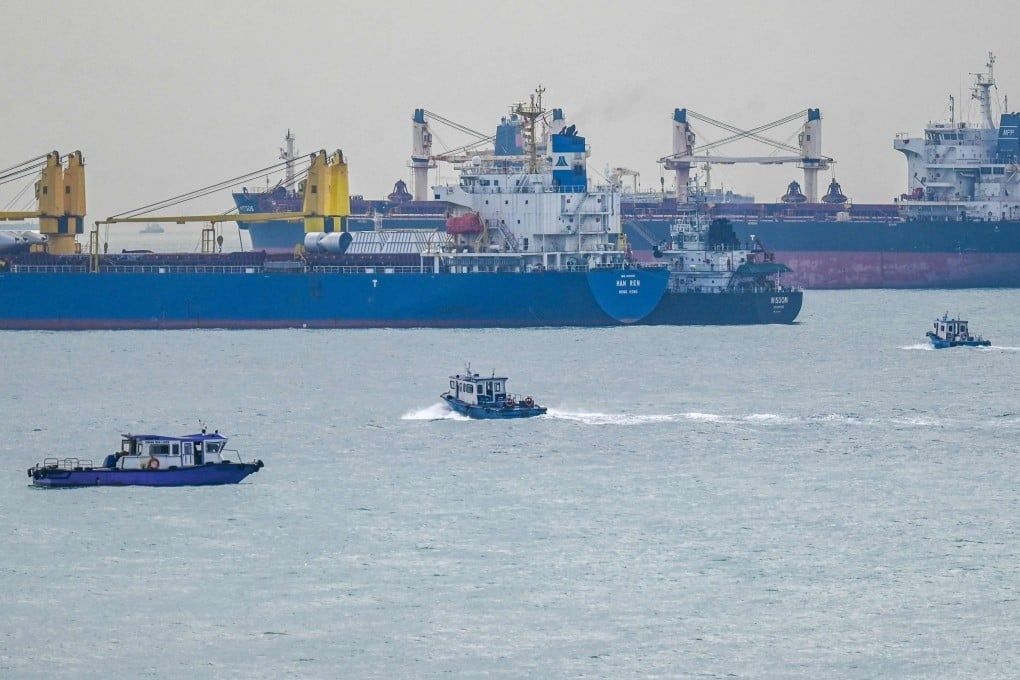
President Prabowo Subianto and Singapore Prime Minister Lawrence Wong have jointly pledged to maintain security and open access along the Strait of Malacca, underscoring the waterway's significance to both nations and the broader Southeast Asian region. The commitment emerged during their annual Leaders' Retreat at Jakarta's Istana Merdeka on Monday, where the two leaders reaffirmed that Indonesia and Singapore's shared interests in the strait align with the framework established by the 1982 United Nations Convention on the Law of the Sea.
For Malaysia and the wider region, this bilateral affirmation carries considerable weight. The Strait of Malacca remains one of the world's most crucial maritime passages, handling roughly a quarter of global maritime trade and serving as a lifeline for energy supplies to East Asia. As the two primary bordering states, Indonesia and Singapore's coordinated stance establishes a foundation for the multilateral approach that Malaysia, as the third major stakeholder, has consistently advocated. Prabowo's explicit mention of continued coordination with both Malaysia and Thailand signals that this commitment extends beyond Jakarta and Singapore to embrace the broader quartet of nations with direct interests in maintaining the waterway's stability.
The strategic dimension of this agreement extends beyond conventional security concerns. Prabowo identified a comprehensive threat landscape affecting the strait, encompassing maritime piracy, pollution, and shipping accidents—challenges that transcend simple bilateral arrangements and demand sustained regional cooperation. The inclusion of environmental protection and accident prevention reflects growing recognition that the strait's security encompasses not merely geopolitical stability but also ecological preservation and maritime safety standards that benefit all users of the passage.
Both leaders emphasised their commitment to preserving the strait as a channel open to all nations, a position that carries implicit resonance given broader geopolitical tensions in Asia. By anchoring their stance in UNCLOS principles, Indonesia and Singapore reinforce the rules-based international order that underpins freedom of navigation—a particularly significant assertion in the current regional context where maritime disputes and strategic competition have intensified. This legal foundation provides legitimacy and continuity to their position, distinguishing it from ad-hoc security arrangements.
Wong's visit to Jakarta represented the second annual Leaders' Retreat between the two nations, a frequency that underscores the institutionalisation of high-level dialogue between them. The retreat format itself—combining bilateral, regional and global agenda items—reflects the multifaceted nature of Indonesia-Singapore relations and their mutual recognition that peace and prosperity in Southeast Asia depends on navigating complex, interconnected challenges simultaneously. This comprehensive approach stands in contrast to narrower, transactional diplomatic engagements.
The timing of this affirmation carries additional significance given the broader regional environment. Southeast Asia faces mounting pressure from great power competition, with multiple external actors seeking influence over maritime corridors and sea lanes. By publicly reaffirming their commitment through a joint press conference streamed online, Prabowo and Wong signalled their positions transparently to regional and international audiences, establishing clear expectations for conduct within the strait and discouraging unilateral actions that might compromise its security.
Prabowo's reference to the forthcoming 60th anniversary of Indonesia-Singapore diplomatic relations next year suggests that the two nations view their partnership as enduring and foundational. This historical perspective contextualises the Malacca Strait commitment within a broader relationship spanning six decades, indicating that security cooperation represents continuity rather than a reactive measure. The emphasis on future-oriented partnership preparation acknowledges that challenges facing the strait will evolve, requiring ongoing adaptation of bilateral and multilateral frameworks.
For Malaysian stakeholders, this bilateral affirmation presents both opportunities and considerations. While Indonesia and Singapore's reaffirmed commitment strengthens the collective position of littoral states in defending the strait's open status, Malaysia's role as a key participant in any formal coordination mechanisms remains essential. The explicit mention of Malaysian involvement suggests recognition that trilateral or broader cooperative arrangements command greater legitimacy and effectiveness than purely bilateral understandings.
The commitment to resolving disputes through peaceful dialogue and diplomacy, emphasised by both leaders in relation to both regional and global issues, carries implications extending beyond the strait itself. This principle, presented as reflecting ASEAN's collective position, reinforces Southeast Asian commitment to the peaceful resolution doctrine at a moment when various regional tensions—from the South China Sea disputes to maritime boundary questions—test that commitment regularly. By anchoring Malacca Strait security within this broader philosophical framework, the leaders linked a specific security concern to universal principles of conflict resolution.
The discussion of current and future challenges facing the Indonesia-Singapore partnership indicates that both governments recognise the strait's security landscape remains dynamic and potentially vulnerable. Rather than treating the waterway's safety as a settled matter, the leaders presented their commitment as an ongoing process requiring continuous engagement, periodic reassessment, and adaptive strategy. This forward-looking orientation distinguishes their approach from stagnant institutional arrangements that might fail to address emerging threats such as cyber-attacks on maritime infrastructure, climate-driven changes to navigation patterns, or evolving piracy tactics.
For regional observers including Malaysia, this reaffirmation serves as a baseline against which to measure future cooperation. The public nature of the commitment, delivered through a livestreamed press conference, establishes accountability mechanisms and creates expectation that Indonesia and Singapore will demonstrate concrete follow-up actions. Whether through enhanced information-sharing protocols, joint training exercises, or coordinated maritime patrols, the rhetoric of commitment must translate into tangible cooperative measures that benefit all users of the Strait of Malacca.

