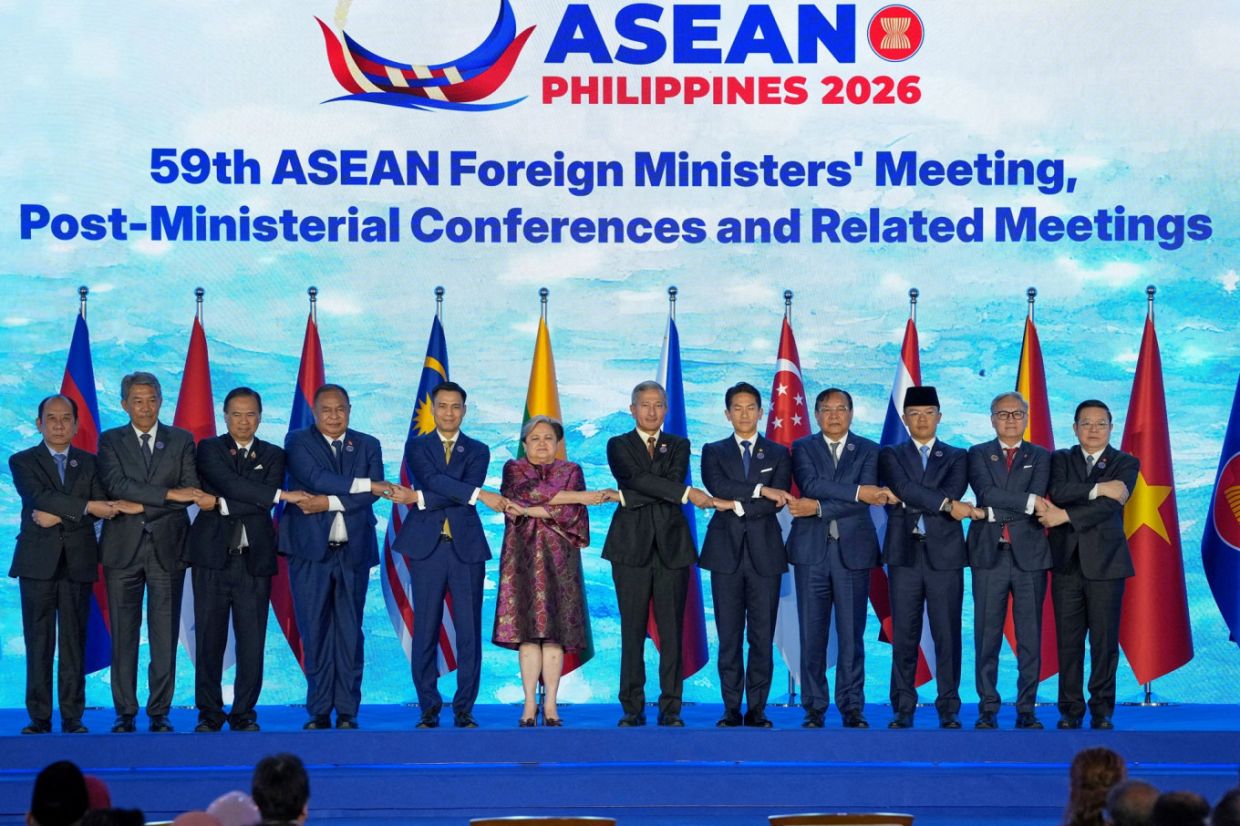
Indonesia has escalated pressure on its fellow Asean members to convert ambitious regional commitments into measurable progress, issuing a stark warning that the 11-nation bloc faces a defining moment as international crises intensify. The appeal came during closed-door diplomatic sessions in Manila on Tuesday, where senior foreign ministers gathered to coordinate positions before subsequent meetings with eleven external partners, including major powers such as the United States, China and Russia. Indonesian Foreign Minister Sugiono framed the moment as crucial, questioning whether Asean could demonstrate its capacity to deliver substantive results rather than merely issuing aspirational statements.
The timing of Indonesia's exhortation reflects growing anxiety within Asean capitals that the organisation risks losing relevance if it cannot address long-standing regional problems whilst navigating fresh external shocks. Sugiono emphasised that the bloc's charter obligations extend beyond ceremony; the organisation must actively safeguard the region's political stability, economic resilience and social cohesion. He referenced Asean's May Summit decision to amend its charter and admit Timor-Leste as the eleventh member, presenting this as evidence of institutional evolution. However, he pointedly asked whether such symbolic gestures would translate into Asean's ability to manage contemporary crises. The question resonated in a meeting room aware that member states remain fractured on multiple fronts, from Myanmar policy to South China Sea navigation rights.
The Middle East conflict has emerged as an immediate economic threat to Southeast Asia, disrupting energy supply chains and triggering broader financial uncertainty. Asean's joint ministerial statement acknowledged mounting concerns regarding the conflict's ripple effects on regional commerce, the safety of nationals working in affected zones, and efforts to sustain humanitarian access. The bloc noted various mitigation initiatives underway at both regional and national levels to cushion socio-economic shocks, particularly protecting vulnerable populations. Yet the statement's cautious tone masked deeper anxieties about Asean's capacity to shield its economies from geopolitical turbulence beyond its control, particularly when member states pursue divergent energy strategies with external powers rather than coordinated regional responses.
Energy vulnerability has exposed a strategic paradox threatening Asean's collective negotiating position. As Middle Eastern supply disruptions ripple through the region, several member states have accelerated purchases of alternative energy sources from China, including renewable technologies. Philippine import data illustrates this shift starkly: solar panel shipments from China more than doubled in the first five months of this year compared to the equivalent 2023 period. This fragmented approach to energy security potentially weakens Asean's leverage in negotiations with Beijing over the contested South China Sea. Rather than negotiating collectively from a position of economic independence, individual member states increasingly depend on Chinese energy solutions, inadvertently strengthening Beijing's hand in maritime disputes.
The South China Sea Code of Conduct remains emblematic of Asean's struggle to convert diplomatic ambition into binding regional law. Negotiations on this agreement have languished for nearly two and a half decades, with the document intended to establish rules governing one of the world's most strategically significant and contested waterways. Sugiono deployed pointed rhetoric on this issue, arguing that Asean's citizens have waited long enough for maritime rules-based governance. He stressed that a region governed by established regulations demonstrates greater resilience than one controlled by unilateral power projection, an implicit reference to larger powers' capabilities to dominate the waterway without agreed constraints. His insistence that negotiations must reach conclusion within months rather than years reflected Indonesia's growing impatience with incremental progress that perpetually defers final resolution.
Myanmar's ongoing political crisis complicated Asean's multilateral coordination further during the Tuesday retreat session. The bloc has attempted to guide Myanmar's military government through the Five-Point Consensus framework established in 2021, yet member states remain deeply divided over appropriate pressure mechanisms and engagement strategies. Philippine Foreign Secretary Theresa P. Lazaro indicated that ministers discussed revising how Asean measures progress against the Five-Point Consensus metrics and potentially reforming the annual special envoy mechanism tasked with Myanmar diplomacy. These discussions suggest acknowledgment that existing approaches have yielded limited results, though concrete structural changes remain uncertain. Lazaro noted that any substantive reforms would likely await the November leaders' meeting, implying that the current special envoy framework will continue operating despite widespread recognition of its limitations.
Member state divisions over Myanmar strategy reflect deeper structural tensions within Asean regarding enforcement mechanisms and compliance incentives. Unlike traditional international organisations that possess sanctions capabilities or conditional aid instruments, Asean operates primarily through non-interference principles and consensus-based decision-making. This framework facilitates inclusion but constrains effectiveness when member states prioritise bilateral relationships over collective positions. Sugiono acknowledged that retreat discussions had resurface longstanding tensions, though he characterised member contributions as offering "progressive" perspectives. This diplomatic language concealed continuing disagreement over how forcefully Asean should press the Myanmar junta, with some members resisting measures perceived as interventionist whilst others demand more assertive action.
The broader context of Asean's institutional evolution suggests that Indonesia's call for concrete delivery reflects anxieties about the bloc's relevance amid intensifying great power competition. The admission of Timor-Leste expanded Asean's membership but did not automatically enhance its collective problem-solving capacity. The organisation now encompasses diverse economic interests, security concerns and strategic alignments that complicate unified action. Myanmar's instability, maritime disputes with major powers, and economic vulnerability to external shocks all demand coordinated responses, yet Asean's decision-making mechanisms often produce lowest-common-denominator outcomes satisfactory to none. Sugiono's intervention represents Indonesian leadership attempting to push the bloc toward more ambitious goal-setting and accountability structures.
The Manila meetings also highlighted how Asean's external partnerships increasingly shape its internal dynamics. The scheduled Wednesday dialogue sessions with the United States, China, Russia and other partners position these external actors as stakeholders in regional stability discussions. This arrangement, whilst providing access to great power perspectives, also creates incentives for member states to coordinate positions with these external powers rather than exclusively within Asean frameworks. The fragmentation visible on energy strategy, Myanmar policy and South China Sea negotiations suggests that individual member state relationships with external partners already exert considerable influence over collective Asean positions. Wednesday's dialogues will likely reinforce this pattern, with member states seeking bilateral validation of their preferred approaches from major powers.
Indonesia's diplomatic pressure on Asean delivery mechanisms must be understood as part of Jakarta's broader effort to assert regional leadership. As the bloc's largest economy and most strategically positioned member, Indonesia has consistently championed stronger Asean cohesion and more assertive regional governance. Sugiono's rhetoric about rules-based regional order directly addresses the South China Sea dispute where Indonesian interests, though not involving direct sovereignty claims, encompass maritime security and freedom of navigation concerns. By emphasising that Asean must move from commitment to implementation, Indonesia positions itself as the bloc's conscience, demanding that member states prioritise collective resilience over bilateral convenience. This leadership approach carries risks if other members perceive Indonesian calls for action as attempts to impose Jakarta's preferences rather than facilitating genuine consensus.
The practical implications for Malaysia and other Southeast Asian nations centre on whether Asean will develop binding mechanisms to address common challenges or continue operating as a forum generating statements without enforcement capacity. Malaysia's position as a South China Sea claimant state, energy importer and dialogue partner with multiple great powers mirrors broader Asean dilemmas. The nation faces pressures to pursue bilateral advantages whilst maintaining collective regional solidarity. The Middle East energy crisis illustrates this tension acutely; Malaysia could benefit from preferential energy supply relationships with Beijing, yet such arrangements potentially weaken Asean's collective negotiating position. The weeks leading to November's leaders' meeting will reveal whether Indonesia's calls for delivery gain traction or whether member state fragmentation continues constraining Asean's effectiveness.

