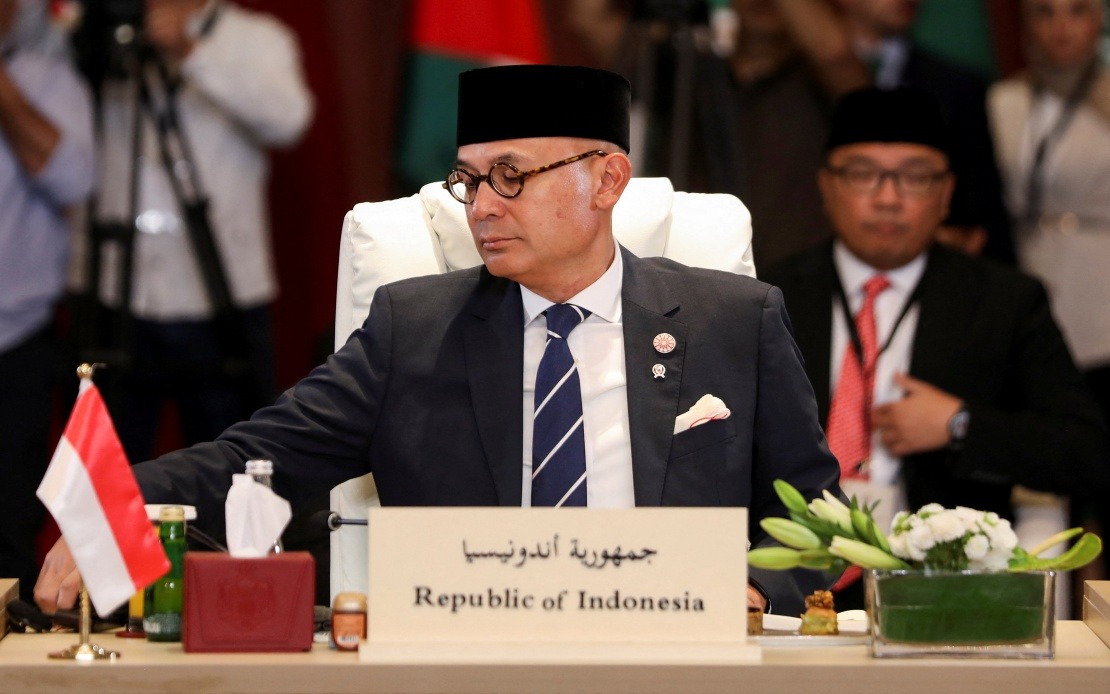
Indonesia has made an urgent appeal to the global community to establish a unified coalition backing Palestine, arguing that the Palestinian struggle transcends religious boundaries and demands coordinated international action. Speaking at the Ministerial Meeting on Jerusalem in Amman, Jordan on Wednesday, Deputy Foreign Minister Arrmanatha Nasir—standing in for Foreign Minister Sugiono—emphasised that fragmented responses have historically allowed Israel to exploit divisions among nations concerned about the situation in the occupied territories.
The diplomat's intervention underscores a strategic shift in Jakarta's diplomacy, moving beyond rhetorical support toward concrete policy proposals aimed at mobilising the broader international community. Nasir stressed that outdated diplomatic frameworks have proven ineffective in addressing what Indonesia characterises as systemic violations, and that the time has come for a more cohesive and legally grounded approach. His remarks reflect Indonesia's position as a leading voice within the Non-Aligned Movement and the Organisation of Islamic Cooperation, positioning the nation as a bridge between Muslim and non-Muslim nations on this issue.
Indonesia's proposal comprises five interconnected measures designed to fortify international pressure and reshape the diplomatic landscape. First, the country advocates for developing a unified strategy rooted in solidarity rather than competing national interests. Second, it calls for strengthening enforcement mechanisms tied to international law and the rulings of the International Court of Justice, suggesting that existing legal frameworks remain underutilised. Third, Indonesia proposes expanding formal international recognition of Palestinian statehood, recognising that diplomatic legitimacy can enhance Palestine's negotiating position and international standing. Fourth, the initiative emphasises protecting the Al Aqsa Mosque and strengthening the Hashemite Custodianship over Jerusalem's holy sites, addressing religious sensitivities that resonate across Muslim-majority nations. Finally, Indonesia champions support for Gaza's reconstruction and the mandate of the United Nations Relief and Works Agency for Palestine Refugees in the Near East, linking immediate humanitarian needs to broader political objectives.
The geopolitical context informing Indonesia's call has grown considerably more complex in recent months. Nasir identified several destabilising factors reshaping West Asia: the expansion of illegal Israeli settlements in the West Bank, intensified military operations affecting Gaza, Syria and Lebanon, and escalating tensions between the United States and Iran. These developments collectively suggest that the Palestinian issue has become increasingly entangled with wider regional power dynamics, making unilateral approaches by any single nation or even regional bloc insufficient. For Southeast Asian countries like Malaysia, Singapore and Thailand with stakes in regional stability, Jakarta's emphasis on coordinated responses carries practical implications for trade routes, investment flows and diplomatic standing.
The Amman meeting itself represented a significant diplomatic gathering, attracting foreign ministers and senior representatives from twelve nations plus the League of Arab States. The presence of Malaysia, Algeria, Saudi Arabia, Iraq, Egypt, Türkiye, Tunisia, Somalia, Pakistan, Morocco, Palestine and Qatar created a coalition spanning North Africa, the Middle East and South Asia. This geographic diversity strengthens the legitimacy of any joint statement, though it also highlights the challenge of achieving consensus among nations with differing strategic priorities and relationships with major powers.
The ministerial gathering adopted a joint statement that moved beyond expression of solidarity into specific operational declarations. Participants rejected unilateral diplomatic relocations to Jerusalem as violations of international law—a direct rebuke to countries that have moved their embassies to the city in recent years. The statement also endorsed strengthening Palestinian institutional capacity within Jerusalem, suggesting recognition that Palestinian governance structures require reinforcement. Importantly, the group agreed to coordinate media campaigns to raise global awareness of Israel's actions and their consequences for regional and international peace, indicating an intention to shape the international narrative surrounding the conflict.
Indonesia's particular emphasis on the status quo in Jerusalem and the Al Aqsa Mosque reflects both religious and geopolitical calculations. As the world's largest Muslim-majority nation, Indonesia benefits politically from championing the defence of Islam's third-holiest site. Simultaneously, by framing the issue in terms of international law and the International Court of Justice rather than exclusively religious grounds, Jakarta attempts to broaden appeal to secular and non-Muslim nations whose support would be necessary for a truly global coalition. This sophisticated messaging suggests an effort to move Palestinian advocacy beyond the traditional Muslim world into mainstream international discourse.
The challenge ahead for Indonesia and its coalition partners lies in converting ministerial declarations into concrete diplomatic and economic pressure. Previous international meetings on Palestine have generated strong statements that failed to produce tangible policy changes. The question facing the Amman group is whether their commitment to coordinated messaging and media campaigns can actually shift voting patterns in international organisations, influence major power behaviour, or accelerate Palestinian institution-building. Indonesia's proposal to promote Palestinian national unity also hints at internal Palestinian political divisions—between Fatah and Hamas—that external actors cannot easily resolve but which fundamentally complicate international efforts.
For Southeast Asia more broadly, Indonesia's leadership on this issue carries implications for regional cohesion and non-aligned diplomacy. Malaysia has similarly championed Palestinian causes, and Vietnam and Thailand maintain complex relationships with both Israel and Arab nations. Indonesia's five-point framework provides a template that other regional nations might adopt without committing to explicitly anti-Israel positions, allowing for diverse approaches within a broader supportive framework. This flexibility may prove essential for maintaining regional unity on a topic where countries face competing pressures from trade partners, security allies and domestic constituencies.
The diplomatic effort also reflects concerns about the sustainability of existing international frameworks. Indonesia's emphasis on International Court of Justice rulings and UNRWA's mandate suggests anxiety that these institutions face erosion or irrelevance. By explicitly supporting these mechanisms, Indonesia positions itself as a defender of multilateralism at a moment when major powers increasingly challenge international institutions. This stance aligns with Indonesia's broader strategic interests in preserving rules-based international order, even as some nations attempt to reshape those rules.
Looking forward, the success of Indonesia's initiative will depend on whether the coalition can move beyond the Amman meeting to coordinate actions in the United Nations, regional organisations and bilateral relationships. The proposal to develop a common strategy requires mechanisms for ongoing consultation and decision-making that ministerial-level meetings alone cannot provide. Whether Indonesia will establish a permanent coordination mechanism or rely on ad-hoc gatherings remains unclear, though the former approach would signal greater commitment to transforming rhetoric into sustained diplomatic pressure.

