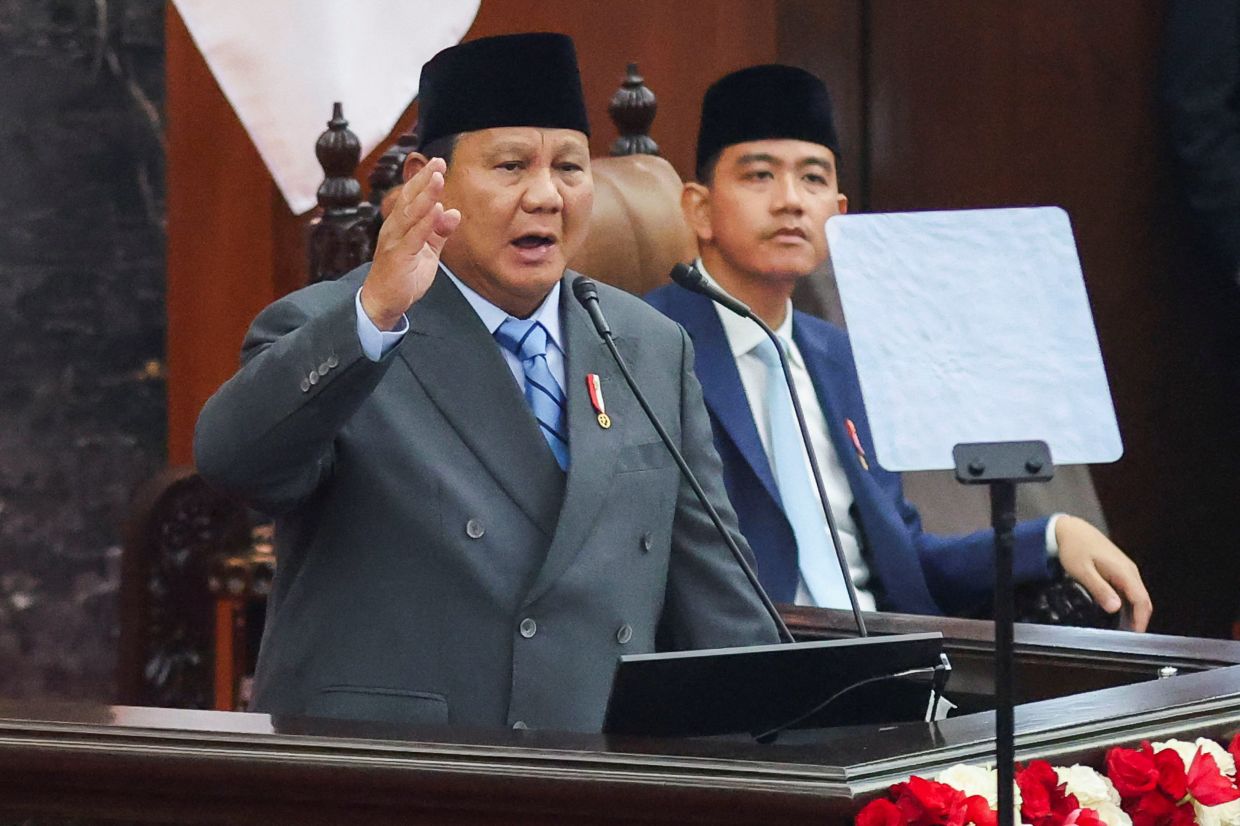
Indonesia's government is embarking on what President Prabowo Subianto characterizes as potentially the world's largest corporate restructuring, announcing plans to shut down over 750 state-owned enterprises before the year concludes. Speaking to parliament during his state of the nation address, Prabowo revealed that the newly established Danantara sovereign wealth fund uncovered far more state entities than previously believed—a staggering 1,074 in total, far exceeding earlier estimates of 300 to 400 enterprises.
The discovery of this vastly larger-than-expected portfolio of state firms has become a focal point for the administration's governance overhaul. Prabowo framed the enterprise consolidation as a corrective measure against systemic inefficiency and financial mismanagement, describing a situation where many state-owned entities operate with little accountability to national interests whilst simultaneously inflating profit figures. The president's characterization of reported earnings as "made up" underscores frustration with how these firms have historically masked operational failures through accounting practices that mask underlying dysfunction.
The immediate impact of this restructuring initiative has already proven substantial. To date, 290 enterprises have been eliminated, with ambitions to reduce the total roster to no more than 300 by December 31st. This aggressive timeline reflects the administration's determination to execute rapid institutional change. The consolidation effort has already generated approximately 50 trillion rupiah (over USD 2.8 billion) in cost savings through eliminating redundant positions, slashing executive compensation, and reducing expenses related to facilities, vehicle fleets, and travelling allowances that characterize typical state bureaucracies.
For Malaysian observers, Indonesia's wholesale restructuring of state enterprises carries significant regional implications. As Southeast Asia's largest economy grapples with bureaucratic bloat and the inefficient allocation of public capital, the ripple effects extend across supply chains and investment flows within the wider region. The consolidation may reshape competitive dynamics in sectors where state-owned competitors currently operate, potentially opening opportunities for private enterprise across both countries.
Beyond administrative streamlining, Prabowo has identified corruption within state-owned enterprise management as requiring urgent investigation. The president floated the prospect of establishing a specialized ad hoc court with retrospective jurisdiction spanning three decades to examine governance decisions and board conduct. This proposal signals recognition that accountability mechanisms must extend beyond contemporary mismanagement to address historical patterns of enrichment and malfeasance. However, the president simultaneously suggested implementing a "special amnesty" for officials willing to acknowledge wrongdoing, reflecting a pragmatic tension between justice and reconciliation.
Indonesia's persistent governance challenges place the country at significant disadvantage internationally. The nation scored a concerning 34 out of 100 on Transparency International's Corruption Perceptions Index for 2025, positioning it among lower-performing economies globally. This weak score reflects decades of institutional weakness despite legislative reforms, specialized investigative bodies, and high-profile prosecutions that have periodically captured public attention. The structural consolidation of state enterprises represents an attempt to reduce the surface area for corrupt practices by eliminating redundant bureaucratic layers where officials extract illicit rents.
Widespread public discontent over rising living standards has amplified political pressure for meaningful anti-corruption action. Protesters have seized upon graft allegations as a central grievance, linking governance failures to inflation that has eroded household purchasing power amid regional economic headwinds exacerbated by Middle Eastern tensions and elevated global oil prices. This connection between perceived institutional corruption and economic hardship creates political momentum for the administration's restructuring agenda, though skepticism regarding implementation remains justified given Indonesia's historical pattern of announcing reforms without sustaining follow-through.
Prabowo's flagship free school meals initiative, whilst addressing the concerning reality that one in four Indonesian children suffer from stunting, has itself become a focal point for criticism regarding waste and mismanagement. The president acknowledged this sentiment whilst reaffirming commitment to the programme, framing future iterations around improved efficiency and oversight. This balancing act—preserving popular social policies whilst addressing legitimate concerns about programme administration—reflects the political constraints shaping the restructuring agenda.
Economic performance metrics provide additional context for understanding the timing and urgency of institutional reform. Indonesia's second-quarter GDP growth of 5.3 percent, following 5.6 percent in the opening quarter, falls short of official targets and has prompted repeated skepticism from international analysts regarding the reliability of growth data. Prabowo has articulated an ambitious projection of 6.0 percent growth by year-end 2026, though achieving such targets whilst simultaneously undertaking massive public sector restructuring presents considerable implementation risks. The president has appropriately emphasized that economic expansion remains subordinate to improving living standards, particularly for lower-income Indonesians, positioning the enterprise consolidation as a means toward distributing prosperity more equitably rather than simply maximizing headline growth figures.

