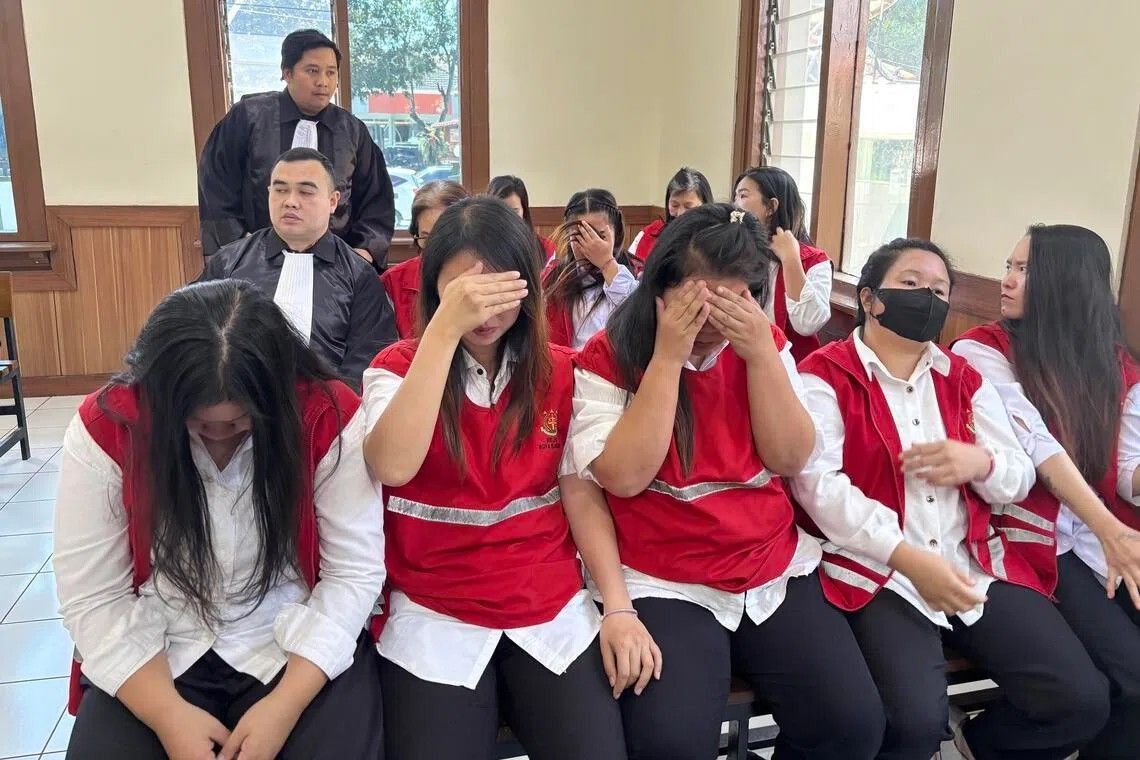
A Bandung District Court in West Java has concluded a sweeping human trafficking prosecution by convicting all 19 members of an organised baby-smuggling syndicate that operated across Southeast Asia. The verdict, delivered on July 21, represents a significant outcome in a case that exposed vulnerabilities in adoption and child welfare systems in the region and highlighted the lucrative underground market for infants destined for overseas placement.
Lie Siu Luan, the 70-year-old architect of the trafficking network, was found guilty of orchestrating the recruitment, forging of adoption documents, and international transport of infants. Operating under the aliases Popo and Lily, Lie coordinated what prosecutors described as a systematic operation in which vulnerable newborns were commodified and sold to willing buyers abroad. Judge Gatot Ardian Agustriono, presiding over the three-judge panel, declared that Lie had been proven guilty of recruiting, harbouring, transferring, and receiving persons for exploitation—the core elements of human trafficking under Indonesian law. The court sentenced her to seven years in prison, falling short of the prosecution's request for a decade-long sentence.
The scope of the criminal enterprise emerged gradually throughout the trial, which commenced in April. Investigators and prosecutors documented evidence that the syndicate trafficked at least 34 infants between 2023 and 2025, with Singapore serving as a primary destination market. At minimum, 12 of these children were delivered to buyers in Singapore, where they were sold at prices ranging from 200 to 250 million rupiah—approximately S$18,110 per infant. This pricing structure suggests a highly organised commercial operation rather than ad-hoc trafficking, indicating the ring had established networks of buyers, couriers, and facilitators capable of executing multiple transactions over an extended period.
The entire co-defendant pool faced identical guilty verdicts, though sentences varied according to their roles within the hierarchy. Astri Fitrinika, identified as the syndicate's chief recruiter responsible for identifying and acquiring infants from vulnerable families, received six years and seven months imprisonment. Two additional recruiters, Djaka Hamdani and Elin Marlina, received matching sentences of six years and seven months. Lai Su Hua, whose role centred on fabricating state documents necessary to satisfy formal adoption requirements and enable cross-border movement of children, also drew six years and seven months. The remaining 14 defendants, predominantly women who functioned as caregivers and handlers during the transfer process, received lighter sentences of three years and four months each—reflecting their peripheral positions within the criminal hierarchy.
The differentiation in sentencing reflects standard prosecutorial practice in transnational organised crime cases, where courts typically impose graduated penalties based on degree of culpability and decision-making authority. Lie's position as the mastermind warranted the harshest individual penalty, while recruiters who directly sourced the victims received intermediate sentences, and support personnel received the most lenient terms. This tiered approach aims to deter leadership roles in trafficking networks while recognising the relative coercion or limited agency that lower-level participants may have experienced.
During investigative interviews and courtroom testimony, both Lie and Astri acknowledged participation in most of the charged offences, yet they maintained that children were not abducted or taken by force. Instead, they characterised the transactions as voluntary surrenders by biological parents unable or unwilling to raise their offspring, a claim that raises complex questions about genuine consent and exploitation in contexts of poverty and family desperation. The defendants asserted that all children received adequate care and were protected from abuse throughout their placement in overseas homes. These statements, however, failed to convince the court that their conduct fell outside the definition of human trafficking, suggesting the judges applied a framework wherein even nominally consensual arrangements can constitute trafficking when they involve commercial transaction of minors, falsification of documents, and circumvention of legal adoption procedures.
The verdict carries significant implications for child welfare and adoption governance across Southeast Asia. Singapore's involvement as a primary destination for trafficked infants raises questions about enforcement capabilities within wealthy receiving nations and the adequacy of due diligence procedures when families and intermediaries arrange cross-border placements. The case underscores how formal legal channels for international adoption can be subverted through document forgery and coordination with corrupt officials, allowing traffickers to exploit institutional pathways designed to protect children. Malaysian authorities and civil society organisations monitoring human trafficking will likely scrutinise whether similar rings operate within or through Malaysian territory, given the region's interconnected networks and porous borders.
Indonesia's successful prosecution demonstrates commitment to enforcing anti-trafficking legislation and holding large criminal networks accountable, yet the case also illuminates structural vulnerabilities. The syndicate's ability to operate continuously from 2023 to 2025—a period spanning nearly three years—suggests that early warning systems, inter-agency coordination, and oversight of document issuance may have functioned inadequately. The involvement of 19 perpetrators indicates systemic participation rather than isolated criminal opportunism, pointing toward potential corruption or negligence among officials who facilitated document fabrication and child transfers.
For Malaysia and other Southeast Asian nations, the case provides a sobering lesson regarding the risks posed by unregulated or poorly monitored adoption intermediaries. Many families seeking to adopt internationally operate in good faith, yet the opacity surrounding child sourcing and document preparation creates space for trafficking networks to exploit gaps in oversight. Regional cooperation mechanisms, including information sharing between immigration authorities, child welfare agencies, and law enforcement, will be essential to identify and disrupt similar operations before they achieve the scale demonstrated by Lie's syndicate.
The sentencing also raises questions about deterrence and rehabilitation. While seven years represents a substantial custodial term, critics of Indonesia's anti-trafficking framework have argued that sentences remain insufficient relative to the severity and profitability of trafficking offences. When individual infants command prices exceeding 200 million rupiah, even lengthy prison terms may constitute an acceptable cost of doing business for highly organised criminal enterprises. This calculus suggests that supplementary measures—including asset forfeiture, lifelong restrictions on working with children, and increased financial penalties—may be necessary to enhance the actual costs and risks of trafficking participation.
Moving forward, the conviction of all 19 defendants offers a template for prosecutorial success in complex transnational trafficking cases. The ability to build sufficient evidence, secure guilty pleas from senior figures, and coordinate testimony from multiple defendants demonstrates investigative competence. However, the case also illuminates the critical importance of international cooperation in addressing trafficking with cross-border dimensions. Singapore's role as a destination market suggests that Australian, Singaporean, and Malaysian authorities should engage in parallel investigations into the buyers, handlers, and networks that received these trafficked infants, ensuring accountability extends throughout the supply chain and not merely to the Indonesian producers and transporters.

