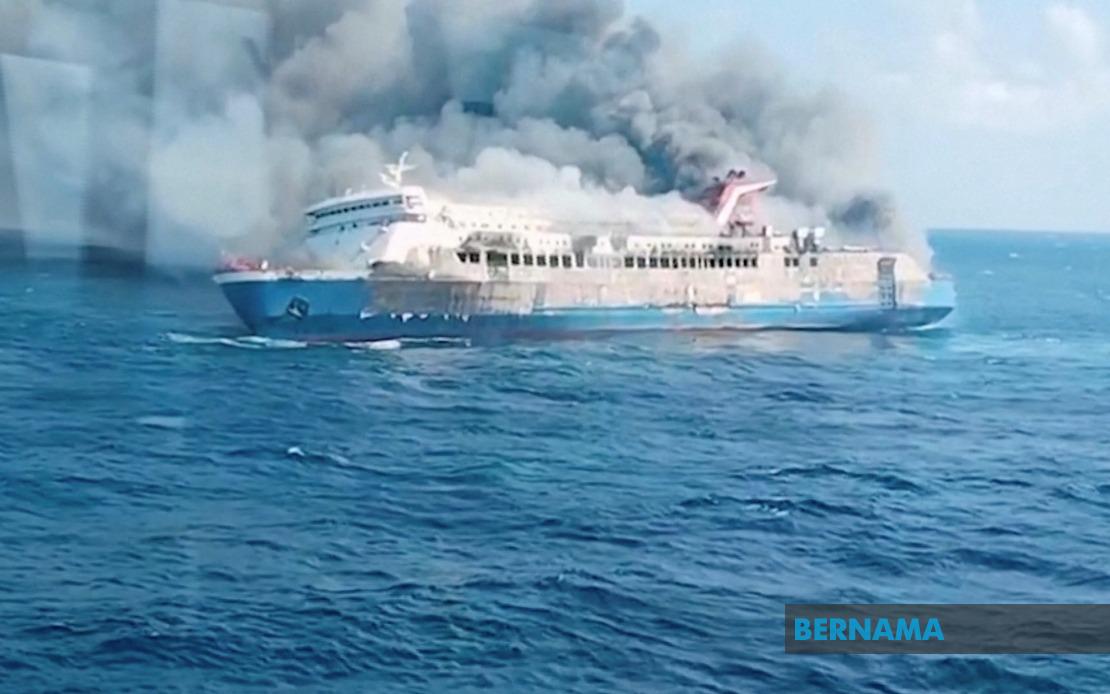
A devastating maritime disaster unfolded off the Indonesian coast on August 2 when the KMP Mutiara Santosa 2 became engulfed in flames while traversing waters near Sumenep, Madura. The passenger ferry, which departed from Surabaya bound for Makassar with 232 passengers and 39 crew members aboard, succumbed to a rapidly spreading fire that has so far claimed at least five lives. As rescue operations continued into the afternoon, authorities reported that 225 passengers had been safely evacuated, though 41 individuals remained unaccounted for and the search intensified across the maritime zone.
According to Nanang Sigit, the head of the Surabaya Search and Rescue Office, emergency responders received notification of the incident at 8.24 am local time and immediately mobilised a coordinated rescue response. The speed with which the fire spread proved catastrophic, with flames consuming much of the vessel and forcing those stranded aboard to seek refuge on the bridge and forward sections of the ship as they awaited rescue. Desperate passengers and crew members, faced with the advancing inferno and limited escape routes, resorted to jumping into the sea in a bid to survive, a decision that underscored the severity of the crisis unfolding on the water.
The rescue operation itself represented a complex undertaking involving multiple maritime agencies and the deployment of numerous vessels and personnel across the affected waters. Local fishing boats and commercial shipping in the vicinity responded swiftly to the emergency, retrieving numerous individuals who had jumped overboard in their struggle to escape the flames. By mid-afternoon, the scale of the evacuation effort became apparent, with the majority of passengers successfully brought to safety through the coordinated actions of rescue teams and neighbouring maritime traffic. However, the fate of the missing 41 individuals cast a shadow over the operation, prompting authorities to expand their search efforts and maintain continuous surveillance of the surrounding waters.
The incident carries significant implications for maritime safety in Southeast Asia, where inter-island ferry services form a critical backbone of regional transport connectivity. Indonesia's archipelago necessitates extensive reliance on sea transport, placing millions of passengers annually on vessels that must navigate busy shipping lanes and challenging waters. The KMP Mutiara Santosa 2 was operating on a well-established commercial route connecting two major economic centres, making this disaster a stark reminder of the vulnerabilities inherent in the region's maritime infrastructure. For Malaysian maritime authorities and shipping operators, the incident underscores the importance of maintaining rigorous safety standards and emergency preparedness protocols aboard passenger vessels operating throughout the region.
Investigations into the cause of the fire had not been completed as of the latest reports, though Indonesian authorities indicated that a comprehensive inquiry was underway. The circumstances that led to the outbreak and rapid escalation of flames aboard the KMP Mutiara Santosa 2 remained undetermined, prompting questions about whether potential mechanical failures, fuel system malfunctions, or other technical issues may have contributed to the catastrophe. Such investigations typically examine maintenance records, crew training and certification, cargo manifest documentation, and adherence to international maritime safety regulations. The findings will likely influence future policy discussions across Southeast Asia regarding vessel inspection protocols and operational safety requirements for inter-island ferries.
The human cost of this maritime tragedy reflects the broader challenges facing passenger safety in the region's extensive ferry networks. Each of the five confirmed fatalities and each of the 41 missing individuals represented lives that were altered or extinguished in the span of hours, affecting families, communities, and the broader travelling public who depend on these services for commerce and connectivity. For Malaysian observers, the incident resonates as a sobering reminder that similar risks exist aboard vessels operating in comparable conditions within regional waters. The ferry industry across Southeast Asia transports tens of millions of passengers annually, and maintaining rigorous safety standards represents both a moral imperative and an economic necessity.
Rescue operations continued throughout the afternoon and into subsequent days, with authorities marshalling additional resources to locate the missing individuals. The search expanded to encompass a wider maritime area as officials considered various scenarios regarding the final disposition of those unaccounted for. Advanced search technologies, including sonar equipment and aerial reconnaissance, supplemented the efforts of rescue vessels methodically combing the waters where the KMP Mutiara Santosa 2 had been navigating when the fire broke out. The emotional weight of the ongoing search mirrored similar maritime disasters that have periodically struck the region, each leaving indelible marks on the collective consciousness regarding sea travel safety.
From a regional perspective, this incident will likely feature prominently in upcoming discussions among Southeast Asian maritime authorities regarding harmonisation of safety standards and emergency response protocols. The Association of Southeast Asian Nations has long recognised maritime connectivity as essential to regional prosperity, yet this imperative must be balanced against the fundamental requirement to protect human life. Indonesian maritime officials will undoubtedly examine whether existing regulations governing passenger capacity, fire suppression systems, lifeboat provisions, and crew training align with international standards established by the International Maritime Organization. Neighbouring countries, including Malaysia, may use this tragedy to review their own oversight mechanisms and ensure that vessels operating within their waters meet or exceed established safety benchmarks.
The broader shipping industry across the region faces renewed scrutiny in the aftermath of this disaster, particularly regarding the maintenance and operational standards of older vessels that remain integral to inter-island commerce. While the KMP Mutiara Santosa 2's specific age and maintenance history were not immediately detailed in initial reports, the incident reinforces concerns about vessel fleet composition across Southeast Asia, where economic pressures sometimes compromise the systematic renewal and upgrade of maritime assets. Ship operators, port authorities, and governmental regulators will confront complex questions about balancing the economic viability of maritime transport services with the non-negotiable imperative to safeguard passenger safety. The tragic outcomes of this fire will likely catalyse policy discussions and potentially new regulatory frameworks aimed at preventing similar catastrophes.

