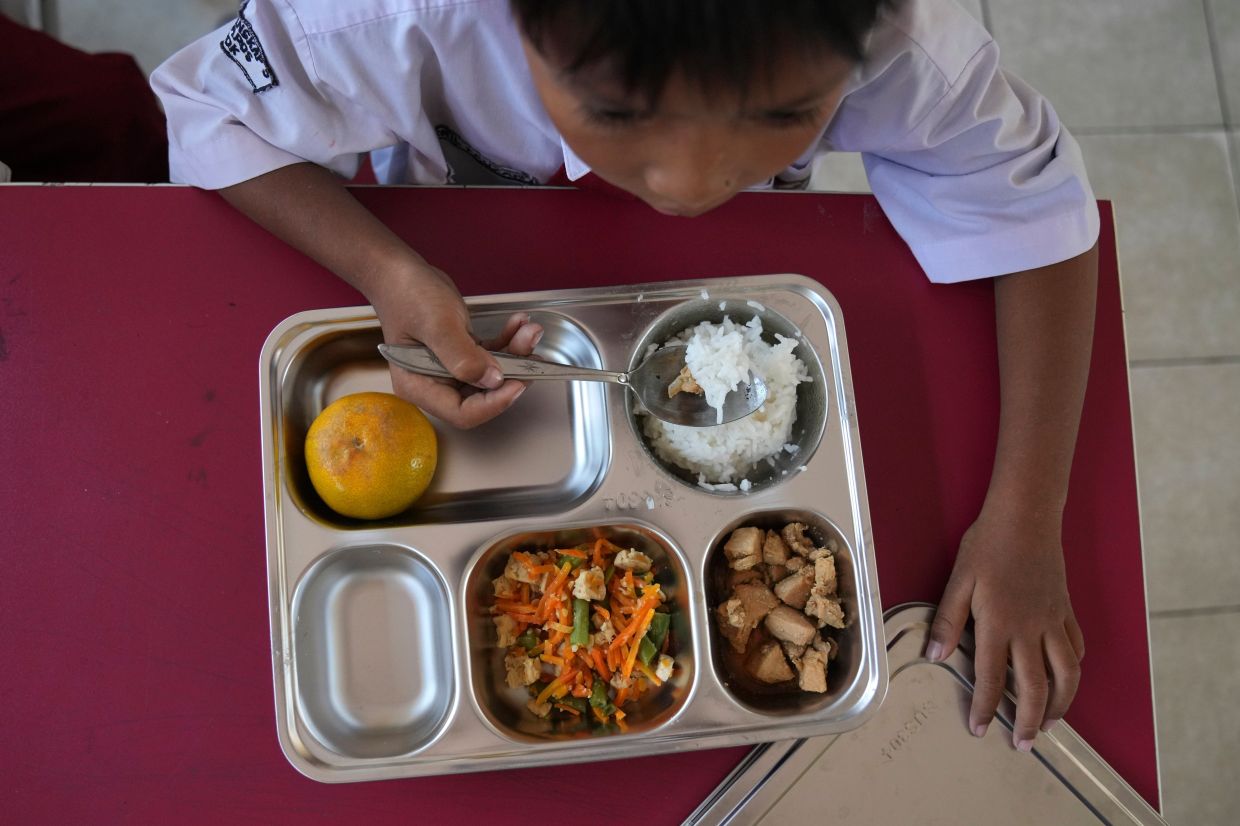
Indonesia's leading anti-corruption organisation is demanding a complete halt to President Prabowo Subianto's flagship free meals initiative and the outright dissolution of the National Nutrition Agency responsible for delivering it, as a sprawling graft investigation threatens to undermine one of the government's most ambitious social programmes. The intervention by Indonesia Corruption Watch follows the detention of agency head Dadan Hindayana and four associates, including two former deputies, on suspicion of corruption linked to the roughly US$15 billion project that has already served more than 60 million people across the country.
Wana Alamsyah, head of the law and investigation division at the watchdog group, contends that the current inquiry has barely scratched the surface of what he characterises as systemic dysfunction within an institution established less than two years ago. He argues that investigators must expand their net far beyond the agency's senior leadership to encompass all parties who may have exploited weaknesses in the programme's governance structure, including vendors, procurement committee members, and other officials involved in its rollout. The investigation announced this month represents the first formal action on concerns that have circulated within reform circles and on social media throughout the scheme's rapid deployment.
The corruption probe has exposed uncomfortable questions about why manifest problems were left unaddressed until now. Reports of food poisoning incidents, complaints about substandard meal quality, and allegations that ultra-processed foods were being distributed had circulated widely, yet the government appeared reluctant to act until formal legal proceedings became inevitable. Wana suggests the timing reflects Indonesia's deteriorating fiscal position rather than a sudden discovery of wrongdoing, with officials potentially using the detention and investigation to justify programme restructuring without triggering public backlash from communities already receiving meals. This pattern—sacrificing individuals to legitimise policy adjustments—is a familiar feature of Indonesian governance crises.
The new agency director, Nanik S. Deyang, has signalled a significant recalibration of ambitions, moving away from the expansive delivery model that characterised the programme's initial rollout. Rather than pursuing the target of reaching 82.9 million recipients with the full 268 trillion rupiah annual budget allocated, Deyang intends to concentrate resources on remote and underserved regions while emphasising nutritional quality over recipient numbers. This pivot suggests internal acknowledgment that the original implementation strategy was fundamentally flawed, prioritising rapid expansion over rigorous planning and oversight mechanisms.
Beyond corruption allegations, the massive expenditure has triggered investor anxiety about Indonesia's fiscal sustainability, particularly given mounting pressure on the budget from fuel subsidies driven up by international geopolitical tensions. Economists and research institutions have publicly questioned whether the initiative can deliver on its promised employment, health, and economic outcomes, with some think tanks criticising the decision to implement the programme universally across all schools rather than targeting areas with genuine nutritional deficits. The critique reflects a broader debate about whether populist social spending can be effectively administered within Indonesia's institutional constraints.
Indonesia Corruption Watch's prior investigation into the kitchen network supporting the meals scheme uncovered extensive connections to politically-connected individuals, including politicians, government officials, military figures, and law-enforcement personnel across 102 foundations operating in 38 provinces. These findings suggest the programme became a vehicle for political patronage and business networking rather than purely humanitarian purpose. A separate study by the Jakarta-based Centre of Economic and Law Studies found that nearly four-fifths of respondents identified potential conflicts of interest in the direct appointment of vendors, while earlier research warned of uneven distribution, food quality inconsistencies, and budget inefficiencies.
Student-led protests in Jakarta and other major cities have added public pressure to official investigations, with demonstrators calling for the entire programme's cancellation and criticising government spending priorities. Police responded by deploying more than 6,000 officers and military personnel to manage protests, a heavy-handed response that underscores the political sensitivity surrounding Prabowo's signature initiative. The president himself has publicly warned against tolerance for corruption within the scheme, insisting that no exceptions would be permitted and vowing to protect public funds from theft—rhetoric that rings hollow given the graft allegations now circulating.
Deyang's appointment as agency director includes a moratorium on establishing new meal kitchens to strengthen vendor screening procedures, reflecting internal recognition that the original expansion lacked proper due diligence. The agency intends to repurpose existing facilities such as school canteens rather than constructing dedicated kitchen infrastructure, a practical adjustment that may reduce opportunities for procurement manipulation and financial mismanagement. Whether these structural reforms address the deeper governance deficiencies remains uncertain.
The timing of the investigation raises questions about the government's true priorities. Wana's observation that criticism flourished on social media throughout 2025 without triggering official action until formal legal charges became necessary suggests authorities responded to crisis rather than acting proactively on known vulnerabilities. This reactive posture creates an impression of political damage control rather than principled anti-corruption commitment, a perception likely to persist unless the investigation demonstrates genuine institutional reform extending beyond individual scapegoating.
For Malaysia and other Southeast Asian nations monitoring Indonesia's governance challenges, the free meals controversy illustrates the institutional risks accompanying rapid, large-scale social spending programmes. When implementation speed overshadows procedural rigour, and when political networks influence vendor selection and kitchen placement, even well-intentioned initiatives become vehicles for graft. The episode also demonstrates how corruption investigations can serve simultaneous functions: appearing to address wrongdoing while enabling policy repositioning without political cost.
The Attorney-General's office has yet to publicly respond to Indonesia Corruption Watch's demand for programme suspension and agency dissolution, leaving uncertainty about investigative scope and potential outcomes. Whether the inquiry remains confined to individual prosecutions or evolves into genuine institutional reform will signal whether Indonesia's anti-corruption mechanisms can operate independently or remain subject to political calculation. The credibility of Prabowo's administration's commitment to clean governance will depend substantially on how thoroughly and impartially these investigations proceed, and whether restructuring produces genuine improvements in oversight and accountability or merely reshuffles the same dysfunctional systems.