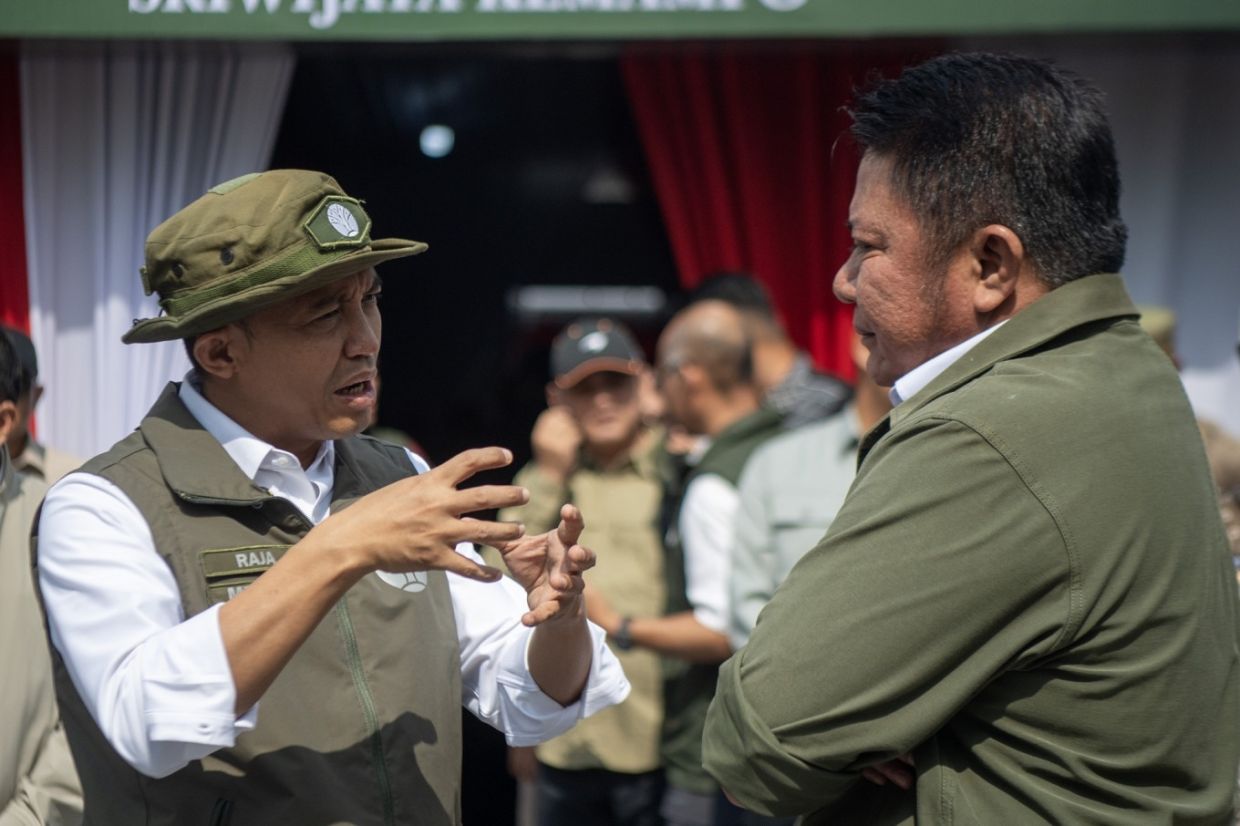
Indonesia's Corruption Eradication Commission (KPK) has reopened its investigation into bribery allegations involving Forestry Minister Raja Juli Antoni, questioning whether the minister fully returned funds he allegedly received from Suhardiman Amby, the regent of Kuantan Singingi in Riau province. The renewed scrutiny centres on discrepancies between the amount of illicit money the minister previously reported and what investigators believe he actually obtained from the regent, raising fresh questions about his handling of the matter and compliance with anti-corruption protocols.
According to KPK spokesperson Budi Prasetyo, investigators are actively examining the gap between funds allegedly transferred to Raja Juli and those he claims to have returned. The minister's credibility hinges on resolving these conflicting accounts, particularly given Indonesia's strict legal framework governing the receipt and reporting of improper gifts by public officials. Budi indicated that graft busters remain focused on establishing a clear chronology of the money trail and verifying the minister's assertions about his actions.
The alleged incident traces back to June 2, when Raja Juli met with Suhardiman as part of official ministry business with the Kuantan Singingi administration. During this encounter, the regent purportedly handed the minister an envelope containing Singapore dollars—initially determined by the KPK to hold S$14,000 (US$10,919). Additionally, other ministry officials allegedly received S$12,500 in kickbacks from various officials within Kuantan Singingi, suggesting a broader pattern of attempted influence within the ministry's hierarchy.
Raja Juli's account of events differs notably from the KPK's suspicions. The minister reported the alleged bribery attempt to the anti-corruption body on July 3, claiming he had declined the gift and returned the envelope ten days after receiving it on June 12. He asserted that he delivered the cash to Kuantan Singingi Police headquarters, emphasizing that accepting such a gift would violate his position as a public servant. However, the KPK's discovery of discrepancies has prompted deeper examination into whether this narrative fully aligns with the evidence investigators have gathered.
Indonesian law requires government officials to report improper gifts related to their official duties to the KPK within 30 days of receipt, rather than to local police. Failure to comply with this requirement can result in serious criminal consequences, including sentences of up to 20 years imprisonment and fines reaching Rp 1 billion (US$55,867). This regulatory framework places Raja Juli in a precarious position, as the method and timing of his reported return may themselves constitute violations if they deviate from statutory requirements.
Investigators have connected the bribery attempt to a substantive matter pending before the Forestry Ministry. Kuantan Singingi's administration had requested reclassification of more than 1,800 hectares of limited production forest (HPT) in the regency. Under Indonesian forestry law, such reclassification permits control access to forest land for development or industrial purposes, making them valuable to regional administrators seeking to unlock economic opportunities or facilitate patronage networks. The timing and context of the alleged bribe suggest it was intended to facilitate favorable ministry action on these proposals.
The apparent coordination of bribery attempts extends beyond the single encounter in June. Budi revealed that Raja Juli had held at least three separate meetings with Suhardiman across April, May, and June, though investigators have not yet publicly disclosed whether all conversations related to the forest conversion matter or pursued other objectives. This pattern of multiple meetings raises questions about the depth of engagement between the minister and the regent and whether the alleged bribe represented a discrete incident or part of a sustained influence campaign.
Suhardiman's own legal troubles compound the investigation's significance. The Kuantan Singingi regent, who belongs to President Prabowo Subianto's Gerindra Party, was arrested and designated as a graft suspect by the KPK in late June on separate allegations involving kickbacks from the regency's secretary Zulkarnain in exchange for the latter's official appointment. The KPK subsequently broadened its investigation to encompass the alleged payments from Suhardiman to the Forestry Ministry, suggesting prosecutors view the bribery attempts as part of a more expansive corruption network operating within Riau's provincial administration.
Raja Juli's position as both Forestry Minister and secretary-general of the Indonesian Solidarity Party (PSI) has amplified political ramifications of the inquiry. Members of the House of Representatives Commission IV, which oversees forestry planning and ministry operations, have demanded his appearance for formal questioning about the allegations. The minister's absence from a scheduled July 14 meeting with commissioners sparked controversy, with Commission IV deputy chair Alex Indra Lukman from the Indonesian Democratic Party of Struggle (PDI-P) attributing the no-show to an umrah pilgrimage. This explanation raised eyebrows among lawmakers concerned about the minister's willingness to address their inquiries transparently.
The Forestry Ministry has issued formal statements affirming its commitment to cooperating fully with the KPK's investigation and pledging to provide any requested documentation or testimony. Officials emphasize that the ministry has not granted any forest reclassification approvals to Kuantan Singingi to date, with the three pending proposals from the regency currently in rejected or pending verification status. This categorical denial seeks to demonstrate that no quid pro quo arrangement succeeded, though investigators remain focused on the attempt itself rather than its ultimate success.
The investigation carries broader implications for forestry governance and environmental accountability in Indonesia. Forest reclassification decisions involve consequential environmental and land-use trade-offs, and their integrity depends on insulating ministry officials from pressure and inducements originating in regional administrations seeking regulatory favors. The case illustrates how corruption networks can target multiple decision-makers simultaneously, as the concurrent efforts to influence ministry personnel and apparent kickback scheme involving Suhardiman and Zulkarnain suggest.
For Malaysia and the broader Southeast Asian region, the case underscores persistent vulnerabilities in forestry and natural resource governance that transcend individual countries. Similar dynamics involving regional politicians, development pressures, and official incentive structures operate across the region's forest-dependent economies. The KPK's investigation demonstrates both the technical capacity of specialized anti-corruption institutions and the ongoing challenges they face in pursuing high-level officials whose political connections and governmental authority create obstacles to thorough investigation and prosecution.

