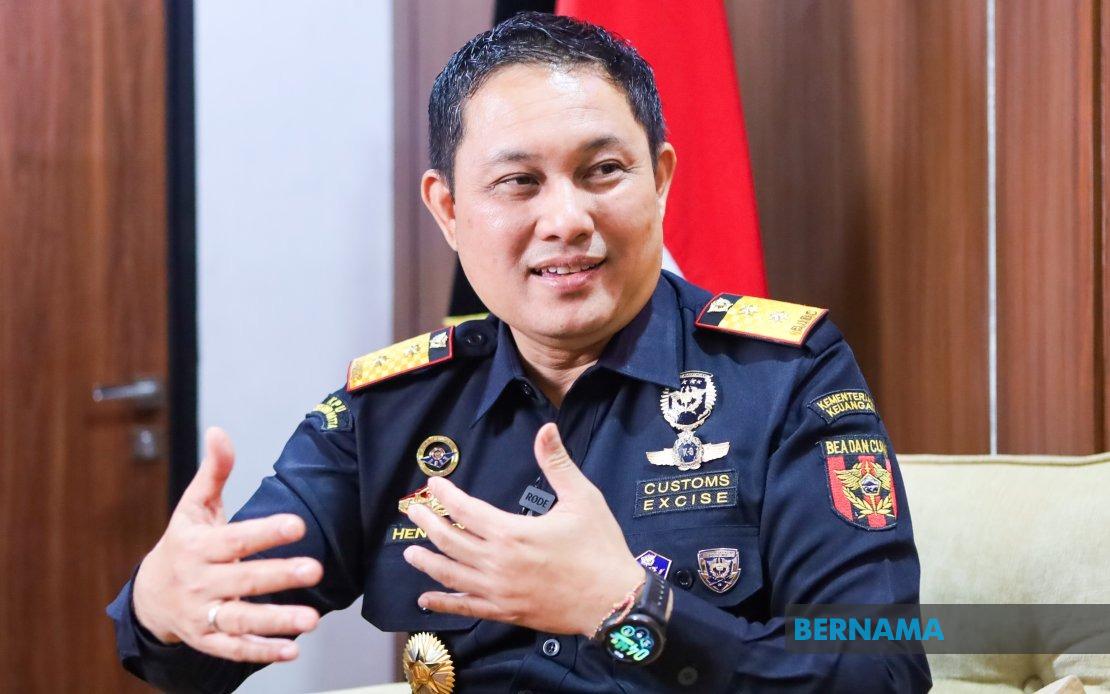
Indonesia's largest international airport has emerged as a critical battleground in Southeast Asia's drug trafficking war, with customs authorities documenting over 300 narcotics cases in just seven months—a pace that translates to at least two interdictions daily. The figures underscore how Soekarno-Hatta International Airport, processing between 25,000 and 30,000 international passengers each day, has become a focal point for criminal syndicates exploiting the region's interconnected aviation infrastructure. Hengky Tomuan Parlindungan Aritonang, head of Soekarno-Hatta Main Customs and Excise Office, characterises these statistics not merely as evidence of lawbreaking but as revealing markers of how organised trafficking operates across borders without respect for conventional assumptions about origin and nationality.
The enforcement data tells a complex story that defies simplistic categorisation. Rather than drugs flowing in predictable patterns from source countries to destinations, the evidence shows that trafficking networks utilise transit hubs strategically, recruiting couriers of convenient nationality and routing shipments through unexpected pathways. Aritonang explains that a passenger arriving on a flight from Malaysia or Thailand may be Indonesian, just as an Indonesian travelling home might be carrying contraband acquired through networks spanning multiple countries. This decoupling of flight origin from suspect nationality reflects how sophisticated smuggling operations have become, deliberately obscuring supply chains to complicate law enforcement investigations. The sophistication extends to how syndicates identify and approach potential mules—recruitment occurs opportunistically among individuals working abroad or travelling frequently, regardless of their passport nationality.
Suspects intercepted at the airport during 2024 have hailed from diverse origins including Spain, Malaysia, France, and China, while seized narcotics themselves trace back to Thailand, Spain, Malaysia, and Singapore as primary sources. The range of substances reflects global drug market dynamics, with psychotropic drugs, etomidate, and methamphetamine appearing most frequently in interception records. However, when measured by weight, methamphetamine and MDMA dominate seizure statistics, suggesting these particular drugs represent the highest-volume trafficking attempts. Customs investigators have also identified shipments concealed within air cargo consignments, a method that requires identifying recipients before tracing supply chains backward to original shippers. This cargo-based trafficking represents a concerning evolution, as it allows syndicates to distance themselves physically from the contraband while maintaining supply operations.
The spotlight has intensified following several high-profile cases involving Malaysian nationals, bringing regional dimensions into sharper focus. A Malaysian pilot was arrested last week after authorities seized approximately 25 kilogrammes of MDMA at Soekarno-Hatta, an exceptionally large quantity suggesting sophisticated trafficking operation involvement. Simultaneously, another Malaysian was apprehended at Juanda International Airport near Surabaya carrying 990 grammes of methamphetamine and 1,089 ecstasy pills strapped to his body, while three Malaysian women were detained at Soekarno-Hatta this week with suspected MDMA, cocaine, and ketamine in their possession. These incidents, compressed into a brief timeframe, have naturally raised questions about whether Malaysian travellers face heightened scrutiny or whether these cases represent merely the visible portion of larger trafficking currents.
Aritonang has responded to such concerns by emphasising that customs screening protocols operate uniformly regardless of traveller nationality, ethnicity, or appearance. Rather than profiling, he stresses that interdictions derive from intelligence data, X-ray imaging analysis, and behavioural indicators observed during screening procedures. Customs officers, he notes, focus initially on baggage content as revealed through scanning technology before identifying ownership. When suspicious items appear on scans, investigation follows mechanically according to standardised procedures applied consistently to all passengers. This explanation addresses potential concerns among Malaysian travellers that recent cases might trigger discriminatory treatment, providing assurance that detection mechanisms depend on objective technical analysis rather than demographic assumptions.
The pilot case warrants particular analytical attention, as it represents an unusual variation in trafficking methodology. Aritonang observes that the case generated substantial Indonesian media attention not fundamentally because the suspect was Malaysian, but because his professional status as a licensed pilot contradicted conventional expectations about who syndicates would recruit. Pilots undergo rigorous screening including medical examinations, background checks, and stringent licensing requirements—ostensibly making them poor candidates for smuggling operations. Yet this very unsuitability from law enforcement perspectives may constitute exactly the reasoning driving syndicate decisions. Criminal organisations appear to deliberately target individuals whose professional standing and screening history would make them appear improbable drug couriers, betting that such unconventional choices escape law enforcement expectations.
Aritonang suggests that syndicates deliberately invert law enforcement logic, identifying recruitment targets precisely because investigators would consider their involvement implausible. A pilot, with his security clearance and professional credentials, paradoxically becomes valuable for trafficking operations precisely because his profile contradicts the stereotypical drug courier image. This strategic approach—recruiting the unlikely rather than the obvious—reflects criminal sophistication that extends beyond simple supply-chain logistics into psychological and investigative dimensions. The rarity of pilot involvement in drug trafficking historically, with Aritonang noting only one comparable case involving an Indonesian pilot approximately two decades ago, underscores how unusual such recruitment represents.
The broader implications for Southeast Asia relate to how established aviation networks facilitate criminal enterprise. Major hubs in Malaysia, Thailand, and Hong Kong function simultaneously as legitimate travel nodes and trafficking infrastructure, their high volume and international connections creating both opportunity and cover for contraband movement. Regional travellers circulating between these hubs encounter systems that, despite sophisticated screening technology and professional customs procedures, face genuine difficulty identifying all concealed narcotics among millions of daily passengers. The 300-plus cases at Soekarno-Hatta represent detected instances; the actual volume of successful smuggling likely exceeds intercepted quantities substantially. This enforcement gap reflects not customs incompetence but rather the mathematical reality of screening massive passenger flows—detection represents an achievement, but coverage remains necessarily incomplete.
For Malaysian readers, these developments carry several implications worth considering. The cases involving Malaysian nationals should not be interpreted as indicating Malaysian involvement in trafficking is disproportionate or unique; rather, they reflect the interconnected nature of regional aviation networks where Malaysian citizens naturally feature prominently given geographical proximity and frequent travel patterns. The assurance from Indonesian customs authorities that screening procedures remain nationality-neutral provides legitimate reassurance, though travellers should understand that customs remains vigilant regardless of nationality. More broadly, the emergence of sophisticated trafficking methodologies—including targeting unlikely couriers like pilots and utilising cargo systems—suggests that regional drug control requires coordinated approaches extending beyond individual airport enforcement.
The data from Soekarno-Hatta ultimately reveals trafficking as an adaptive criminal enterprise that exploits systemic vulnerabilities in international aviation. Syndicates demonstrate organisational sophistication in route selection, courier recruitment, and methodology innovation. They understand law enforcement patterns and deliberately position operations to avoid conventional profiles. Indonesian customs has responded with professional enforcement producing substantial seizures, yet the continued large caseload indicates supply remains robust enough to absorb interception losses. Addressing this challenge comprehensively requires not simply increased airport screening but also upstream cooperation targeting trafficking organisations, source control efforts, and demand reduction initiatives across the region. The pilot case particularly illustrates how criminal innovation outpaces conventional security assumptions, necessitating continuous reassessment of risk indicators and recruitment targeting methods.
Moving forward, regional cooperation will prove essential given how trafficking networks span multiple countries and utilise interconnected aviation hubs. Malaysian, Indonesian, Thai, and other Southeast Asian authorities operating airports and customs facilities must share intelligence about emerging trafficking patterns, suspicious routes, and innovative smuggling methodologies. The cases at Soekarno-Hatta and other Indonesian airports provide early warning signals about how syndicates adapt to enforcement pressure. Information sharing about these adaptations—such as the deliberate recruitment of pilots—allows partner agencies to adjust their own detection protocols and intelligence frameworks. The 300-plus cases at Indonesia's busiest international airport represent both a significant enforcement achievement and evidence of substantial ongoing criminal activity that regional cooperation must address collectively.

