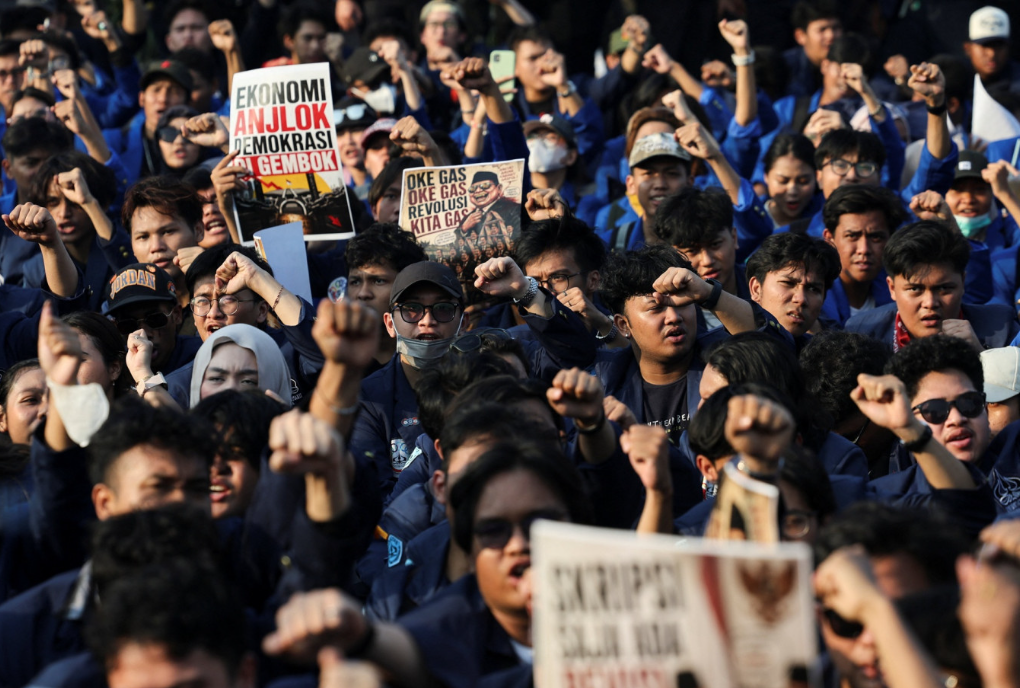
President Prabowo Subianto's ambitious free nutritious meal programme has become a lightning rod for public discontent, with protests erupting simultaneously across multiple Indonesian regions as competing constituencies clash over the continuation of the multi-trillion-rupiah initiative. The competing demonstrations underscore the complex nature of Indonesia's largest social welfare scheme, which presents itself as a health intervention yet carries significant fiscal, administrative, and economic dimensions that have polarised public opinion well beyond simple support or opposition.
Student movements, traditionally influential in shaping policy discourse in Indonesia, have emerged as the most vocal critics of the programme's current implementation. In Bali, hundreds of university students gathered outside the Regional Legislative Council building in Denpasar to demand a comprehensive audit of the scheme, questioning not merely its execution but its fundamental role within the government's broader fiscal architecture. These demonstrations reflect growing anxiety among younger Indonesians about the state's capacity to manage large-scale programmes effectively, particularly when public resources are being stretched across multiple competing priorities. The students' call for involvement of the Supreme Audit Agency signals a preference for institutional oversight rather than outright cancellation, suggesting the critique focuses on accountability rather than principle.
The corruption dimension has intensified scrutiny considerably. Recent arrests of senior officials from the National Nutrition Agency, the body responsible for programme oversight, have provided concrete evidence for critics arguing that inadequate governance structures enable systemic abuse. Thousands of students affiliated with the Indonesian Islamic Student Movement gathered outside the House of Representatives in Jakarta demanding wholesale leadership changes at the nutrition agency, framing the programme's management failures as emblematic of broader governance deficiencies within the administration. This convergence of fiscal concerns with documented institutional problems has created political momentum that extends beyond student activism into mainstream public discourse about government competence.
The budget dimension remains contentious despite official reductions. Although the government has cut allocations from the initial Rp 335 trillion to Rp 228.4 trillion, this figure remains substantial within Indonesia's constrained fiscal environment, particularly as the administration pursues wider austerity measures across other sectors. Student protesters have seized on this apparent contradiction, questioning whether a programme serving 83 million beneficiaries should command such resources when teachers face welfare challenges and other social priorities remain underfunded. This framing resonates beyond campus settings, appealing to broader taxpayer concerns about government spending patterns.
Yet the programme's supporters mobilise with equal intensity, though their demonstrations receive considerably less international media attention. Kitchen workers across Batam and other regions have staged counter-protests highlighting the direct employment impacts of proposed efficiency measures. These workers, numbering around 1,500 in Batam alone, depend on daily wages from meal preparation activities and face genuine income loss from reductions in meal distribution frequency or suspension during school holidays. Their situation illustrates how large social programmes create constituencies dependent on implementation rather than merely benefiting from services, complicating simple cost-benefit analyses.
Farmers and agricultural producers constitute another crucial support base that distinguishes this debate from standard welfare programme discussions. In Bandar Lampung and other agricultural regions, residents have rallied supporting programme continuation because it represents a significant market for local commodities including rice, corn, cassava, and seasonal fruits and vegetables. For these constituencies, the programme functions as an agricultural support mechanism rather than merely a nutrition initiative, directly influencing farm-gate prices and market stability. Suspending or significantly reducing meal distribution threatens not just employment but primary income sources for farming communities already facing price volatility and market access challenges.
The government's response has attempted to balance competing pressures through targeted efficiency measures rather than programme suspension. Authorities have introduced modifications including school holiday suspensions, reduced distribution frequencies, and exclusion of schools in affluent areas deemed capable of meeting nutritional needs independently. These adjustments suggest an underlying government commitment to programme continuation but in recalibrated form. Government Communications Agency head Muhammad Qodari has publicly defended the initiative's continuation, arguing that improvement should supersede abandonment as policy direction, a position echoing the student movement's calls for reform rather than elimination.
Food safety concerns, highlighted during recent food poisoning incidents, compound the accountability questions surrounding programme implementation. These incidents have transformed the debate from abstract fiscal considerations into tangible health and safety matters affecting vulnerable populations including schoolchildren and pregnant women. The convergence of corruption allegations with documented food safety failures creates a powerful narrative of institutional failure that extends beyond financial mismanagement into public health governance, elevating the political stakes considerably.
The geographical distribution of these competing demonstrations reveals important patterns about how Indonesia's complex regions experience the programme differently. Bali's student protests emphasise governance and democracy concerns reflective of urban middle-class constituencies, while Batam and Lampung demonstrations prioritise economic livelihoods and agricultural benefits reflective of communities more directly integrated into programme implementation and agricultural supply chains. This geographical variation suggests that national resolution of programme tensions may prove elusive without acknowledging regionally differentiated impacts and policy preferences.
For Malaysia and Southeast Asia more broadly, Indonesia's experience with the free meal programme offers instructive lessons about managing large-scale social welfare initiatives within constrained fiscal environments. The Indonesian case demonstrates how programmes addressing legitimate social needs—malnutrition and child stunting remain serious public health challenges—can generate political controversy extending far beyond initial policy intentions. Malaysia's own experience with targeted welfare programmes and education initiatives suggests similar vulnerabilities to cost escalation, implementation challenges, and competing stakeholder pressures when programmes achieve significant scale and develop dependent constituencies.
The programme's ultimate trajectory will likely involve neither complete suspension nor unchanged continuation but rather recalibration reflecting accumulated criticisms while preserving core components addressing documented nutritional deficiencies. Such middle-path approaches typically disappoint all parties while addressing core legitimate concerns, yet may represent the political outcome most compatible with Indonesia's institutional constraints and fiscal realities. The intensity and geographic spread of these competing demonstrations suggests that President Prabowo's administration recognises the political salience of programme management, making straightforward cancellation politically costly despite mounting budget pressures.

