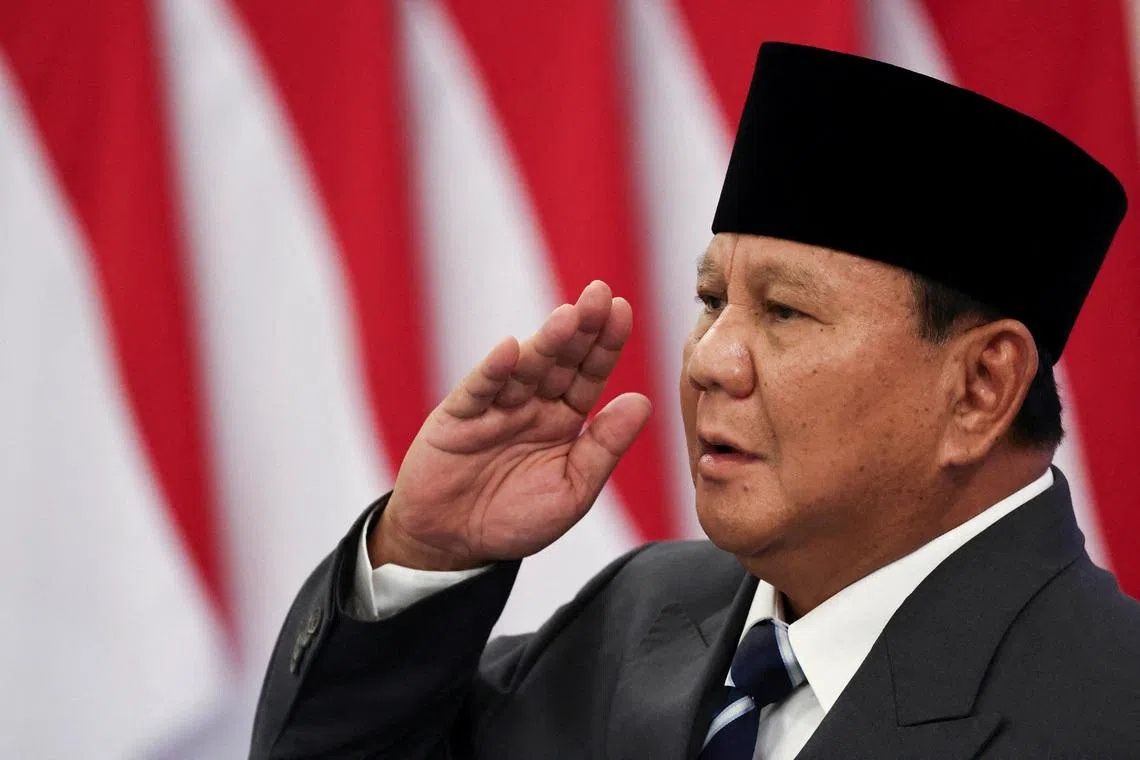
Indonesia's human rights commission has called for the government to terminate compulsory military training for prospective managers enrolled in President Prabowo Subianto's flagship village cooperative scheme, citing the deaths of five participants just ten days into the 45-day training course. The intervention marks growing scrutiny of a civilian development programme that has been entwined with military instruction, raising questions about the appropriateness of military discipline in economic initiatives.
The Red and White Cooperatives initiative, which began in July last year, represents a centrepiece of Prabowo's economic agenda. The scheme aims to establish approximately 80,000 village cooperatives throughout Indonesia, fundamentally restructuring rural commerce and employment creation. The government has positioned this programme as essential infrastructure for achieving its ambitious 8 percent economic growth target by 2029, with cooperatives intended to distribute basic goods, subsidised cooking gas, and agricultural fertiliser to underserved communities across the archipelago.
The military component of the scheme requires nearly 35,000 prospective cooperative managers to complete basic training at several regional military units between mid-June and late July. This integration of military instruction into a civilian economic programme reflects Prabowo's broader approach to governance since assuming the presidency in 2024, characterised by an expanded military presence in civilian affairs and national programmes. The inclusion of military training for cooperative managers has proven controversial, with critics questioning whether martial discipline serves any legitimate purpose for individuals whose primary responsibilities will involve business administration and community service.
Pramono Ubaid Tantowi, an official at the human rights commission, articulated the fundamental mismatch between military training and cooperative management. He emphasised that cooperatives function as economic institutions requiring expertise in business management, member services, and organisational governance—domains entirely separate from military discipline. The commission's formal recommendation represents an official position that basic military training provides no direct benefit to developing the specific competencies necessary for successful cooperative leadership, and may instead impose unnecessary risks on participants.
Between June 17 and June 26, five participants died during the training programme, according to the defence ministry. Major General Ketut Gede Wetan, head of human resource development at the defence ministry, attributed the deaths to diverse underlying health conditions including cardiac arrest, heat stroke, tuberculosis, and pneumonia. The ministry maintained that all five individuals had undergone mandatory medical examinations before enrolling and received clearance to participate, and that participants received treatment consistent with standard medical protocols following any emergencies.
The defence ministry's characterisation of the training as non-strenuous and focused on aspects unrelated to combat capabilities has drawn considerable scepticism. Military training programmes, even those designated as basic instruction, typically involve physical exertion that can strain participants with underlying health vulnerabilities. The clustering of five deaths within a ten-day window suggests either that health screening procedures were inadequate or that training intensity exceeded safe limits for the diverse population of participants, some of whom may be older cooperative managers from rural areas.
In response to the fatalities, the defence ministry announced plans for a comprehensive evaluation encompassing improved health monitoring systems, enhanced early detection mechanisms for identifying participants at risk, and modulation of training intensity. The ministry indicated that the health ministry would assume a greater role in overseeing the programme going forward, representing a tacit acknowledgement that military-led training required external health expertise. However, these adjustments address symptoms rather than resolving the fundamental question of whether military training should occur at all within a civilian economic development context.
The human rights commission has urged the government to investigate the deaths thoroughly, requesting that police obtain forensic autopsies to establish definitive cause-of-death evidence suitable for potential criminal proceedings. This escalation suggests the commission views the deaths as potentially preventable and attributable to negligence or inadequate safeguards rather than unavoidable medical misfortune. The involvement of police and forensic investigation indicates the commission suspects possible criminal accountability among those responsible for programme design and implementation.
For Malaysian observers, this episode offers instructive parallels regarding the risks of militarising civilian economic programmes. Southeast Asian governments periodically adopt military-led development initiatives, and Indonesia's experience demonstrates potential vulnerabilities when martial structures oversee civilian enterprises. The integration of military discipline into cooperative management appears particularly incongruous given that successful cooperative systems globally emphasise democratic governance, member participation, and business acumen rather than hierarchical military command structures.
The incident also highlights tensions in Prabowo's governance approach, which increasingly blurs boundaries between military and civilian institutions. While the former general frames military involvement in civilian programmes as enhancing efficiency and discipline, critics contend that such integration reflects authoritarianism rather than effective administration. The deaths in the cooperative training scheme provide concrete evidence that these institutional blurrings can produce tangible human costs beyond abstract governance concerns.
Regional economic development practitioners in Southeast Asia will closely observe how Indonesia resolves this controversy. Should the government cancel military training despite Prabowo's apparent commitment to military-civilian integration, it would signal recognition that certain civilian spheres require insulation from military direction. Conversely, if training continues with only cosmetic modifications, it would reinforce perceptions that the administration prioritises nationalist symbolism and military prerogatives over participant safety and programme efficacy.
The broader implications extend to how developing Southeast Asian economies structure rural development and cooperative initiatives. The Indonesian experience suggests that military training, rather than enhancing cooperative performance, introduces unnecessary hazards while failing to develop requisite economic and management capabilities. Effective cooperative systems require training focused explicitly on financial literacy, business planning, supply chain management, and democratic governance—competencies unrelated to military discipline and potentially undermined by military hierarchy.

