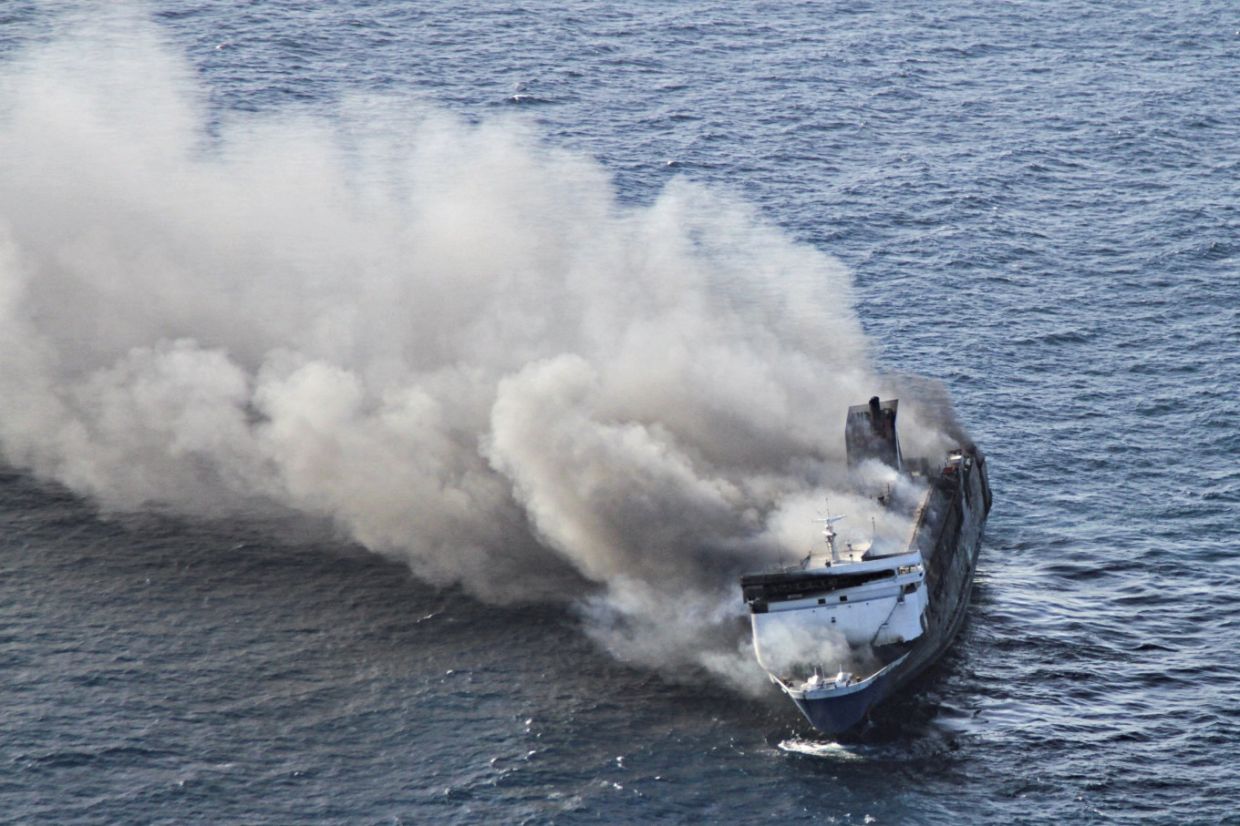
A catastrophic fire aboard the KMP Mutiara Sentosa II passenger ferry on Sunday morning has thrust Indonesia's maritime safety regime into sharp focus, laying bare systemic vulnerabilities in vessel operations and regulatory oversight. The blaze, which erupted around 6am on August 2 off the coast of Madura in East Java, claimed at least five lives and left two people missing from among the 236 passengers and 39 crew members aboard the Surabaya-to-Makassar service. The incident has triggered urgent questions about whether Indonesia's maritime authorities are adequately enforcing safety standards or merely rubber-stamping compliance certifications.
The vessel's emergency response proved dangerously inadequate, according to Udin Karo Karo, chairman of the Makassar–Surabaya Truck Drivers Association, who represents many of those stranded on board. Crew members essentially abandoned their duty to systematically evacuate passengers, forcing roughly 40 percent of the 160-meter-long vessel's occupants to fend for themselves. Survivors were compelled to leap into the sea clutching only life jackets, a harrowing reality that underscores how far the ship's response fell short of established maritime protocols. The disturbing absence of visible lifeboats or inflatable rescue rafts during the emergency heightened the danger exponentially, transforming what should have been a controlled evacuation into a chaotic scramble for survival.
What renders this disaster particularly troubling is the operator's history. The KMP Mutiara Sentosa II is operated by PT Atosim Lampung Pelayaran, the same company responsible for the KMP Mutiara Sentosa I, which caught fire near Madura on May 19, 2017, killing five people in an uncannily similar tragedy. This recurring pattern suggests that corrective measures following the first incident either were never implemented or proved wholly insufficient. Edi Priyanto, Deputy Chairman of the East Java Occupational Safety and Health Council, articulated the broader institutional problem: systemic failures in safety culture, organizational learning, and risk management have festered within the company's operations, extending well beyond mechanical or technical factors alone.
The concentration of incidents within a single operator raises uncomfortable questions about regulatory capture or complacency. Edi stressed that each maritime accident should catalyze comprehensive improvements throughout the relevant safety system. Yet the repetition of nearly identical disasters suggests that Indonesian maritime authorities have failed to enforce meaningful accountability or to mandate structural reforms at PT Atosim Lampung Pelayaran. The fire's rapid spread, its inadequate suppression, and the dysfunction of emergency response systems collectively point to an organization where safety protocols exist on paper but remain hollow in practice.
Transportation Minister Dudy Purwagandhi indicated the government would conduct a comprehensive evaluation of PT Atosim Lampung Pelayaran once the National Transportation Safety Committee completes its investigation. However, his cautious language—promising evaluation only after KNKT establishes the accident's cause—suggests a reactive rather than proactive approach. The minister acknowledged that the company had been involved in at least two prior maritime incidents, yet this knowledge apparently did not trigger enhanced scrutiny or precautionary measures before the August 2 disaster occurred. This gap between awareness and preventive action reflects a broader institutional passivity within Indonesia's transportation oversight apparatus.
The timing amplifies concerns about systemic breakdown. The KMP Mutiara Sentosa II fire erupted merely one month after another ferry sank near Selayar island in South Sulawesi, killing at least four people with fourteen others vanishing. When multiple serious maritime accidents cluster within such brief intervals, the cumulative effect transcends coincidence and signals fundamental deficiencies in how vessels are certified, inspected, and supervised. Abdul Hadi, a member of the House of Representatives Commission V responsible for transportation, framed the issue with blunt clarity: these are not isolated incidents but rather symptoms of a maritime safety system in profound distress.
Hadi's intervention from parliament's transportation committee carries particular weight because it reflects growing political concern about maritime disasters. He insisted that safety inspections and seaworthiness certifications must cease functioning as administrative formalities and instead become meaningful assessments of actual vessel condition. The warning implies that Indonesian port authorities and the Indonesian Maritime Safety Administration have permitted safety procedures to devolve into bureaucratic routines divorced from substantive verification. When inspectors rubber-stamp vessels as seaworthy without rigorous enforcement of emergency preparedness or equipment maintenance, they become complicit in the disasters that follow.
The implications for regional maritime commerce and passenger safety extend beyond Indonesia's shores. Southeast Asia's shipping corridors, many of which transit Indonesian waters and ports, depend on reliable safety standards. If Indonesia's regulatory framework permits operators with demonstrated safety failures to continue operations without meaningful consequences, it creates externalities affecting neighboring states and international maritime law. Malaysian companies trading with or transiting through East Java ports depend on Indonesian safety oversight functioning effectively. The current crisis suggests that reliance on Indonesian maritime certification may be inadequate.
The KMP Mutiara Sentosa II fire also exposes the vulnerability of Indonesia's logistics sector, which depends heavily on inter-island ferry services connecting production and consumption centers. The vessel primarily carried truck drivers whose livelihoods depend on timely cargo movement between Surabaya and Makassar. When such ferries fail catastrophically, supply chains fracture and transportation costs spike across the archipelago. This economic dimension means that maritime safety neglect carries consequences far beyond the immediate tragedy of lost lives, touching the broader competitiveness of Indonesian commerce and the standard of living throughout island communities dependent on ferry services.
Government accountability remains central to preventing future tragedies. PT Atosim Lampung Pelayaran's apparent freedom to operate despite its accident history—both incidents fatal, both involving fire, both aboard Ro-Ro vessels—suggests that Indonesian maritime authorities either lack enforcement mechanisms or lack political will to deploy them. The compensation demands from victims' families and affected truck drivers will test whether the government can compel corporate accountability. More fundamentally, whether regulatory reforms emerge that mandate enhanced safety protocols, more rigorous inspections, and meaningful penalties for violations remains to be seen.
The investigation by the National Transportation Safety Committee will likely identify technical causes—an electrical fault, improper maintenance, design deficiency—that triggered the fire. Yet the fire itself represents only the precipitating event. The true disaster unfolded during the emergency response, when crew dysfunction and missing safety equipment transformed a manageable shipboard fire into a mass casualty event. Preventing recurrence therefore requires not merely fixing mechanical problems aboard individual vessels but restructuring the entire regulatory framework governing maritime operations, corporate safety culture, and government oversight. Indonesia's maritime tragedy reveals that in the archipelago's vital shipping sector, systematic neglect has accumulated into lethal consequences.

