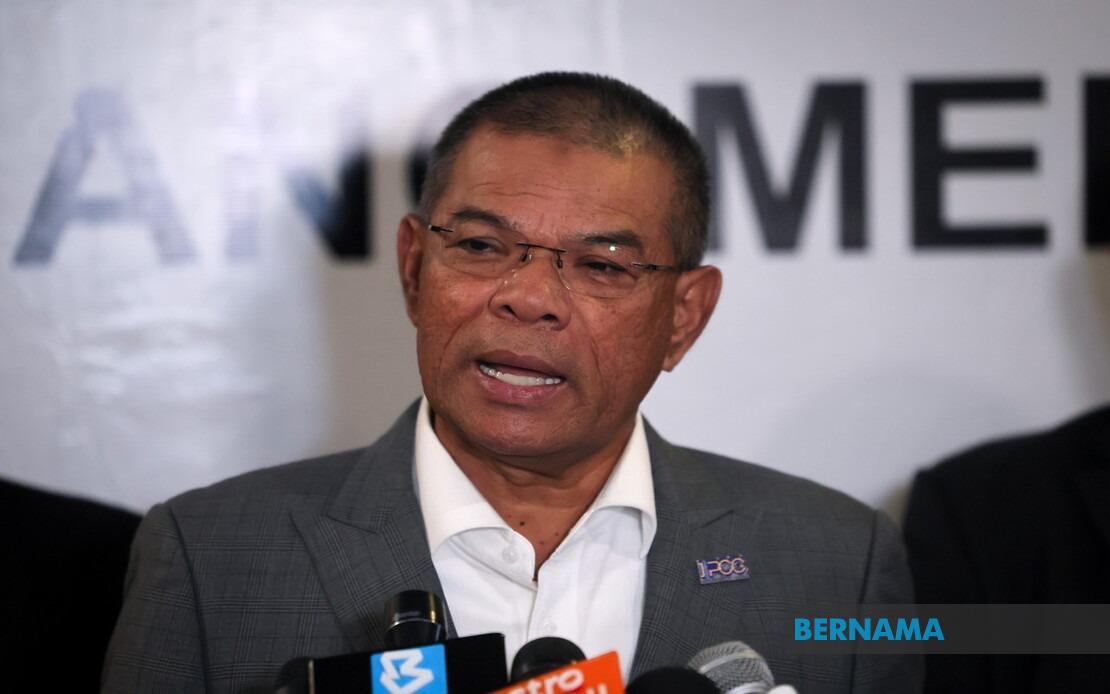
The Independent Police Conduct Commission (IPCC) has demonstrated steady progress in handling public grievances against police conduct, processing over 1,600 complaints in its opening three years of operation. Speaking at a press conference in Putrajaya on July 27, Home Minister Datuk Seri Saifuddin Nasution Ismail revealed that since the watchdog began operations in 2023 through to July 24, 2026, it has received 1,635 formal complaints, with 844 cases—representing 76 per cent of the total—now resolved. The figures underscore what officials view as growing public willingness to utilise formal channels to report instances of police misconduct, a notable shift in Malaysia's approach to institutional accountability.
The resolution rate offers a snapshot of IPCC's operational capacity, though the volume of unresolved cases merits scrutiny. Saifuddin Nasution acknowledged that outstanding complaints stem from various circumstances: some complainants remain dissatisfied with how police investigations concluded their cases, while others report receiving no response at all after initially filing grievances with the police force itself. This dual problem—poor investigation outcomes and communication gaps—suggests systemic issues within complaint handling that extend beyond the IPCC's remit, indicating where further internal police reforms may be needed.
The Home Minister highlighted that the most frequently cited complaint category involves citizens not receiving feedback on reports they submitted to police. This pattern reveals a critical vulnerability in the police service's public-facing operations and suggests that frustration often stems not from an absence of complaint mechanisms, but from institutional indifference or administrative failure to keep complainants informed. Addressing this particular bottleneck could substantially improve public satisfaction without necessarily requiring the IPCC to expand its investigative capacity.
Understanding the IPCC's operational framework proves essential for interpreting these statistics accurately. The commission functions as a triage and oversight body rather than a unified investigative authority. When allegations contain corruption dimensions, the IPCC routes cases to the Malaysian Anti-Corruption Commission (MACC) rather than handling them directly. This collaborative approach avoids duplication of effort and leverages specialised expertise, though it also means IPCC completion statistics do not capture the full picture of accountability mechanisms at work. The division of labour across multiple agencies can sometimes create perceptions of delay or confusion among the public.
Investigation papers opened by the IPCC provide another metric for assessing its active engagement with serious allegations. To date, the commission has initiated 22 investigation papers, including five launched so far in 2026. Of these, 11 have reached completion while another 11 remain ongoing. The relatively modest number of formal investigations, balanced against the higher complaint intake, reflects how many grievances concern procedural or communication failures rather than substantive misconduct warranting detailed inquiry. This distribution helps contextualise the resolution rate and suggests the IPCC is appropriately calibrating its resource deployment.
Saifuddin Nasution characterised the intake figures as modest yet meaningful, framing them as evidence that public confidence in the commission has genuinely taken root. Whether this interpretation fully captures the situation remains debatable—low complaint numbers might equally reflect limited public awareness of the IPCC's existence, lingering scepticism about its independence, or cultural reluctance to formalise complaints against authorities. Nevertheless, the upward trajectory and the government's continued investment in publicising the mechanism suggest determined effort to embed institutional oversight into Malaysia's governance architecture.
The government's commitment to raising awareness took tangible form through the recent distribution of IPCC complaint posters destined for Royal Malaysia Police (PDRM) information corners nationwide. This initiative attempts to democratise knowledge of available complaint channels and position the IPCC as a legitimate, accessible institution rather than a distant bureaucratic entity. Strategic placement within police facilities themselves sends a message about institutional transparency, though the symbolic value of posters must be matched by substantive follow-through in protecting complainants and addressing substantiated allegations.
Recent enforcement actions have reinforced official messaging about zero tolerance for police misconduct. The arrest of 12 police personnel of varying ranks for allegedly extorting approximately RM2 million from a Vanuatu national demonstrates that the internal accountability framework can operate with teeth when serious criminality surfaces. This case, while highlighting the continued capacity for corrupt conduct within the force, also illustrates that detection and prosecution mechanisms do function. For Malaysian and regional observers, such visible consequences provide some assurance that allegations can translate into disciplinary or criminal outcomes, though systemic reforms addressing root causes remain the longer-term imperative.
The IPCC's performance must be contextualised within broader Southeast Asian trends in police oversight and institutional reform. Malaysia's establishment of an independent watchdog places it among regional peers attempting to modernise accountability structures in response to public pressure and governance best practices. However, comparative analysis suggests that complaint volume alone provides limited insight; quality of investigation, speed of resolution, and genuine implementation of recommendations matter equally. The 76 per cent resolution figure masks considerable variation in outcome types—some cases may be resolved through administrative correction while others involve substantive discipline or criminal referral.
Looking forward, the IPCC faces the challenge of sustaining public trust while demonstrating tangible impact on police conduct standards. Continued transparency regarding case outcomes, investigation methodologies, and systemic patterns observed through complaint analysis would strengthen credibility. Additionally, expanding public education about the commission's mandate and the distinction between complaints suitable for IPCC handling versus those requiring MACC or other agency involvement could reduce mismatched expectations and improve satisfaction among users of the system.
For Malaysian readers and regional stakeholders monitoring institutional development across Southeast Asia, the IPCC milestone underscores both progress and persistent challenges in building genuine accountability. The commission's first three years have established operational legitimacy and demonstrated basic functionality, yet the backlog of unresolved complaints and acknowledged communication failures suggest substantial room for operational refinement. The government's continued investment in promotion and infrastructure implies confidence in the model, while the visible prosecution of corrupt police officers signals that the oversight system possesses enforcement capacity. Whether this foundation supports transformation of police culture and public trust at scale remains the defining question for the years ahead.

