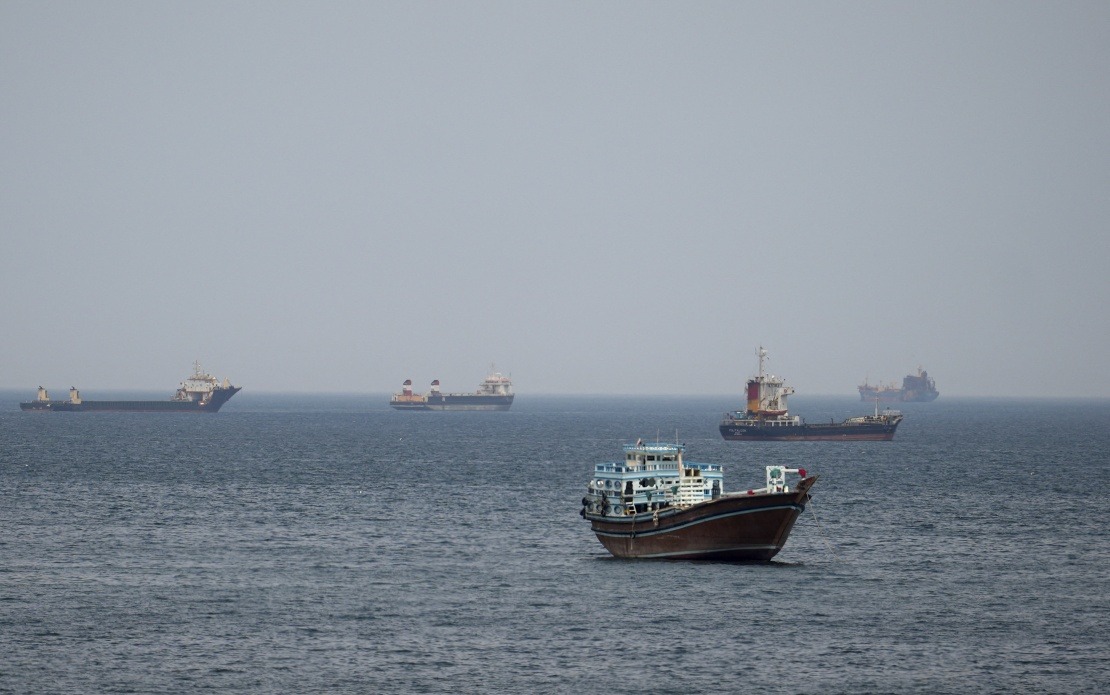
Iran's Parliament Speaker and chief negotiator Mohammad Bagher Qalibaf touched down in Oman on Monday to pursue discussions on reshaping how the Strait of Hormuz—one of the world's most strategically significant waterways—will be administered. The high-level delegation, which included Iran's top diplomat Abbas Araghchi, was received by Omani Foreign Minister Badr Albusaidi upon arrival, signalling the importance both countries place on the consultations.
The timing of this diplomatic mission reflects an intensifying period of engagement between regional and global powers over one of Asia's critical chokepoints. Qalibaf had only recently concluded eighteen hours of intensive negotiations with American representatives in Switzerland, where talks proceeded under the joint mediation of Pakistan and Qatar. These negotiations centred on implementing the recently agreed memorandum of understanding between Tehran and Washington, suggesting that the Iranian delegation is now translating the momentum from those talks into broader regional arrangements.
Oman's strategic positioning as a mediator and neutral party in Gulf affairs makes it a natural venue for such discussions. The sultanate has historically maintained balanced relations with both Iran and Western powers, positioning itself as a facilitator rather than a partisan actor. By hosting these consultations, Muscat reinforces its role as a stabilising force in a region frequently beset by tension and miscalculation. The involvement of Omani Foreign Minister Albusaidi underscores the official nature of these talks and their significance within the sultanate's diplomatic agenda.
The Strait of Hormuz remains pivotal to global energy security and commerce. Approximately one-third of all seaborne traded oil passes through this waterway, making it indispensable to economies worldwide, including Malaysia and other Southeast Asian nations dependent on Middle Eastern petroleum supplies. Any disruption to shipping through the strait directly threatens energy prices and supply chains across the region. Consequently, establishing clearer management frameworks and de-escalation mechanisms carries implications far beyond the Gulf itself.
In joint statements, both Tehran and Muscat emphasised their commitment to leveraging the current diplomatic opening to advance peace and strengthen stability mechanisms. The two sides specifically highlighted the necessity of preserving regional security while guaranteeing unimpeded safe passage for commercial vessels and naval operations through the Strait of Hormuz and adjoining international waterways. This language suggests negotiations are moving beyond rhetoric toward concrete operational arrangements that could reduce the risk of accidental confrontation.
The emphasis on international law and principles of good neighbourliness in official statements reflects a diplomatic approach designed to build legitimacy for any emerging framework. Rather than portraying the negotiations as a zero-sum struggle between competing powers, both countries are framing discussions within universally accepted legal and ethical principles. This rhetorical positioning may facilitate broader regional and international acceptance of whatever arrangements eventually emerge from these talks.
Qalibaf's subsequent planned meeting with Omani Sultan Haitham bin Tariq is expected to broaden discussions beyond Hormuz management to encompass wider bilateral cooperation and regional coordination. Such high-level audiences typically signal that negotiations extend into territory beyond the immediate technical issues and touch upon strategic partnership building. The sultan's involvement personalises the diplomatic engagement and demonstrates Oman's commitment to the process at the highest governmental echelon.
For Malaysia and other Southeast Asian nations, the outcome of these discussions matters considerably. Any stabilisation of the Persian Gulf region and clarification of maritime transit arrangements reduces uncertainty that currently inflates insurance costs and fuel prices. Additionally, clearer protocols for passage through the Strait of Hormuz benefit Malaysian shipping and trading interests substantially. Regional nations have long sought greater transparency and predictability in Gulf security arrangements, as instability there invariably cascades through Asian supply chains.
The sequential nature of these diplomatic engagements—Swiss negotiations followed immediately by Omani consultations—suggests a carefully orchestrated diplomatic calendar aimed at building consensus incrementally. By first establishing parameters with American counterparts and then socialising those understandings with regional partners, Iranian negotiators appear to be constructing a broader coalition around the emerging framework. This methodical approach increases the likelihood of sustainable arrangements that resist reversal through subsequent political changes.
However, substantial obstacles remain before any new Hormuz framework becomes operational reality. Previous attempts at regional security cooperation in the Gulf have foundered on issues of sovereignty, mutual verification, and commitment enforcement. The complexity of involving multiple stakeholders—including Saudi Arabia, the United Arab Emirates, and external powers—means that bilateral Iranian-Omani agreements represent only one element of a much larger diplomatic puzzle. Nevertheless, these talks demonstrate that despite persistent tensions, dialogue channels remain open and diplomatic progress, however incremental, continues to advance.

