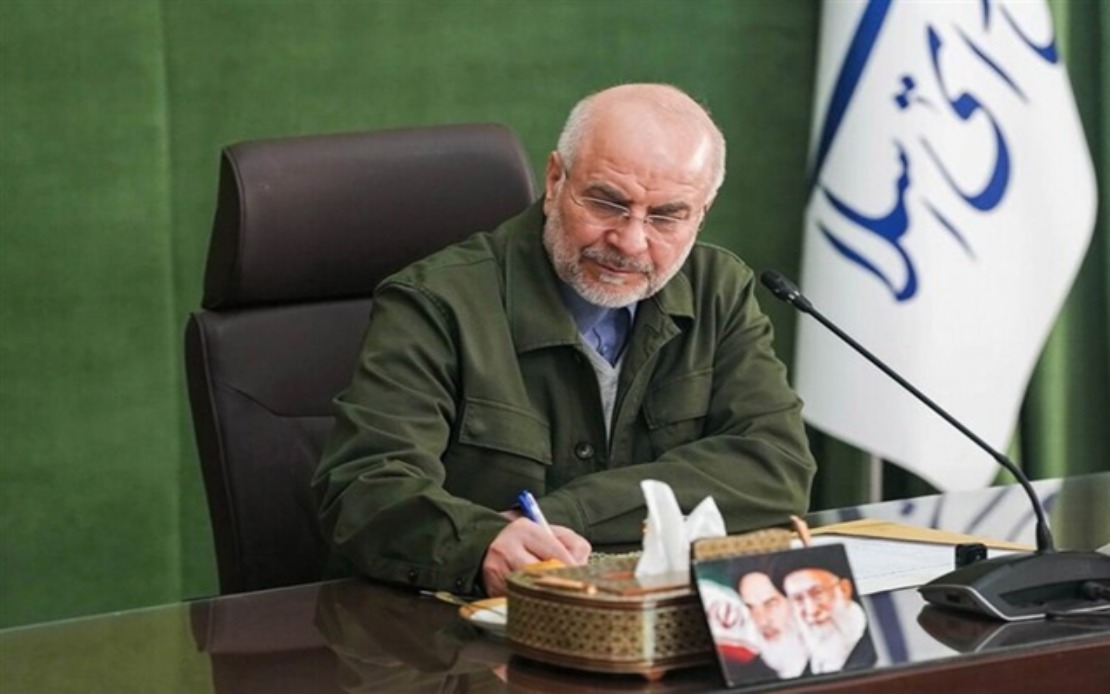
Tensions over the intended use of Iran's newly accessible funds have surfaced as a fresh point of contention between Tehran and Washington, with Iranian Parliament Speaker Mohammad Bagher Ghalibaf publicly denying US assertions that the released capital will flow toward American farm products. Ghalibaf, who holds significant authority in Iran's negotiating process, used social media on Thursday to challenge claims that Persian assets would be channelled into purchasing US agricultural commodities, framing the disagreement within the context of deeper historical grievances between the nations.
The dispute emerged after high-level US figures made specific declarations about how Iran should allocate its unfrozen resources. Vice President JD Vance suggested on Monday that the released assets could be utilised to acquire American soybeans, corn and wheat. President Donald Trump followed suit on Tuesday, advancing a more structured proposal that would place the funds into an escrow account controlled by Washington, restricting their use exclusively to purchases of US food and medical supplies including corn, wheat, and soybeans. These statements reflected a deliberate effort to direct Iranian spending toward American producers, a position that triggered an immediate and pointed response from Tehran's leadership.
Ghalibaf's rejection carried particular weight given his dual role as both parliamentary speaker and key negotiator. His statement, posted on the platform X, carried sharp language: the characterisation that "the only crop we're harvesting is what you planted: decades of mistrust" framed the disagreement not merely as a technical dispute over purchasing protocols but as symptomatic of entrenched bilateral suspicion. This rhetorical approach reflected broader Iranian frustration with what officials view as conditional or manipulative approaches to negotiations, even as formal talks continue.
The pushback from Iran has been consistent across multiple government channels. On Tuesday, Iranian Foreign Ministry spokesperson Esmaeil Baghaei issued a formal statement asserting that Tehran maintains full discretion over deployment of its released assets, to be determined entirely through the lens of national interest without external constraints. Baghaei emphasised that purchasing decisions would prioritise economic merit, specifically citing price competitiveness and product quality as the determinative factors guiding Iran's procurement choices. This positioning establishes Iran's independence as a sovereign actor in determining fiscal allocations, rejecting the premise that political conditions should govern commercial decisions.
The position articulated by Iran's Central Bank Governor Abdolnaser Hemmati offered slightly more nuance while maintaining the fundamental stance. Hemmati acknowledged that Iran faces no compulsion to purchase American agricultural goods but stopped short of categorically ruling out such acquisitions. His remarks suggested that if US products proved economically advantageous—offering superior value for money compared with competing suppliers—Iran might engage in such transactions. This formulation preserves Tehran's freedom of action while avoiding unnecessary provocation, creating theoretical space for US agricultural exports without conceding to Washington's demand for preferential treatment.
For Malaysia and other Southeast Asian economies, this disagreement carries implications extending beyond the immediate Iran-US context. The dispute illustrates how sanctions relief negotiations frequently become entangled with questions of economic leverage and market access. Malaysia, which maintains complex commercial and diplomatic relationships across the Gulf region, must navigate the evolving landscape of Iranian purchasing power and market opportunities. As Iran regains access to international commerce, understanding which suppliers Tehran prioritises becomes commercially relevant for regional exporters competing in energy, food, and consumer goods sectors.
The underlying discord also reveals the fragility of the diplomatic framework recently established between Tehran and Washington. The memorandum of understanding signed on June 18 provided for a 60-day negotiating window aimed at reaching a comprehensive agreement on Iran's nuclear programme and the removal of economic sanctions. Yet within days of this accord, fundamental disagreements about asset deployment have surfaced, suggesting that structural mistrust remains formidable despite apparent progress toward dialogue. When even the mechanics of how released funds should be allocated become contested terrain, it signals deeper uncertainties about both sides' commitment to normalisation.
The negotiations themselves have proceeded to multiple rounds, with recent discussions conducted in Switzerland on Sunday and Monday. Switzerland's role as a traditional neutral venue reflects the delicate diplomatic choreography required to keep talks advancing despite sharp public disagreements. The fact that negotiators continue meeting even as their political leaders trade pointed statements through social media indicates a deliberate separation between substantive negotiating processes and public posturing. This compartmentalisation, while pragmatic, also demonstrates how little progress has been achieved in bridging fundamental differences about oversight, control, and economic autonomy.
From an economic perspective, Iran's insistence on unfettered discretion over asset deployment reflects broader anxieties about sovereignty and external control. For a nation that has endured decades of sanctions and economic isolation, the symbolic significance of truly freed capital—capital that cannot be redirected or reclaimed by external authorities—carries weight beyond mere financial considerations. Iranian officials view demands for restricted spending as attempts to maintain de facto control even while formally lifting sanctions, effectively imposing economic subordination through the back door. This perspective explains the vehemence of the rejection, which operates simultaneously as a statement about principle and national dignity.
The emphasis on price and quality as purchasing criteria also reflects practical realities. Iran requires agricultural imports to feed its population and sustain industrial production, making procurement decisions fundamentally economic rather than ideological. If American products genuinely offer superior value, economic rationality might eventually drive purchases regardless of political differences. However, allowing Washington to dictate that American goods must be prioritised would represent precisely the kind of conditionality that Iran seeks to escape. The distinction between choosing American products because they are competitive versus being required to choose them because of political conditions marks the crucial dividing line in this dispute.
For regional observers including Malaysia, this disagreement underscores the persistence of zero-sum thinking in the Iran-US relationship despite superficial diplomatic progress. The willingness of both sides to dispute publicly over asset deployment, rather than resolving such questions through quiet negotiation, suggests that mutual confidence remains minimal. Neither party appears confident that agreements will hold, leading each to stake out maximalist positions on secondary issues. This pattern typically presages difficult negotiations ahead, as both sides jockey for perceived advantage before committing to final settlements.
Looking forward, whether Iran and the United States can resolve such disputes will significantly influence regional economic dynamics. Southeast Asian countries with trading interests across the Gulf must prepare for scenarios ranging from fuller normalisation, which would substantially reintegrate Iran into global commerce, to renewed confrontation, which would restore restrictive sanctions regimes. The current public controversy, while ostensibly about agricultural purchasing, ultimately reflects unresolved questions about whether genuine reconciliation can emerge from decades of mutual antagonism, or whether both nations remain locked in patterns of suspicion and competition that economic negotiations alone cannot overcome.

