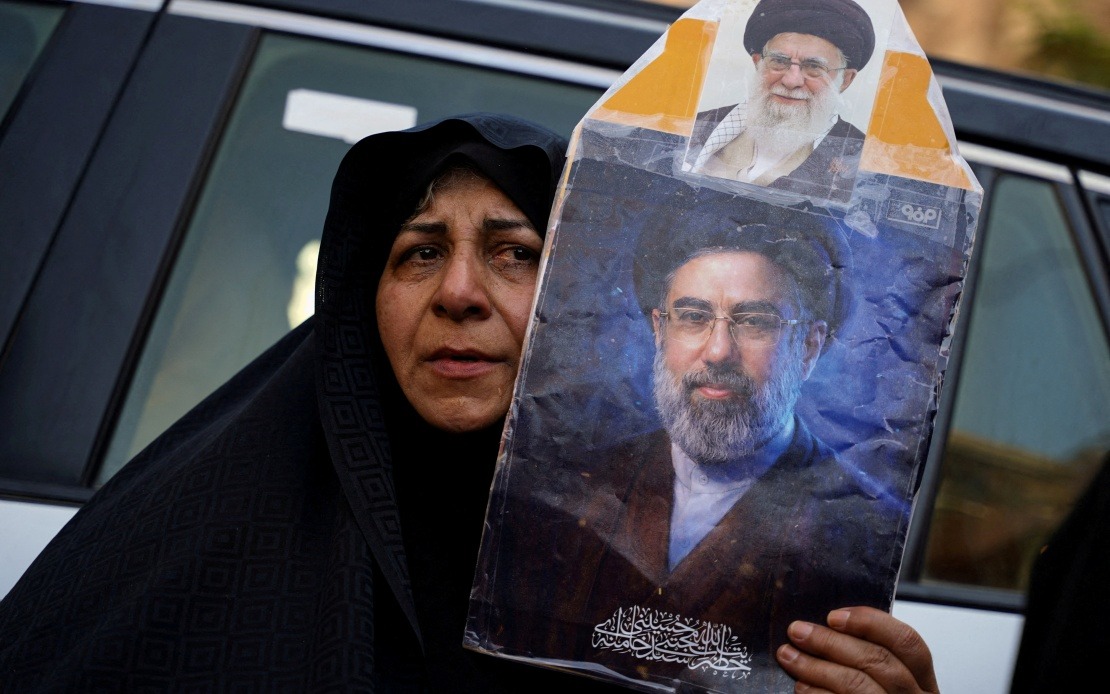
The geopolitical standoff between Iran and the United States has sharply deteriorated following what Tehran describes as Washington's systematic breach of a peace agreement signed just weeks earlier. On Saturday, Iranian Supreme Leader Mojtaba Khamenei issued a forceful rebuke in a message to his nation, arguing that American violations of the memorandum of understanding inked by President Masoud Pezeshkian and Donald Trump on June 18 have fundamentally undermined the credibility of American diplomatic commitments at the highest level.
Khamenei's characterisation of the US president's signature as "worthless and invalid" represents an escalation in rhetorical intensity, reflecting Tehran's growing frustration with what it perceives as bad faith compliance. The Iranian leader's comments suggest that the initial optimism surrounding the June agreement has evaporated entirely, replaced by a conviction that American pledges cannot be trusted. This assessment carries significant weight within Iran's political establishment, as Khamenei wields supreme authority over the country's security apparatus and ultimate decision-making on matters of national defence.
The memorandum itself was structured to create a framework for substantive negotiations, with both parties committing to intensive talks within a 60-day window aimed at producing a final, comprehensive agreement. The accord represented a rare moment of diplomatic opening following months of escalating tensions. However, the deterioration has been remarkably swift, suggesting that fundamental disagreements over implementation or that underlying strategic interests remain irreconcilable despite the initial accord.
Khamenei's statement went beyond condemning specific violations to make broader claims about American character and reliability. He contended that Washington had "revealed its true and unmasked face," describing a pattern he characterised as inherently dishonest and fundamentally hostile to Iranian interests. The Supreme Leader framed American actions within a historical narrative of what he called "dark experience of crime and breach of promises," suggesting that current behaviour reflects longstanding American policy rather than any aberration.
The Iranian leadership has articulated an explicit warning regarding potential consequences of continued American pressure. Khamenei promised that if the United States persists with what Tehran terms warmongering and attempts to impose additional economic or military costs on Iran, the Islamic Republic and its allied resistance movements would deliver responses that would be "unforgettable." This language, while deliberately vague in its specifics, carries implicit threats of significant escalation across multiple domains.
The stated position of Tehran's Deputy Foreign Minister for Legal and International Affairs Kazem Gharibabadi underscores the seriousness of Iran's response. Gharibabadi announced that Iran has suspended its own compliance with the memorandum's obligations, citing Washington's alleged breach of its commitments. This suspension represents a critical juncture, as it indicates that Iran is no longer willing to maintain restraint pending a diplomatic resolution. The decision to publicly announce non-compliance signals that Tehran is preparing domestic and international audiences for potential military escalation.
The military dimension of this confrontation has already manifested tangibly. The United States has conducted multiple rounds of strikes targeting Iranian interests in recent days, whilst Iran has responded with retaliatory attacks against American military bases and facilities throughout the region. This tit-for-tat dynamic raises the risk of miscalculation, particularly given the speed with which escalation cycles have developed. Neither side appears willing to absorb attacks without immediate response, creating a potentially unstable spiral.
For Southeast Asian observers and policymakers, this deterioration carries meaningful implications. The region's economic vitality depends significantly on freedom of navigation through the Persian Gulf and Strait of Hormuz, channels through which vast quantities of crude oil and liquefied natural gas flow toward Asian markets including Malaysia. Regional military escalation risks disrupting these critical shipping lanes, potentially driving energy prices higher and complicating the economic recovery trajectories of numerous Asian nations.
The collapse of the June accord also signals something more fundamental about the current international environment. It demonstrates that even when diplomatic breakthroughs occur and formal agreements are signed at the highest levels, implementation remains fraught with difficulty and that deep strategic mistrust can rapidly overwhelm initial cooperative impulses. For a region like Southeast Asia that depends on stable great power relationships and predictable rule-based international order, the Iran-US deterioration represents a cautionary example of how quickly apparent progress can dissolve.

