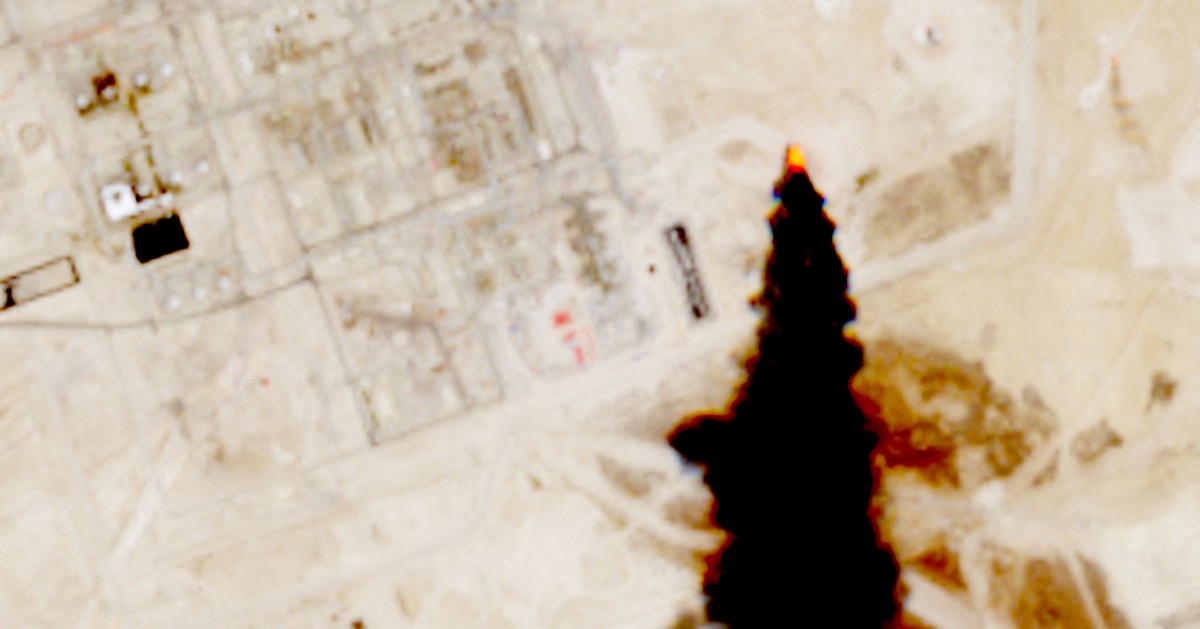
Iraq's government has initiated a formal inquiry into assertions made by Saudi Arabia concerning the origins of unmanned aerial vehicles that targeted the kingdom, according to statements from Prime Minister Ali al-Zaidi's office on Monday. The directive signals Baghdad's intention to address Riyadh's contentious claim that militant groups aligned with Iranian interests based in Iraq were responsible for launching the drone strikes.
The escalating tensions between Iraq and Saudi Arabia over drone operations underscore a broader pattern of cross-border security incidents that have plagued the Gulf region for years. Saudi Arabia has repeatedly alleged that proxy forces operating from Iraqi territory, many of which maintain strong ties to Iran, use the country as a staging ground for attacks. These allegations have become a significant irritant in bilateral relations, complicating efforts to stabilize the region and maintain diplomatic channels between Baghdad and Riyadh.
For Malaysia and other Southeast Asian nations with economic interests throughout the Middle East, these security dynamics carry considerable weight. Any escalation in Iraq-Saudi tensions could destabilize crucial shipping routes and energy markets that affect regional trade and investment flows. The investigation announced by al-Zaidi represents an attempt to demonstrate Iraqi willingness to address Saudi security concerns, potentially defusing an immediate crisis while establishing a framework for resolving underlying disputes.
The investigation also reflects the delicate balancing act that Iraqi leadership must perform in managing relationships with both Iran and Saudi Arabia, two regional powers with competing geopolitical interests. Iraq's strategic position between these two influential actors has long made it vulnerable to becoming a proxy battleground. By launching an independent investigation, al-Zaidi appears intent on establishing Iraq's agency in addressing the matter rather than allowing external powers to dictate its security posture.
Iranian influence within Iraq has been a persistent concern for Saudi Arabia and its allies, particularly regarding armed groups that operate with considerable autonomy from Baghdad's central authority. These groups have been linked to various attacks on Saudi territory and interests throughout the region. The existence of such organizations within Iraqi borders has created ongoing friction, with Riyadh viewing Iraqi sovereignty as insufficiently robust to prevent attacks originating from Iraqi territory.
The investigation mechanism itself may prove to be a test of Iraq's administrative capacity and political will. Establishing a credible, transparent inquiry into the origins of drone attacks requires coordination across multiple government agencies, security services, and intelligence bodies. The success or failure of this investigation will signal to the international community whether Baghdad possesses the institutional strength to independently verify claims and hold relevant parties accountable.
Saudi Arabia's allegations have gained particular urgency in recent years as drone technology has become increasingly accessible and sophisticated. The proliferation of unmanned aerial systems has lowered barriers to entry for non-state actors, creating security challenges that traditional military frameworks struggle to address. For Saudi Arabia, the threat posed by drone-equipped militant groups represents a significant vulnerability in its air defense architecture, explaining the kingdom's insistent focus on containing the problem at its source.
The investigation also carries implications for Iraq's international standing and its ability to fulfill the obligations expected of a responsible state actor. Nations are generally expected to prevent non-state armed groups from using their territory to conduct attacks against neighboring countries. Iraq's willingness to investigate these claims could strengthen its legitimacy in the international arena while demonstrating commitment to the principle of territorial responsibility.
Regional observers note that the investigation may produce limited tangible results given the complexity of Iraq's security environment and the political sensitivity surrounding pro-Iran militia groups. Many of these organizations enjoy substantial political representation within Iraq's government and security apparatus, complicating any effort to curtail their operations. Nevertheless, the symbolic importance of the investigation should not be underestimated, as it demonstrates Baghdad's acknowledgment of Saudi concerns and willingness to engage with them through institutional channels.
Longer-term resolution of these tensions will likely require more comprehensive approaches addressing the underlying drivers of proxy conflict in Iraq, including political inclusion, security sector reform, and mechanisms for managing great power competition within Iraqi territory. The current investigation represents a limited but necessary first step toward establishing accountability and rebuilding trust between the two neighboring nations.
For Malaysian policymakers and businesses with exposure to regional developments, ongoing instability in Iraq-Saudi relations underscores the importance of diversifying supply chains and maintaining flexible engagement strategies across the Middle East. The investigation ordered by Prime Minister al-Zaidi should be monitored as an indicator of broader trends in regional stability and the effectiveness of diplomatic mechanisms for containing conflicts.

