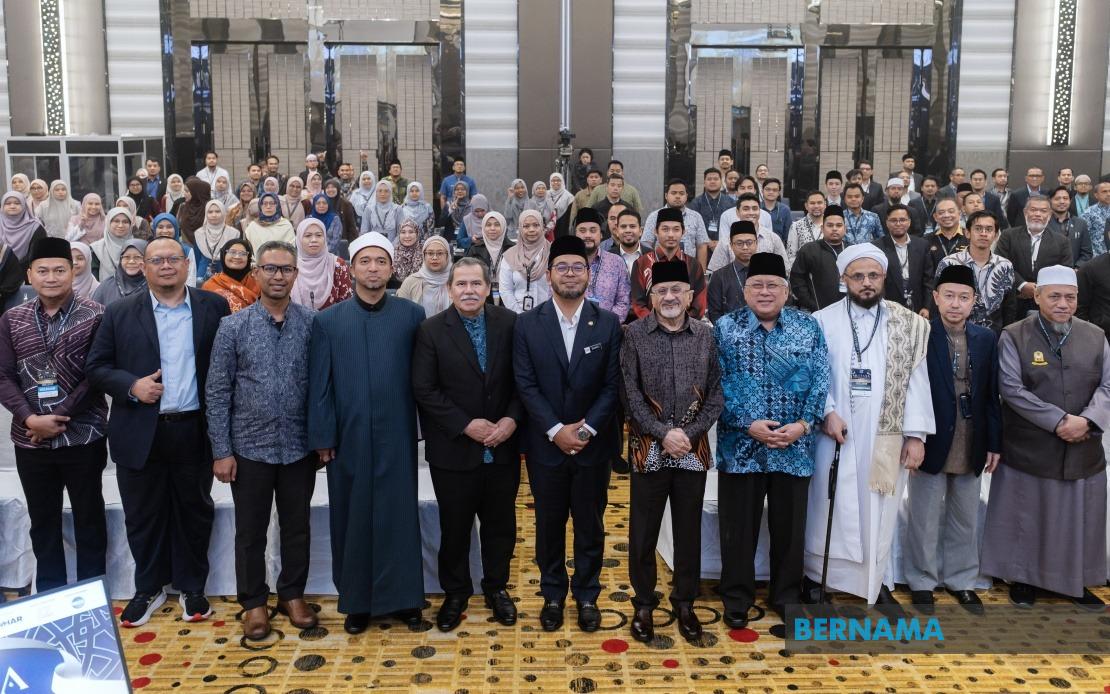
Malaysia should harness Islamic social finance as a powerful strategic mechanism to address poverty and catalyse broader economic progress, according to Minister in the Prime Minister's Department (Religious Affairs) Dr Zulkifli Hasan. Speaking at the MULTAQA SIDR Islamic Social Finance Conference in Kuala Lumpur, he outlined an ambitious vision for positioning this sector as a major pillar of the nation's development agenda, with potential to complement and strengthen existing financial and social systems.
The minister emphasised that realising this potential requires coordinated action across multiple stakeholders. To build momentum, the government intends to forge substantive partnerships among government bodies, academic institutions and commercial enterprises. This collaborative framework would focus on identifying innovative approaches and untapped opportunities within the Islamic social finance landscape. Rather than operating in isolation, the sector must integrate with and learn from mainstream financial structures to achieve greater impact and sustainability in addressing Malaysia's development priorities.
Recognising the institutional gaps that have hindered progress, the government has assigned the Department of Waqf, Zakat and Haj (JAWHAR) a leading coordinating role. JAWHAR will spearhead efforts to upgrade governance standards and boost professional practices across Islamic organisations, with particular attention to non-governmental organisations (NGOs). This strategic repositioning reflects acknowledgment that many Islamic bodies operating in this space have lacked the robust management frameworks necessary for credibility and effectiveness at scale.
Universities and higher education institutions are identified as critical partners in this institutional strengthening. Their involvement would help introduce modern governance methodologies, financial management disciplines and accountability mechanisms into Islamic NGO operations. By bridging the gap between academic expertise and ground-level organisational practice, these partnerships can establish the professional standards expected of institutions managing significant charitable resources and public trust. Such collaboration is essential for elevating Islamic social finance from its current standing to recognition as a legitimate major financial segment operating alongside banking, insurance and investment sectors.
A significant milestone emerged with the launch of Malaysia's Islamic Social Finance Report 2026 during the conference. Developed through joint efforts by the Zakat Collection Centre (PPZ-MAIWP) and collaboration between CoEISF ISRA Institute and INCEIF University, this comprehensive analysis documents the sector's evolution, identifies persistent obstacles and delineates future opportunities. Beyond its domestic utility, the report serves as a regional reference point, enabling institutions, industry practitioners and academics across Southeast Asia to benchmark practices and learn from Malaysia's experience in this emerging field.
Central to Dr Zulkifli's message is reframing the role of Islamic social finance as "The Third Force"—a conceptual shift with profound implications. Rather than remaining confined to the traditional charity model of providing immediate consumptive aid to the poor, the sector should transition toward programmes that build productive capacity within communities. This means moving beyond emergency assistance toward skills development, microfinance, enterprise support and human capital investment. Such an orientation would address root causes of poverty rather than merely alleviating symptoms, creating pathways for households to achieve sustained economic improvement.
For Malaysian readers, this reorientation carries particular significance. Many communities across Peninsular Malaysia, Sabah and Sarawak experience persistent poverty despite decades of development initiatives. Islamic social finance mechanisms such as waqf (endowments) and zakat (alms) hold substantial dormant capital reserves. If channelled strategically toward productive investments rather than consumptive distribution, these resources could finance small business expansion, agricultural modernisation and skills training. The framework outlined by Dr Zulkifli suggests potential for deploying these traditional Islamic instruments in service of contemporary development objectives.
The minister's comments regarding governance and integrity carry urgent weight, particularly given recent institutional scandals. He referenced the parliamentary debate on the Royal Commission of Inquiry report concerning Tabung Haji, drawing an explicit connection between institutional failings and broader damage to Islamic credibility. Any weaknesses in how Islamic financial institutions manage funds, make investment decisions or exercise accountability would ripple across the entire sector. Public confidence in Islamic social finance depends fundamentally on demonstrating governance standards that match or exceed those of conventional financial intermediaries. Failure to address integrity gaps would undermine efforts to mainstream the sector and could erode public trust in Islamic institutions more broadly.
When questioned about calls for a new investigation into Tabung Haji's investment losses, Dr Zulkifli declined to elaborate, signalling sensitivity around the issue. Nevertheless, his remarks suggest that institutional reform remains on the government agenda. The appointment of JAWHAR as coordinating body may partly reflect intent to establish oversight mechanisms preventing similar governance failures within the Islamic social finance ecosystem. For Malaysia's development goals and Islamic institutions' reputational standing, ensuring robust checks and balances across the sector is non-negotiable.
The assembled leadership at the conference underscored high-level institutional commitment to advancing Islamic social finance. Attendees included INCEIF University's leadership, Federal Territories Islamic Religious Council executives and senior figures from charitable collection bodies. This configuration indicates that progress is being pursued through formal channels with significant resources allocated. However, translating this governmental and institutional momentum into tangible outcomes affecting poverty reduction and economic empowerment will require sustained effort, adequate funding and genuine integration with Malaysia's broader economic policy framework. The coming years will reveal whether Islamic social finance can indeed function as the transformative third force in national development that Dr Zulkifli envisions.

