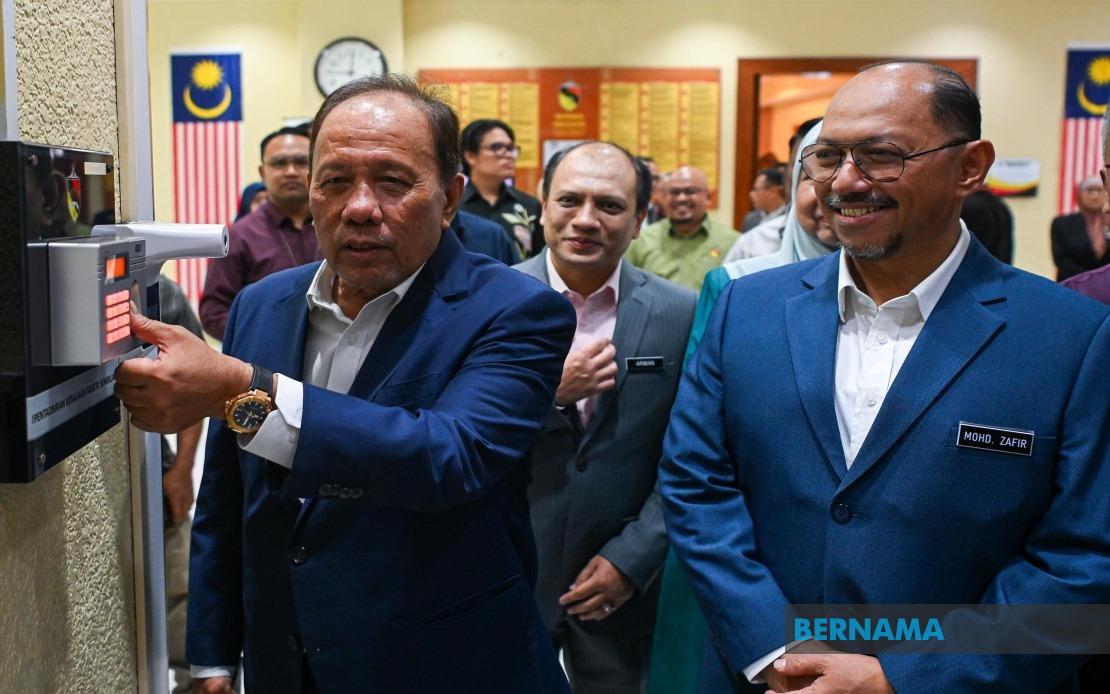
Datuk Ismail Lasim has moved swiftly to address concerns surrounding his appointment as Negeri Sembilan Menteri Besar, asserting that the entire process unfolded according to established constitutional and administrative protocols. Speaking from Wisma Negeri in Seremban, the newly installed chief executive maintained that there were no irregularities in how his elevation was handled, a statement clearly intended to counter mounting allegations of procedural impropriety.
The remarks come in direct response to a public challenge from Tan Sri Rais Yatim, chairman of policy think tank Wawasan, who has questioned the legitimacy of the appointment mechanism. Rais Yatim's concerns extend beyond mere procedural matters, touching upon what he characterizes as undue external interference in processes that should be governed exclusively by Negeri Sembilan's constitutional framework and customary governance traditions. Such intervention, if substantiated, would represent a significant breach of the constitutional autonomy that state-level appointments are meant to enjoy.
Ismail was formally sworn in as Menteri Besar before Yang Dipertuan Besar of Negeri Sembilan Tuanku Muhriz Tuanku Munawir at Istana Besar Seri Menanti last Sunday, following his successful contest in the Juasseh state seat during the recent Negeri Sembilan state election. His inauguration came after Barisan Nasional's commanding performance at the polls, securing 18 of the 36 available state assembly seats. This result provided BN with a sufficient mandate to govern independently, though the outcome also saw Perikatan Nasional capturing seven seats, collectively granting both major coalitions control well above the simple majority threshold.
The substantial electoral victory by Barisan Nasional has traditionally been presented as conferring legitimacy on the appointment process, with government officials arguing that the coalition's overwhelming endorsement at the ballot box automatically justifies any subsequent administrative decisions. However, Rais Yatim's intervention suggests that electoral dominance alone cannot serve as a shield against constitutional scrutiny, particularly when the mechanisms by which specific individuals are selected for high office remain opaque or subject to influence beyond the state's institutional structures.
The distinction between winning a legislative majority and the process of appointing an executive chief is a subtle but constitutionally significant one. While Barisan Nasional's electoral mandate is indisputable, the question of whether Ismail's specific selection as Menteri Besar followed proper procedures within the Yang Dipertuan Besar's prerogatives remains contested. In Malaysia's constitutional system, the appointment of a Menteri Besar is not automatically determined by electoral results but rather falls within the discretionary authority of the state's constitutional ruler, who nominally acts on the advice of the elected majority but retains ultimate formal responsibility for the selection.
The timing of Rais Yatim's critique carries particular weight given his establishment credentials and intellectual standing in policy circles. His suggestion that external forces may have influenced what should be an exclusively intra-state matter hints at broader anxieties within Malaysia's political establishment about the integrity of constitutional processes. Such concerns, whether or not substantiated, reflect deeper tensions about the degree to which federal actors or extra-constitutional bodies exercise leverage over state-level appointments that theoretically rest with state rulers and their legislatures.
Ismail's public assurance that procedures were "followed correctly" represents a necessary but potentially insufficient response to such weighty allegations. A simple declaration of compliance, while convenient, does not address the underlying architecture of decision-making that critics believe may have been compromised. For transparency and public confidence in state institutions to be restored, more detailed articulation of the specific constitutional steps undertaken would likely be required, though political convention often discourages such granular disclosure of what are treated as internal processes.
The controversy underscores a recurring theme in Malaysian politics: the gap between formal constitutional requirements and practical political realities. While Negeri Sembilan's constitution prescribes a clear mechanism for appointing a Menteri Besar, the informal influences—from federal coalition partners, senior party figures, or unelected advisors—that may shape such decisions often remain obscured from public view. This opacity, whether intentional or simply a function of political tradition, creates space for skepticism and criticism from those who believe the constitutional ideal should more closely approximate political practice.
For Southeast Asian observers monitoring Malaysian governance, the Negeri Sembilan appointment dispute illustrates broader questions about institutional resilience and the protection of constitutional boundaries against encroachment by extra-state actors. Malaysia's federal system explicitly reserves considerable authority to individual states, yet the gravitational pull of federal politics frequently draws state-level decisions into federal orbit, diluting the autonomy that constitutional federalism is designed to preserve. The Negeri Sembilan case thus becomes emblematic of tensions inherent in Malaysia's polity.
The immediate political implications for Ismail's tenure as Menteri Besar remain uncertain. His vigorous defense may satisfy coalition allies and government supporters, but for critics like Rais Yatim, the underlying constitutional questions persist regardless of the new chief executive's assurances. Going forward, Ismail's performance in office and his demonstrated respect for state-level constitutional institutions will likely prove more persuasive than any defensive statements issued during his opening weeks in the post. Should his administration operate transparently and in evident deference to Negeri Sembilan's constitutional framework, the initial controversy may fade. Conversely, any perception of improper federal interference in state decision-making could reignite questions about the legitimacy of his appointment and the health of Malaysia's constitutional order.

