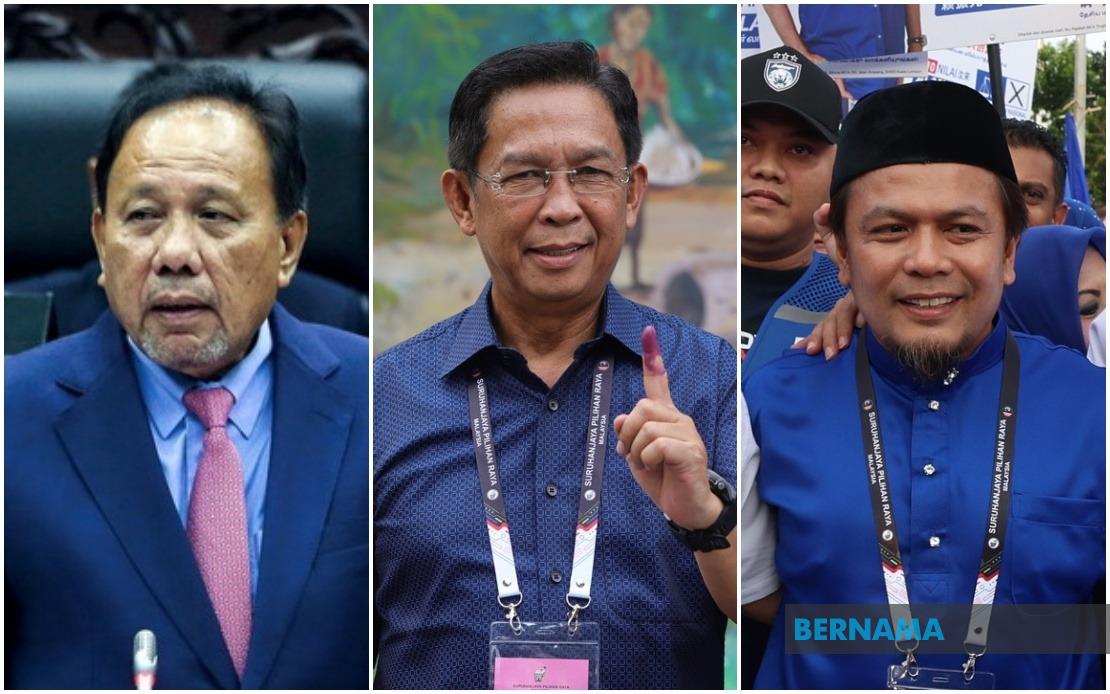
Datuk Ismail Lasim, the Kuala Pilah UMNO chief and UMNO Supreme Council member, stands as a primary contender for appointment as Negeri Sembilan's next Menteri Besar. The 67-year-old successfully contested the Juasseh state seat in the 16th Negeri Sembilan state election held yesterday, securing his position as one of three names shortlisted for the influential post. The formal oath-taking ceremony is slated to proceed this morning at approximately 11.00 am at Istana Besar Seri Menanti in Kuala Pilah, with Ismail among those observers noted arriving at the venue.
Two other candidates have been positioned alongside Ismail in the deliberations. Datuk Seri Jalaluddin Alias, aged 62 and serving as both Negeri Sembilan UMNO liaison chairman and Jelebu Member of Parliament, retained his Pertang state seat in yesterday's polling. The third nominee is Datuk Mohd Asna Amin, 47, a former state deputy speaker who claimed victory in the Lenggeng constituency. This trio emerged from a wider field of potential candidates under consideration by the ruling coalitions seeking to form the new government.
The appointment decision follows consultation between Barisan Nasional leadership and Tuanku Muhriz. On the evening before the oath-taking ceremony, BN chairman Datuk Seri Dr Ahmad Zahid Hamidi presented all three names to the Sultan during an audience at Istana Hinggap in Seremban. This procedural step underscores the constitutional role of the Ruler in endorsing the candidate selected to lead the state government, a crucial formality in Malaysia's constitutional framework for executive appointments.
Yesterday's election delivered a decisive outcome that reshaped the state's political alignment. Barisan Nasional captured 18 out of 36 contested state seats, whilst Perikatan Nasional secured 11 seats. This combined tally of 29 seats provides both coalitions with a commanding two-thirds supermajority in the 36-member State Legislative Assembly, offering substantial legislative manoeuvrability for implementing the joint government's agenda. A total of 103 candidates competed across the state for these 36 assembly positions.
This electoral outcome represents a significant reversal from the previous state assembly composition. In the previous election, Pakatan Harapan had won 17 seats to emerge as the largest bloc, with BN capturing 14 and Perikatan Nasional holding five seats. That configuration had resulted in a PH-BN state government, a coalition arrangement that proved unstable over the intervening term. The shifting political dynamics reflect broader voter preferences and internal coalition tensions that have become characteristic of Malaysian state-level politics in recent years.
The path to this election was precipitated by the collapse of the earlier bipartisan agreement. On April 27, Negeri Sembilan's BN faction withdrew its critical support from then-Menteri Besar Datuk Seri Aminuddin Harun, effectively terminating the PH-BN state government. This withdrawal triggered constitutional dissolution of the State Legislative Assembly on June 5, necessitating the holding of fresh elections to establish a legitimate new government. The sequence of events illustrates how state-level coalitions remain vulnerable to defection when underlying political interests diverge or when external pressures drive realignment.
For Malaysia's regional context, the Negeri Sembilan outcome carries implications extending beyond the state itself. The decisive BN-PN partnership at the state level contrasts with the national-level political configuration, where competing blocs operate under different structural arrangements. This reinforces a pattern visible across Malaysian federalism, where state and federal political alignments operate with considerable autonomy, allowing voters to express distinct preferences at different governmental tiers. The BN-PN collaboration at state level also demonstrates tactical flexibility in coalition-building, moving beyond the PH-BN frameworks that characterised earlier state administrations.
The three candidates under consideration each bring distinct backgrounds and standing within their respective party hierarchies. Ismail's position as a UMNO Supreme Council member provides him with access to high-level party networks and decision-making structures, potentially advantaging his prospects. Jalaluddin's dual role as MP and state party liaison chairman positions him as a bridge figure between parliamentary and state-level party machinery. Asna's relatively younger profile at 47 and previous experience as deputy speaker offer a generational perspective, though he lacks the seniority and party organisational standing of his two rivals.
The announcement mechanism reflects established constitutional practice in Malaysian states, whereby the sultans exercise their constitutional prerogative to appoint the Menteri Besar from among candidates presented by the ruling coalition. This process maintains the sovereign's role as arbiter whilst respecting the democratic mandate delivered through electoral processes. The morning oath-taking ceremony will formalise the appointment, transferring executive authority to the selected individual and formally inaugurating the new BN-PN state administration.
Looking forward, the new Menteri Besar will inherit a state administration that requires consolidation following the recent political turbulence. The two-thirds supermajority provides substantial room for policy implementation and legislative action without dependency on opposition support. However, the coalition's cohesion will prove essential for translating electoral advantage into effective governance. The transition period from campaign to administration typically demands attention to key infrastructure, development priorities and fiscal matters that directly affect resident welfare and business confidence in the state economy.
For Negeri Sembilan residents and Malaysian political observers, the imminent appointment concludes a period of uncertainty following the earlier government's collapse. The election has delivered clarity regarding voter preferences, though the identities of incoming cabinet members and administrative priorities remain to be articulated. The Menteri Besar designation, once confirmed through the oath-taking ceremony, will mark the formal beginning of a new five-year term unless further electoral upheaval intervenes, as occurred with the previous administration.

