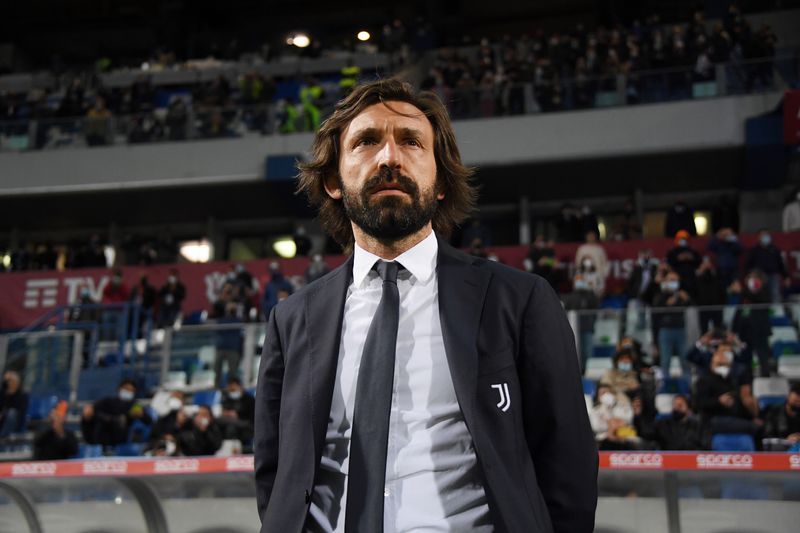
Andrea Pirlo's emerging candidacy to become Italy's next head coach has encountered substantial political headwinds centred on his commercial ties to a Russian bookmaker, threatening to derail what was otherwise considered a compelling appointment. The 47-year-old World Cup-winning midfielder and former Juventus manager had positioned himself as the frontrunner to replace Gennaro Gattuso, particularly after Pep Guardiola, the celebrated Manchester City strategist, reportedly declined the opportunity. Yet this seemingly promising trajectory has collided with mounting scrutiny from within Italy's political establishment and football governance structures, creating complications that extend far beyond typical sporting deliberations.
The flashpoint centres on Pirlo's role as a global ambassador for Fonbet, a Russian sports betting operator where he signed on in October. This commercial arrangement would ordinarily attract minimal attention, but the timing and optics have proven decidedly problematic. Pirlo's high-profile appearance at Moscow's Luzhniki Stadium alongside fellow former Italy international Marco Materazzi during a Fonbet-organised promotional event became the focal point of criticism, particularly given that the event coincided with ongoing Russian military operations against Ukraine. The visibility of these two recognisable Italian football figures endorsing a Russian commercial entity at such a contentious geopolitical moment has fundamentally altered the political calculus surrounding his potential appointment to the national coaching position.
The Italian Football Federation's institutional response has remained notably cautious. When contacted directly, the FIGC declined to provide substantive comment, though sources within the organisation acknowledged that Pirlo's Russian connections were undergoing formal evaluation and that no final determination had been reached. This measured approach reflects the delicate position in which federation leadership now finds itself, caught between recognising Pirlo's considerable tactical credentials and navigating genuine political pressure from multiple quarters. Giovanni Malago, who recently assumed the presidency of the FIGC with a mandate to orchestrate a comprehensive restructuring of Italian football following the team's third consecutive World Cup qualification failure, faces what amounts to a defining test of his early tenure.
Despite enjoying backing from Paolo Maldini, the newly installed technical director and legendary AC Milan figure, Pirlo has encountered significant resistance within the Italian political establishment. Pina Picierno, a vice-president of the European Parliament, articulated broader frustrations with the appointment on social media, suggesting that selecting Pirlo represented a step backward precisely when Italian football required comprehensive cultural, ethical and managerial transformation following successive competitive disappointments. Her criticism framed the decision not merely as a personnel matter but as emblematic of a failure to embrace the systemic change that many stakeholders believed essential to national team reconstruction.
Ignazio La Russa, president of the Italian Senate and a member of Prime Minister Giorgia Meloni's political coalition, expressed pointed scepticism during remarks to news agency ANSA. Whilst acknowledging the accomplishments of Malago, federation advisors, and Maldini individually, La Russa characterised Pirlo's managerial appointment as something approaching a gamble with uncertain outcomes. His formulation—describing the move as a leap in the dark—conveyed measured but unmistakable doubt about whether Pirlo possessed the requisite coaching experience and proven track record to command Italy's national team at a critical juncture. La Russa's positioning as an Inter Milan supporter and establishment figure lent particular weight to his reservations, signalling that scepticism transcended partisan political divisions.
Carlo Calenda, who leads the centrist Azione party, advanced an even more categorical objection grounded in principles of national responsibility. Calenda's assertion that individuals who had promoted or maintained associations with Russia subsequent to 2022—marking Russia's full-scale invasion of Ukraine—should disqualify themselves from holding national office extended the debate beyond football administration into broader questions about appropriate standards for public figures. This framing positioned Pirlo's Fonbet arrangement not as an isolated commercial transaction but as part of a wider pattern of engagement with Russian interests during a period of profound geopolitical tension. The strength of Calenda's language reflected genuine concern among significant political constituencies that appointing someone with such visible Russian commercial connections could damage Italy's diplomatic standing and undermine the country's coherence on European security matters.
Pirlo himself has sought to address the controversy by emphasising the apolitical character of his involvement with Fonbet. He has contended that his attendance at the Moscow event constituted a straightforward commercial obligation stripped of any ideological or political dimension. This defence, whilst straightforward, struggles against the broader context in which the engagement occurred. The optics of a prominent Italian sports figure appearing at a Russian bookmaker event during an active military conflict, regardless of stated intent, inevitably invite scrutiny from a political culture increasingly conscious of how commercial relationships with Russia carry symbolic weight extending beyond ordinary business transactions.
The unfolding situation illuminates broader tensions within contemporary European football administration, where commercial interests, geopolitical sensitivities, and questions of national representation increasingly intersect in complex ways. For Malaysia and Southeast Asian observers, the episode offers instructive parallels regarding how commercial ties between sporting figures and foreign entities can generate unexpected political consequences, particularly when those ties involve jurisdictions or companies from controversial geopolitical actors. The federation's struggle to balance recognising Pirlo's football expertise against legitimate concerns about the messaging sent by his appointment demonstrates how globalised sports governance increasingly operates at the intersection of athletic merit, commercial reality, and political accountability.
The Italian Football Federation now confronts a genuine dilemma without obvious resolution. Proceeding with Pirlo's appointment risks substantial domestic political blowback that could undermine Malago's broader restructuring agenda at precisely the moment when consensus and institutional credibility prove essential. Conversely, rejecting him due to his Russian commercial ties establishes a precedent that might be viewed as capitulating to political pressure on sporting decisions, potentially affecting future appointments and the federation's autonomy. The stakes extend beyond one coaching position to encompass fundamental questions about the appropriate relationship between political considerations and sporting governance in contemporary Europe.

