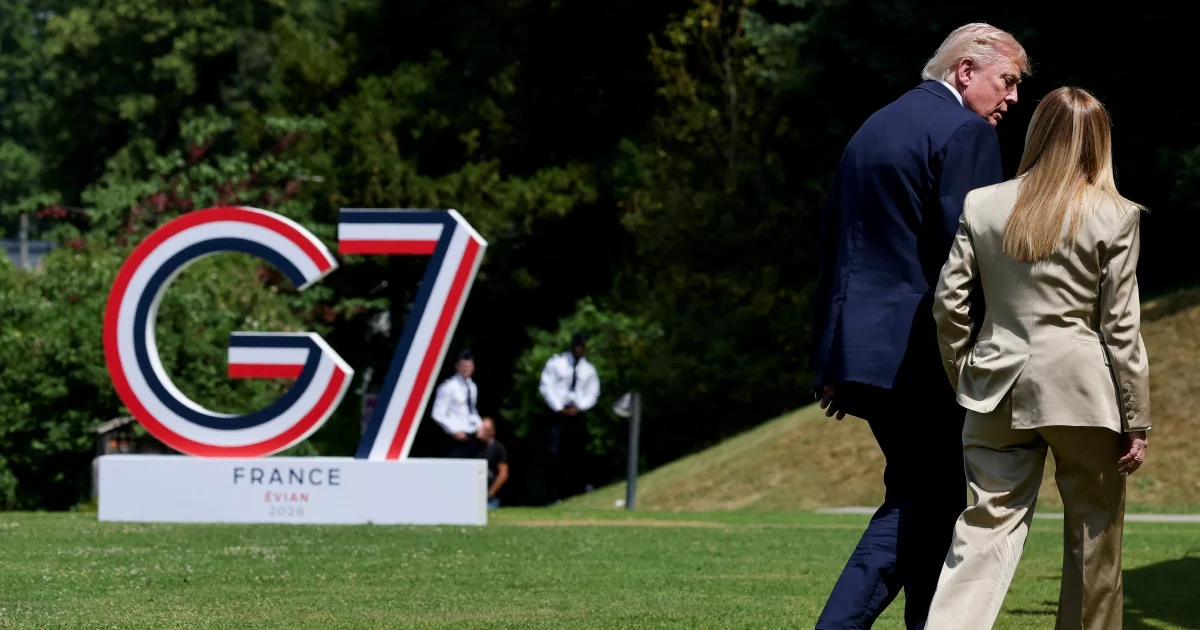
Diplomatic friction between Italy and the United States surfaced on Friday when Italian officials responded sharply to reported statements from US President Donald Trump characterising Prime Minister Giorgia Meloni's request for a photograph as an instance of begging. The alleged comments triggered an immediate and forceful reaction across Rome's political establishment, culminating in the cancellation of a scheduled official visit to the United States by Italy's Foreign Minister. The episode underscores how even established transatlantic relationships remain vulnerable to unexpected ruptures when personal remarks about national leaders enter the public domain, particularly during periods of sensitive international negotiations.
The exact timing and context of Trump's reported remarks remain somewhat unclear, though the statement appears to have emerged during a conversation or public appearance that reached Italian media outlets. By Friday, news of the comments had circulated widely enough to prompt formal responses from government figures in Rome. The characterisation of Meloni's behaviour as having involved begging struck many Italian officials as unduly disparaging and failed to accord with the dignity they believe should accompany interactions between allied leaders. The speed with which the Foreign Ministry moved to cancel the planned visit suggested the offence taken was neither minor nor subject to quiet diplomatic smoothing.
Meloni has cultivated a carefully maintained image as a strong, independent leader since taking office, and remarks suggesting she had sought photographic opportunities with Trump in a manner bordering on supplication directly contradicted that carefully constructed political persona. Italian media commentators highlighted the potential damage to her domestic standing, particularly among conservative voters who prize strength and self-reliance in their leaders. The incident thus carried implications extending beyond bilateral relations to encompass Meloni's political credibility within Italy itself, making a robust governmental response politically inevitable.
The decision to cancel the Foreign Minister's visit represented the most tangible expression of Italian displeasure available in the diplomatic toolkit without escalating to more severe measures. Such cancellations typically signal serious objection and serve notice that the offending party's government should expect consequences. Unlike some forms of protest rhetoric that can be walked back or reinterpreted, a cancelled visit represents a concrete loss of scheduled engagement that compels attention in Washington. The move reflected a calculation in Rome that allowing the remarks to pass without visible response would constitute unacceptable weakness.
This episode occurs against a broader backdrop of evolving Italian-American relations under Trump's leadership. Italy under Meloni has generally sought to maintain alignment with American strategic interests while pursuing its own policy objectives within the European Union framework. The incoming Trump administration's approach to transatlantic partnerships remains in formation, and this disagreement emerged at a moment when Italy had presumably hoped to establish productive working relationships. The timing therefore amplified the sting of the reported comments, suggesting they had undermined efforts to build momentum in bilateral cooperation.
For Southeast Asian observers, the incident offers instructive lessons in how even formal alliances between major powers can experience sudden friction rooted in matters of personal dignity and perceived respect. The episode demonstrates that in international relations, how things are said often carries weight equal to what is said. Nations expect their leaders to be treated with a baseline level of courtesy regardless of underlying strategic calculations, and violations of that expectation trigger disproportionate responses.
The broader implications for transatlantic dynamics deserve consideration. Italy represents a significant European Union member and a fellow North Atlantic Treaty Organisation ally, yet it was sufficiently offended to cancel diplomatic engagements. This suggests that the incoming American administration's approach to allied relationships may require recalibration if similar incidents are to be avoided. Other European leaders would likely be observing both how Italy responded and how the Trump administration addressed the fallout.
Within the European Union context, the incident provided another moment of intra-alliance tension that observers of European political cohesion have learned to monitor closely. Italy's centre-right government under Meloni has sometimes occupied a distinct position within broader European consensus, and her personal standing matters significantly for Italian political dynamics. Any perception that she had been diminished on the international stage could reverberate through Italian domestic politics and affect her coalition's stability.
The Foreign Minister's cancellation of the planned visit sent a message that required no elaboration beyond its execution. Diplomatic visits represent valuable opportunities for face-to-face engagement, information exchange, and relationship building. Their cancellation therefore constitutes a meaningful penalty. The decision suggested Rome would not simply absorb what it viewed as disrespect directed at its highest elected official without imposing at least some cost on the relationship.
Moving forward, the critical variable becomes how the Trump administration chooses to address the dispute. Options range from clarification or retraction of the reported remarks to continued dismissal of Italian complaints. The path chosen will substantially shape not only Italian-American relations but also how other European allies calibrate their own responses to the incoming American leadership. For Italy specifically, how this dispute resolves will influence Meloni's political narrative both domestically and internationally as she navigates the complex task of balancing European commitments with transatlantic partnership.

