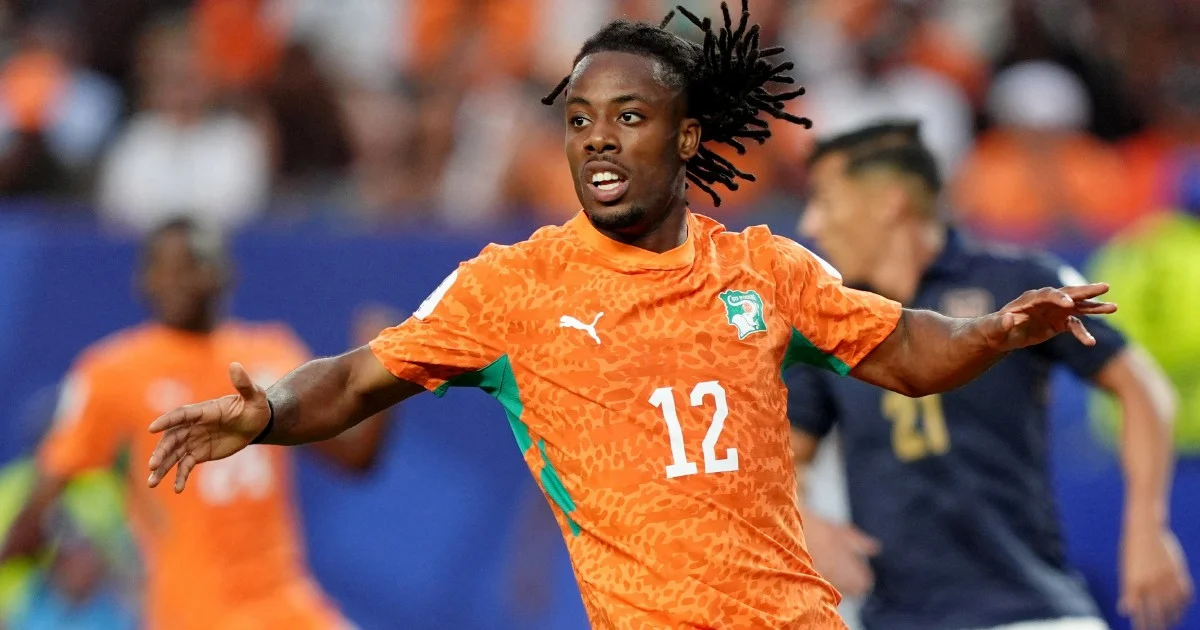
Ivorian international Elye Wahi, who took the field in Ivory Coast's World Cup triumph against Ecuador on Sunday, was detained by French authorities last month in connection with a spot-fixing investigation, according to reports from The Athletic published Wednesday.
The arrest represents a significant development in an ongoing probe into alleged match manipulation in French football. Spot-fixing—where specific moments or incidents within a match are predetermined rather than the entire result—has emerged as a growing concern for football authorities across Europe and increasingly in Africa, where financial pressures and limited oversight create opportunities for criminal networks to operate.
Wahi's involvement in the investigation casts a shadow over what should have been a celebrated moment in his international career. The forward's appearance in Ivory Coast's successful World Cup qualifier illustrated his importance to the national team's competitive aspirations in one of Africa's most fiercely contested football regions. The timing of the arrest's revelation raises questions about whether the player's domestic activities in France have implications for his standing with the Ivorian Football Federation and potential impact on his club career.
The specifics of the allegations against Wahi remain unclear from available reports, and authorities have not publicly detailed what activities or matches may be under scrutiny. French police investigations into sports-related corruption typically involve multiple parties—from players and referees to betting syndicates and criminal organisations—making individual cases complex to unravel. The breadth of such probes means that being arrested does not necessarily imply guilt, and many individuals are questioned as witnesses or peripheral figures in wider networks.
For Malaysian and Southeast Asian football observers, the Wahi case illustrates how vulnerability to match-fixing extends beyond the region's professional leagues. African players operating in European markets face unique pressures: some struggle with financial stability despite earning European wages, maintain family obligations in home countries, and may lack robust support systems compared to players from wealthier nations. These factors can make them targets for criminal syndicates seeking to manipulate matches.
The incident also underscores the interconnected nature of global football corruption. Fixing schemes often operate across multiple continents, with orchestrators in one region manipulating matches played thousands of kilometres away. Malaysian authorities have prosecuted several cases involving betting syndicates with international reach, demonstrating how spot-fixing extends across Asia, Africa, and Europe. Intelligence sharing between national football associations and law enforcement agencies has become critical, yet remains inconsistent and fragmented across many jurisdictions.
French football's relationship with integrity investigations has intensified in recent years as authorities have dismantled several betting networks. The Ligue 1 and lower divisions have experienced previous spot-fixing scandals that have resulted in player bans and club sanctions. Wahi's potential involvement—should allegations be substantiated—would add another chapter to a concerning pattern affecting French professional football at multiple levels.
The World Cup context adds complexity to this situation. Ivorian authorities may face pressure to balance supporting their national squad with maintaining standards of player conduct and discipline. International football bodies have guidelines addressing player misconduct, and the Confédération Africaine de Football (CAF) maintains disciplinary procedures separate from national courts, meaning dual accountability structures may apply to Wahi depending on the investigation's findings.
Club-level repercussions represent another dimension of concern. While Wahi's club has not been publicly identified as a focus of the investigation, any player implicated in fixing faces potential transfer restrictions, contract termination, or disciplinary action from their employer. These consequences can derail careers and impact a player's future earning potential—a consideration that extends beyond legal proceedings into the commercial realities of professional sport.
The broader context matters considerably for African football's development. Major leagues on the continent compete for investment and international credibility, and high-profile corruption cases undermine these efforts. Sponsors, broadcasters, and potential foreign investors view governance and integrity standards as key risk factors. A player of Wahi's profile involved in a French investigation carries reputational weight that extends beyond one individual to questions about screening practices, education initiatives, and preventative measures within African football organisations.
Moving forward, the investigation's progression will likely influence how African football addresses vulnerability to corruption among its players operating abroad. Greater education, clearer reporting mechanisms, and support services for players in European leagues could help mitigate exposure to criminal recruitment efforts. For regional observers in Malaysia and Southeast Asia—where similar vulnerabilities affect players pursuing opportunities in Europe—the Wahi case serves as a cautionary reminder of the risks accompanying international careers.
The coming weeks will reveal more details as French authorities complete their investigation and determine whether charges will be filed. Until then, questions linger about the scope of the probe, the specific allegations, and how Wahi's career trajectory will be affected by his involvement in one of football's most damaging categories of misconduct.