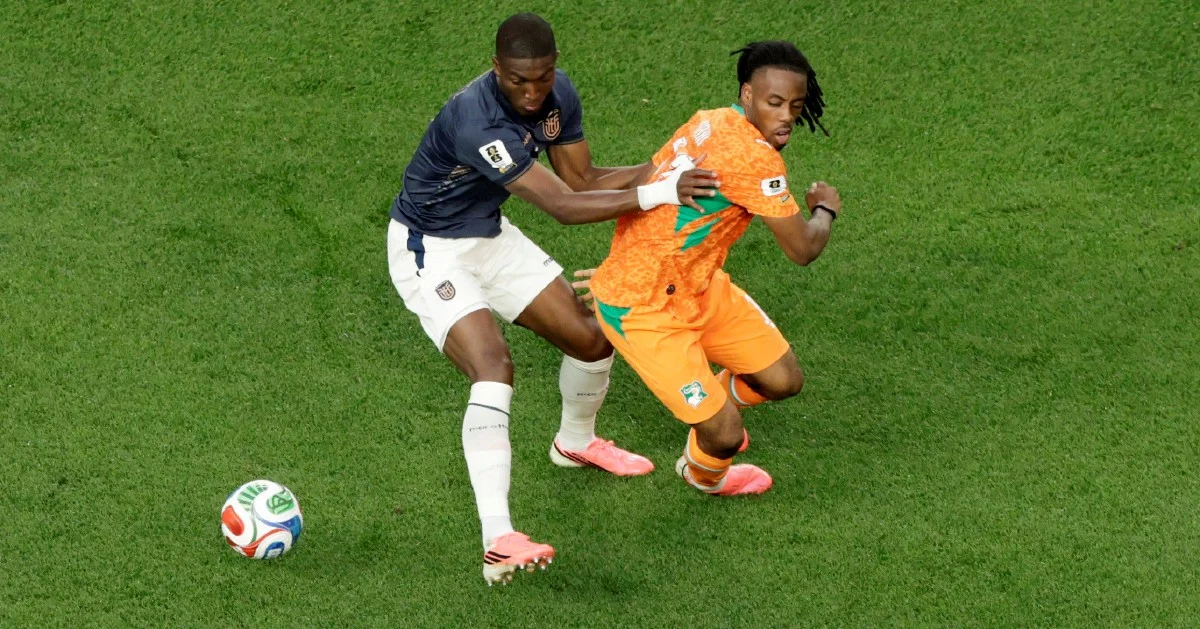
The Ivorian Football Federation announced on Thursday that forward Elye Wahi will remain in Ivory Coast and skip the team's upcoming World Cup qualifier in Canada against Germany, marking an unusual pre-match development that underscores the growing intersection between international sports competition and off-field legal scrutiny. The federation's decision came just a day after Wahi's name surfaced in connection with a probe into alleged match-fixing activities centred on a French professional league encounter, intensifying pressure on both the player and his national federation to act decisively.
The investigation examining suspected sports corruption ties to a Ligue 1 match has cast a shadow over Wahi's immediate future in international football. Although specific details about Wahi's alleged involvement remain limited in official statements, the mere association with such inquiries has prompted the federation to prioritize protecting the integrity of the national team's campaign. This defensive posture reflects standard practice among football governing bodies when players face criminal or sporting investigations, as competing in major tournaments while under suspicion of corruption can damage a nation's sporting reputation and invite unwanted scrutiny from international authorities.
The timing of the revelation poses particular challenges for Ivory Coast's World Cup preparations. Germany represents a formidable opponent in any context, and the sudden removal of an attacking player from the squad necessitates tactical adjustments and may force coaching staff to recalibrate their strategic approach with limited preparation time. Such last-minute roster changes disrupt team cohesion and training rhythms that have typically been established weeks in advance, potentially affecting overall performance.
Match-fixing allegations within European football have intensified scrutiny on professional players across continents, with investigative bodies increasingly pursuing transnational leads that connect players regardless of their current club affiliations or national team assignments. The French league has experienced heightened focus on corruption in recent seasons, leading authorities to establish dedicated units and partnerships with regional law enforcement to combat suspicious betting patterns and suspicious activity during matches. When allegations emerge involving internationally mobile players, the complications multiply across multiple jurisdictions and sporting organizations.
For Malaysian and Southeast Asian football observers, this situation illuminates the vulnerability of professional athletes to corruption schemes, regardless of their league or prominence. The region's own football development has faced parallel challenges, with integrity watchdogs increasingly vigilant about protecting the sport's credibility. The Wahi case demonstrates how swiftly reputational damage can spread and how national federations must balance loyalty to players with institutional responsibility to maintain competitive fairness.
Ivory Coast's decision to bench Wahi also reflects contemporary governance standards within African football, where national associations increasingly implement precautionary measures to demonstrate compliance with international anti-corruption frameworks. The Ivorian Football Federation's swift action signals to FIFA and continental bodies that it takes match-integrity concerns seriously and will not tolerate players' participation in key competitions while corruption investigations remain unresolved.
The World Cup context amplifies the significance of this development. These tournaments represent peak competitive moments for national teams, with enormous financial, political, and sporting stakes concentrated on short tournament windows. National federations face extraordinary pressure to field their strongest possible lineups, making roster exclusions exceptionally difficult decisions. Yet the federation's willingness to sacrifice squad depth for ethical positioning suggests they recognize that short-term competitive advantage cannot justify reputational exposure should corruption allegations later be substantiated.
Wahi's situation also reflects broader trends in European football, where French authorities have expanded investigative capacity into suspected corruption networks involving players, agents, and betting syndicates. The interconnected nature of modern football—with players circulating among multiple clubs across different countries—means that misconduct in one jurisdiction carries consequences across international football ecosystems. Players who establish reputations linked to match-fixing face severe professional consequences, including potential bans from official competition that can effectively end playing careers.
The investigation's implications extend beyond immediate World Cup consequences. Should authorities substantiate corruption allegations against Wahi, he faces potential sanctions ranging from match bans to extended suspensions from organized football competition. Such outcomes devastate athlete careers and earnings trajectories while simultaneously damaging the credibility of clubs and national associations. For Wahi specifically, the damage accumulates regardless of investigation outcomes—participation bans carry the same professional impact as guilt determinations.
From a Southeast Asian perspective, this episode underscores how global football governance increasingly operates through preventive measures and reputation management rather than purely reactive discipline. Malaysian clubs and players competing in international contexts should recognize that compliance with anti-corruption protocols transcends domestic boundaries. Regional football federations might consider whether their institutional safeguards match contemporary international standards, particularly as Southeast Asian players pursue opportunities in European leagues where sophisticated enforcement mechanisms now operate routinely.
The Canada-Germany fixture will now proceed without Wahi, potentially reshaping tactical approaches from both teams while serving as a sobering reminder of how corruption investigations disrupt international football schedules and player availability. The Ivorian Football Federation's response, though costly in competitive terms, demonstrates institutional commitment to integrity—a message that resonates throughout global football governance structures as authorities and federations collaborate increasingly closely to protect match authenticity and competitive fairness.